Word Families Sort (-at -an -ap)
Group pictures by their word family rime.
Drop here
Drop here
Drop here


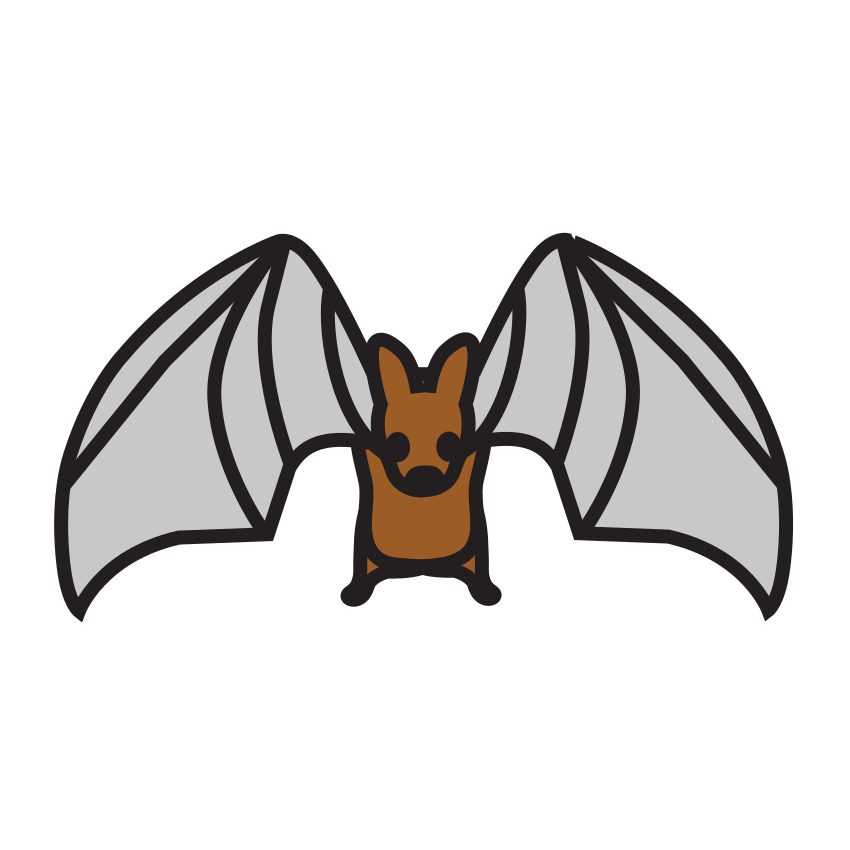








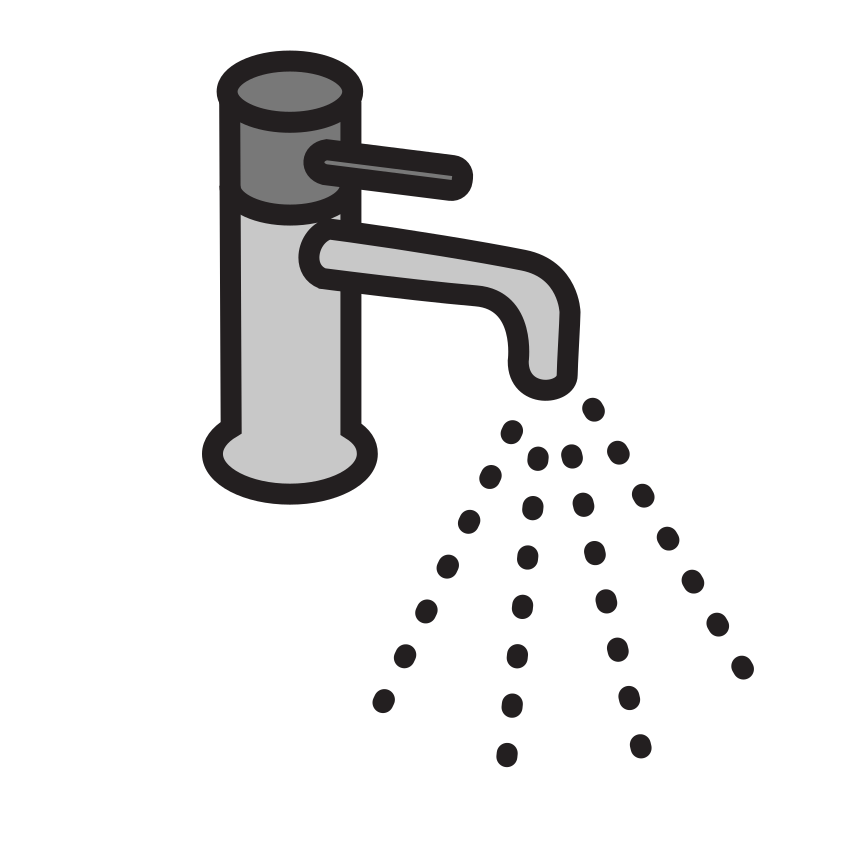
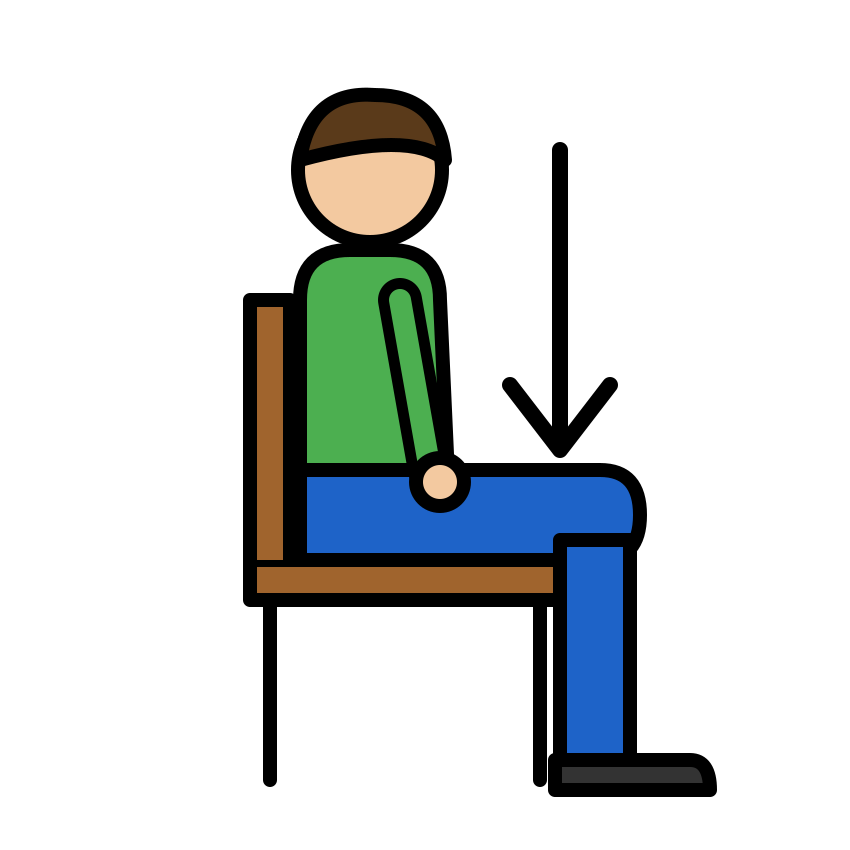
0/15 sorted
How to run it
Say the family ending on its own and then add the first sound: -at, c-at, h-at. That routine is the whole method, and it turns fifteen separate words into three patterns with five onsets each. Do -at and -an first, which are maximally different; -ap and -at differ only in the final consonant and are the confusable pair. Ten minutes covers the fifteen.
Cueing ladder
Start at the top. Add support one step at a time.
- IndependentSay the item and wait 5 seconds for the student's answer.Log as correct
- Stretch itSay the word again slowly, stretching the sounds or tapping the syllables.Log as cued
- Two choicesOffer two answers, the right one not always second.Log as cued
- ModelDo it yourself, tapping as you go, then the student does it after you.Log as cued
Adjust it
Use pictures, fewer items, and words with fewer sounds.
Take the pictures away, or move on to first-sound identification.
Matching IEP goal
Given spoken words, such as 'cat' and 'hat', Student will sort words by their word family in 8 of 10 opportunities across 3 consecutive sessions, given no more than one repetition.
Send it home through the parent portal →About this activity
Fifteen words sorted into three word families: cat, hat, bat, mat and rat share -at; can, man, fan, pan and van share -an; cap, map, nap, tap and lap share -ap. Word families work on the rime — the vowel and everything after it — which is a bigger and easier unit than a single phoneme and is the standard bridge between rhyming and decoding.
What to listen for
Watch -at against -ap, which share a vowel and differ in the last sound. A child who mixes them is attending to the vowel and not the ending, which is a specific and workable gap. Notice whether the child can generate a new family member — asking for another -an word tests whether the pattern is available or only these five are.
Carrying it home
Word family games work anywhere. Saying -at and asking for as many words as possible takes a minute, and children usually offer nonsense words too, which is a good sign rather than a mistake.
What's in this activity
- -at
- -an
- -ap
Questions
- What ages is this for?
- Kindergarten through second grade, as a bridge between rhyming and decoding.
- Is it free?
- Yes, all fifteen words play with no account.
- Why teach word families rather than individual sounds?
- Because the rime is an easier unit than a single phoneme. A child who can hear -at can read five words by changing one sound, which is a faster route into decoding than sounding out each word letter by letter.
Use this board with your caseload
With a free account, every correct, cued and incorrect mark is saved to the student and scored against their IEP goal, with the data written up for you. Assign it as home practice through the parent portal.
Track progress freeFree for SLPs. No card, no trial clock.