Beginning Sound Sort
Sort pictures by their initial phoneme.
Drop here
Drop here
Drop here










0/15 sorted
How to run it
Say the sound, not the letter name. Children who are told these are the ess words will sort by spelling and miss the point of the task, which is auditory. Stretch the first sound as you say each word — ssssun, mmmmoon — because that exaggeration is what makes the initial phoneme available to a five-year-old. Once sorting is solid, ask the child to think of one more word for each bin, which is the harder generative version of the same skill.
Cueing ladder
Start at the top. Add support one step at a time.
- IndependentSay the item and wait 5 seconds for the student's answer.Log as correct
- Stretch itSay the word again slowly, stretching the sounds or tapping the syllables.Log as cued
- Two choicesOffer two answers, the right one not always second.Log as cued
- ModelDo it yourself, tapping as you go, then the student does it after you.Log as cued
Adjust it
Use pictures, fewer items, and words with fewer sounds.
Take the pictures away, or move on to blending three sounds into a word.
Matching IEP goal
Given spoken words, such as 'sun' and 'soap', Student will identify the first or last sound in a word in 8 of 10 opportunities across 3 consecutive sessions, given no more than one repetition.
Send it home through the parent portal →About this activity
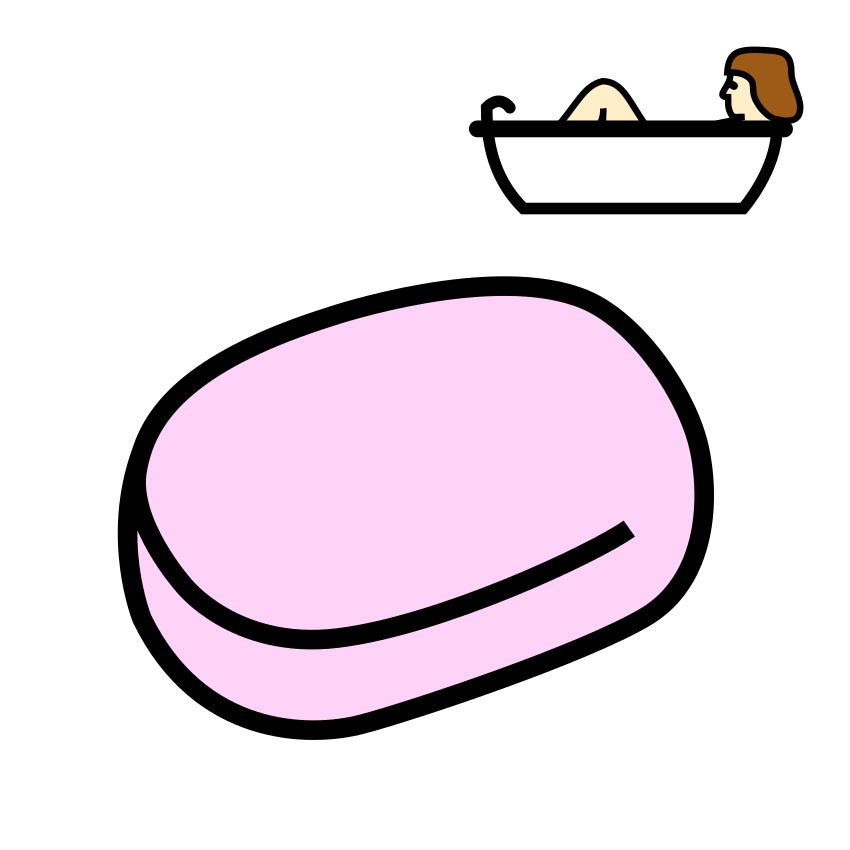
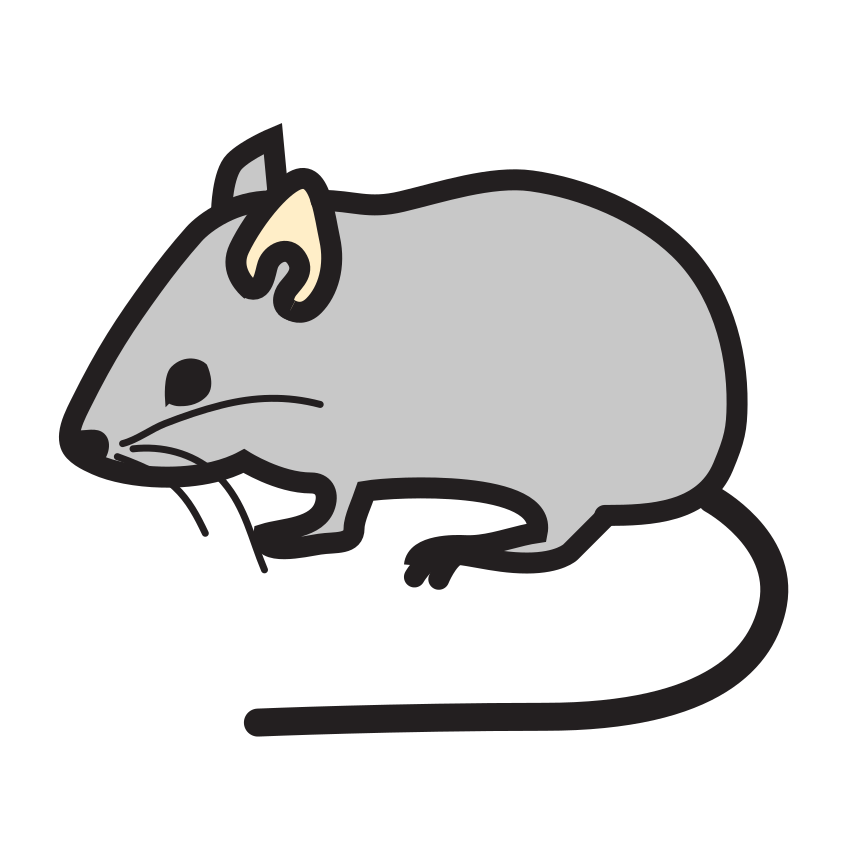
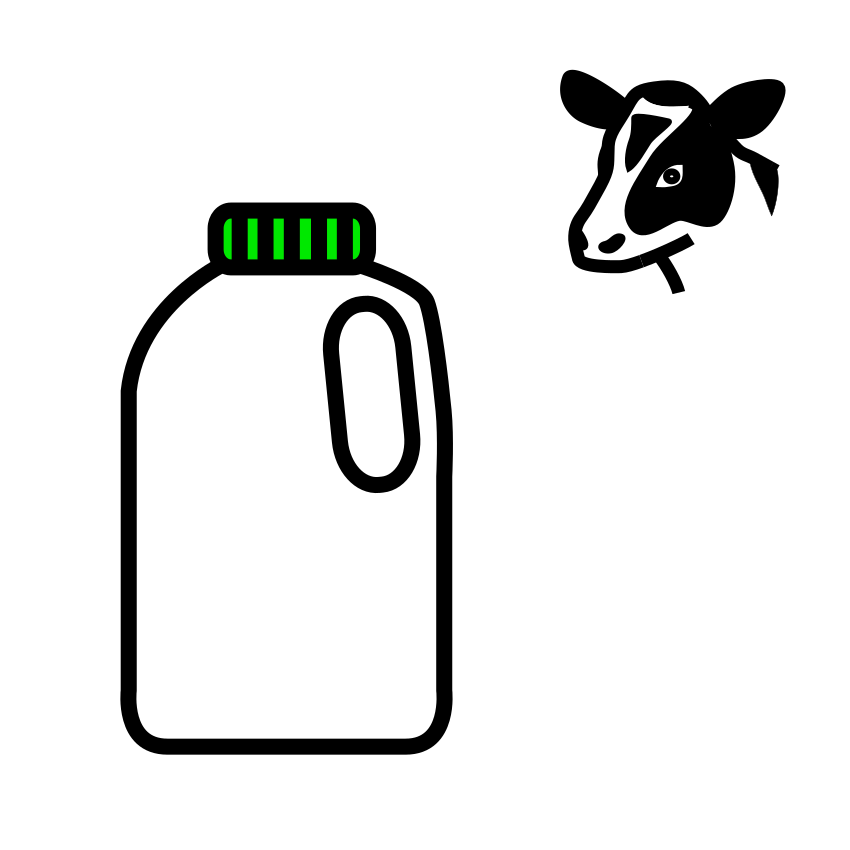
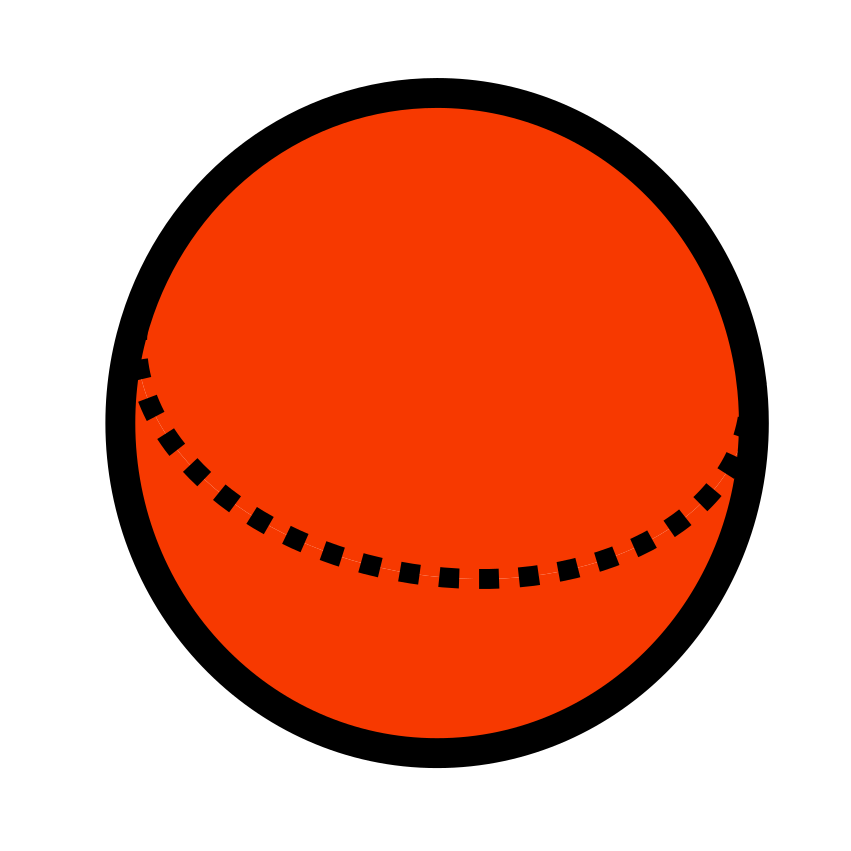
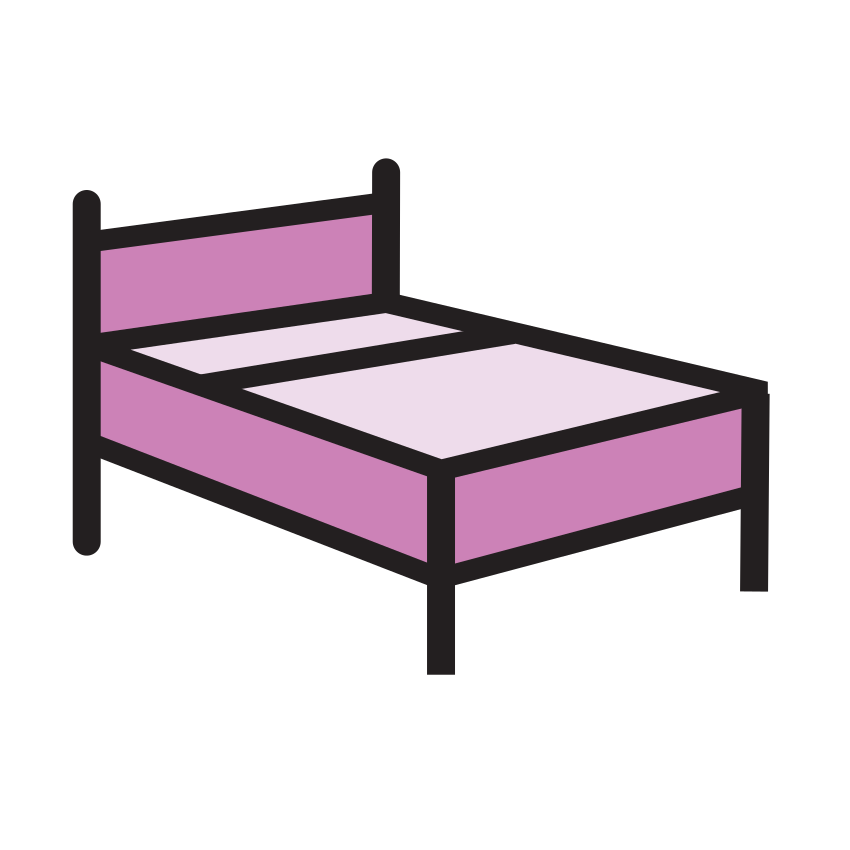
Fifteen pictures into three bins by their first sound: sun, soap, sock, seal and six for /s/; moon, map, mouse, milk and monkey for /m/; ball, bed, boat, bug and book for /b/. The three sounds are chosen to be maximally different — a fricative, a nasal and a stop — so the contrast is easy at the point where phoneme awareness is first taking hold.
What to listen for
Watch for sorting by picture rather than by sound. A child who puts milk with moon because both are things at breakfast has categorised semantically, which is a perfectly good skill and not this one. Notice whether the /b/ bin is easiest — stops are usually the most salient at the start of a word, and a child accurate on /b/ and shaky on /m/ is on a normal path rather than a worrying one.
Carrying it home
Sound games do not need materials. Ask what sound milk starts with while pouring it, or which of two things starts with /b/. Doing it three times a day beats a weekly worksheet by a wide margin.
What's in this activity
- /s/
- /m/
- /b/
Questions
- What grades is this for?
- Kindergarten and first grade, where beginning-sound identification is an expected early literacy skill.
- Do I need an account?
- No, the whole board is free to play.
- Should I use letter names or sounds?
- Sounds. The task is hearing the phoneme, and letter names introduce a second layer that gets in the way at this stage.
Use this board with your caseload
With a free account, every correct, cued and incorrect mark is saved to the student and scored against their IEP goal, with the data written up for you. Assign it as home practice through the parent portal.
Track progress freeFree for SLPs. No card, no trial clock.