
When You Don't Understand: What to Say
- Game
- 5–12
- 10 pages · 10 min
10 moments when something is unclear. Choose what to say to get the information you need. Built for grades 5–12, it works in pull-out, push-in, or teletherapy, with 10 screens, in about 10 minutes. Skill tags on this board: social communication, self-advocacy, clarification, teens. Plays in the browser with no login; add students to score trials against IEP goals.
Quiz
When You Don't Understand: What to Say
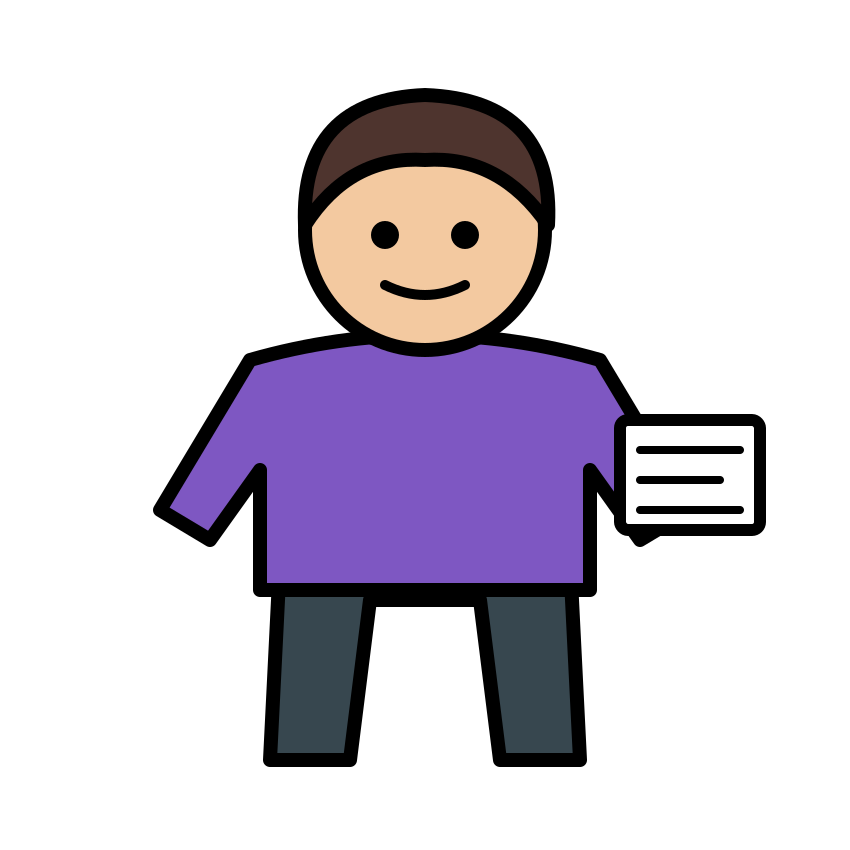
Your teacher talks fast and you miss the last part. What should you say?
Tap your answer.
Session summary (SOAP)
Stays on this screen. Nothing is saved or sent.
Mark a card Correct, Correct with cue or Incorrect and the summary writes itself here.
How to run it
After each answer, point out what makes the good question work: it says what part was missed, such as 'the last part' or 'the other two steps'. Practise saying each one aloud in a calm voice. Then set up a real moment in the session, giving a direction too fast on purpose, and see if the student asks.
Cueing ladder
Start at the top. Add support one step at a time.
- IndependentSet up the situation and wait for the student to respond on their own.Log as correct
- Nonverbal cueUse a look, a gesture or a point to the visual cue card.Log as cued
- Indirect promptAsk 'What could you say now?' or 'How do you think they feel?'Log as cued
- ModelShow what to say or do, then run the moment again so the student can try it.Log as cued
Adjust it
Give a script or two choices of what to say, and practise with you before a peer.
Role-play with a new partner, or add a twist the student has not planned for.
Matching IEP goal
Given school and community scenarios, Student will state a need or a plan clearly to the right person in 4 of 5 opportunities across 3 consecutive sessions, given no more than an indirect prompt.
Send it home through the parent portal →About this activity
Ten moments when something is unclear: a teacher who talks fast, a word a friend uses, three directions from a coach, a confusing worksheet, a quiet video, an announcement heard halfway. Each question offers one specific clarifying question and two common moves that do not help, like nodding along or guessing.
What to listen for
Notice whether the student chooses to nod or guess, and ask what makes asking hard: worry about looking silly, not knowing what to ask, or not noticing they missed something. A student who knows the right answer but never asks needs practice in real moments, not just on the quiz.
Carrying it home
At home, give a direction with a word your teen may not know, or say it quickly, and praise them for asking. Share a time you had to ask someone to repeat something, so it feels normal.
What's in this activity
- Your teacher talks fast and you miss the last part. What should you say?
- Could you repeat the last part please?
- Nod and hope it is fine
- Start talking to a friend
- A friend uses a word you have never heard. What could you say?
- Pretend you know it
- Wait. What does that word mean?
- Laugh and change the subject
- Your coach gives three directions at once and you remember one. What should you say?
- Do the one step you remember
- Walk away
- Can you say the other two steps again?
- The directions on a worksheet are confusing. What should you say to the teacher?
- I read the directions but I'm not sure what to do first. Can you explain?
- This makes no sense.
- Turn it in blank
- You get lost halfway to a room in a new building. What could you ask?
- Keep walking around
- I got to the stairs. Where do I go from here?
- Go home
- Your teacher says it is due next class and you are not sure which day that is. What should you ask?
- Guess a day
- Say nothing and ask a friend next week
- Is that due Tuesday or Wednesday?
- A classmate tells a joke you don't get. What could you say?
- I don't get it. Can you explain?
- Laugh loudly anyway
- Tell them it is not funny
- A video in class is too quiet to hear. What could you ask?
- Put your head down
- Could you turn the volume up a little?
- Talk over the video
- You hear only part of a long announcement. What could you ask a teacher?
- Ignore it
- Spread what you think you heard
- Did they say practice is canceled? What time?
- Your manager at a summer job uses a word you don't know. What should you say?
- Sorry. What does that mean? I want to do it right.
- Nod and guess
- Ask to go home
Questions
- Why are specific questions better?
- 'Could you repeat the last part?' tells the speaker exactly what to say again. 'What?' makes them repeat everything or guess.
- Is it rude to ask someone to repeat?
- No. A short, polite question is expected, and guessing often causes bigger problems later.
Use this board with your caseload
With a free account, every correct, cued and incorrect mark is saved to the student and scored against their IEP goal, with the data written up for you. Assign it as home practice through the parent portal.
Track progress freeFree for SLPs. No card, no trial clock.