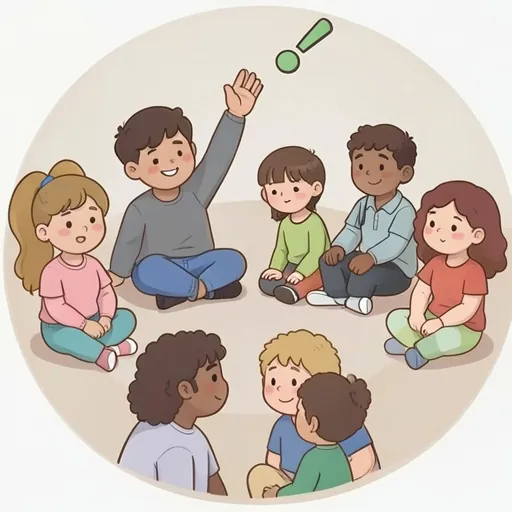
Class Discussion Moves: Agree, Disagree and Build On
- Game
- 6–12
- 1 page · 10 min
Ten discussion moves for seminars, group work, and class debate: agree with a reason, disagree respectfully, ask for an example, build on an idea, ask for clarification, raise a counterpoint, invite a quiet voice, change your mind, ask for evidence, and sum up. Show each card, model the line, and then run a short real discussion on a school topic so the student uses two moves. Score each move as independent, cued, or modeled in your own data.
Talk about it
Class Discussion Moves: Agree, Disagree and Build On
10 cards — tap to deal
How to run it
Read each card or situation aloud, let the student respond, and then ask why. When they find a good answer, role-play it out loud before the next card so the line is practiced, not only chosen. Work through the set once for a baseline, then return to the cards that were hard. Keep your own data: mark independent, cued, or modeled trials in your session notes.
Cueing ladder
Start at the top. Add support one step at a time.
- IndependentPresent the situation and wait 5 seconds of quiet before helping.Log as correct
- HintPoint to the part of the situation that matters, or ask what the other person might think.Log as cued
- Two choicesGive two possible lines and let the student pick one and say it.Log as cued
- ModelModel a full line the student can repeat, then try the next card.Log as cued
Adjust it
Practice three moves only, with you as the discussion partner, and give the first word as a cue.
Run a five-minute discussion and have the student use four different moves without the cards.
Matching IEP goal
Given a class discussion, Student will use an expected discussion move (agreeing with a reason, disagreeing respectfully, asking for clarification, or building on an idea) in 8 of 10 opportunities across 3 consecutive sessions, given no more than an indirect cue.
Send it home through the parent portal →About this activity
Class Discussion Moves: Agree, Disagree and Build On is a speaking cards board for middle and high school students. Ten discussion moves for seminars, group work, and class debate: agree with a reason, disagree respectfully, ask for an example, build on an idea, ask for clarification, raise a counterpoint, invite a quiet voice, change your mind, ask for evidence, and sum up. Show each card, model the line, and then run a short real discussion on a school topic so the student uses two moves. Score each move as independent, cued, or modeled in your own data. It is a sentence-level board for a short therapy block or a station; you score the responses yourself.
What to listen for
Listen for moves used at the right moment in a real discussion, not only read from the card. Disagreeing respectfully and asking for clarification are often the hardest, so note those. A move with a reason or evidence attached is stronger than a bare line. Examples on this board include I agree with that because it matches the article., I see it differently., Can you give an example?, To build on what she said., and I am not sure I follow. Can you explain?.
Carrying it home
Teachers can post two discussion moves on the board before a seminar and nod when a student uses one. At home, try one at dinner: I see it differently, or can you give an example? Praise any use.
What's in this activity
- I see it differently.
- Can you give an example?
- To build on what she said.
- So we agree on this part.
Questions
- Who is this for?
- This board is for middle and high school students working on the skill in the description, with items such as I agree with that because it matches the article., I see it differently., and Can you give an example?.
- What comes next?
- Use two moves in a real class discussion, then review with the join-the-discussion quiz in this batch. To make it easier: practice three moves only, with you as the discussion partner, and give the first word as a cue.
- Is it free?
- Yes. It plays free in the browser with no login. An account adds session data, goal scoring, and assignment to a student.
Use this board with your caseload
With a free account, every correct, cued and incorrect mark is saved to the student and scored against their IEP goal, with the data written up for you. Assign it as home practice through the parent portal.
Track progress freeFree for SLPs. No card, no trial clock.