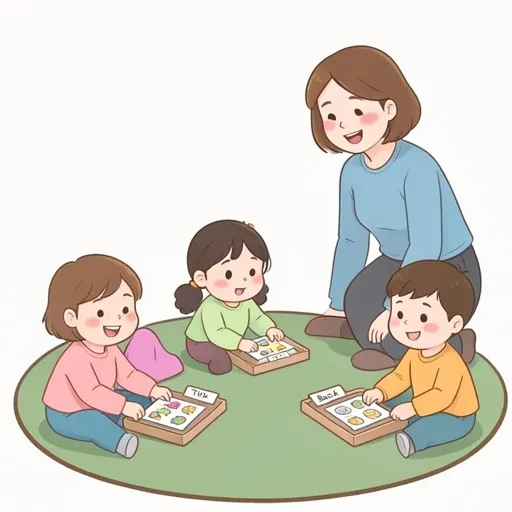
Tip or Back? Sort Tongue-Tip and Tongue-Back Words
- Sorting
- PreK–2
- 1 page · 8 min
Sixteen pictured words to sort by where the first sound is made: the tongue tip (toe, two, door, doll, tooth, ten, dish, tie) or the back of the tongue (cow, cup, comb, goose, car, cake, cage, game). For velar fronting, where /k/ and /g/ come out as /t/ and /d/. The student says each word, feels where the tongue went, and then places the card. Words in each group have no sound from the other group, so the contrast stays clean. Score each spoken word as independent, cued, or modeled in your own data.
Sort it
Tip or Back? Sort Tongue-Tip and Tongue-Back Words
Say the word, then put it in the right basket.
drop here
drop here
How to run it
Name the task first, then present one picture at a time. The student says the word on every card, then makes the choice. Model the sound once with a mirror if the first tries miss, and praise the try before the result. Work through the set once for a baseline, then return to the cards that were hard. Keep your own data: mark independent, cued, or modeled trials in your session notes.
Cueing ladder
Start at the top. Add support one step at a time.
- IndependentThe student says the target in the word, sentence, or answer on their turn before you help. Wait 3 seconds.Log as correct
- Visual cuePoint to your mouth, or show the mouth shape for the target sound, before the student tries again.Log as cued
- Verbal modelSay the word or sentence; the student says it right after you.Log as cued
- Placement cueKeep the tongue tip down behind the bottom teeth and lift the back of the tongue for /k/ and /g/; use a mirror to check the tip stays down.Log as cued
Adjust it
Sort only four cards from each group, and model each word with a mirror first.
Say each back-sound word in a short phrase such as my cup or a big goose before placing it.
Matching IEP goal
Given pictured words, Student will produce /k/ and /g/ at the back of the mouth, without fronting, in 8 of 10 opportunities across 3 consecutive sessions, given no more than a visual cue.
Send it home through the parent portal →About this activity
Tip or Back? Sort Tongue-Tip and Tongue-Back Words is a group sort board for preschool through grade 2 students. Sixteen pictured words to sort by where the first sound is made: the tongue tip (toe, two, door, doll, tooth, ten, dish, tie) or the back of the tongue (cow, cup, comb, goose, car, cake, cage, game). For velar fronting, where /k/ and /g/ come out as /t/ and /d/. The student says each word, feels where the tongue went, and then places the card. Words in each group have no sound from the other group, so the contrast stays clean. Score each spoken word as independent, cued, or modeled in your own data. It is a word-level board for a short therapy block or a station; you score the responses yourself.
What to listen for
Listen to the first sound of each spoken word, not only where the card lands. A child who fronts will often sort correctly by ear but still say tow for cow. Check that the tongue tip stays down behind the bottom teeth on the back-sound words, and note which vowel after /k/ or /g/ makes it easier. Examples on this board include toe, two, door, cow, and cup.
Carrying it home
Play a quick kitchen game: hold up a cup, a cookie, or a car and ask your child to say it with the sound made at the back, like a little cough. Then name a toe or a door and notice the tip of the tongue. Praise every try, and keep it to two or three minutes.
What's in this activity
- Tongue tip sounds
- Tongue back sounds
Questions
- Who is this for?
- This board is for preschool through grade 2 students working on the skill in the description, with items such as toe, two, and door.
- What comes next?
- Move to the /k/ and /g/ story and conversation sets in this batch once words are steady. To make it easier: sort only four cards from each group, and model each word with a mirror first.
- Is it free?
- Yes. It plays free in the browser with no login. An account adds session data, goal scoring, and assignment to a student.
Use this board with your caseload
With a free account, every correct, cued and incorrect mark is saved to the student and scored against their IEP goal, with the data written up for you. Assign it as home practice through the parent portal.
Track progress freeFree for SLPs. No card, no trial clock.