Sonido de la che — Drag Drop
Articulation · Grades K–2 · 1 card · Spanish-language material


How to run it
Ask for the sound on its own and then the word before each move, which doubles the productions on a board with few items. Because the five mix initial and medial position, use this as a quick check on both rather than as the main practice — the flashcard deck is where the repetitions are. Chocolate and chaqueta first, since initial position is usually easier.
Cueing ladder
Start at the top. Add support one step at a time.
- IndependentThe student says the word on their turn before moving. Wait 3 seconds.Log as correct
- Visual cuePoint to your mouth, or show the mouth picture for /ch/, before the student tries again.Log as cued
- Verbal modelSay the word; the student says it right after you.Log as cued
- Placement cueTongue tip and front of the tongue up on the ridge behind your top teeth. Hold, then let go with a short burst of air: 'cha'.Log as cued
Adjust it
Drop to syllables ('cha' and 'cho'), or use fewer cards.
Put each word in a short carrier phrase with no /ch/ in it.
Matching IEP goal
Given picture cards, Student will produce /ch/ in Spanish in single words in 8 of 10 opportunities across 3 consecutive sessions, given no more than a visual cue.
Send it home through the parent portal →About this activity
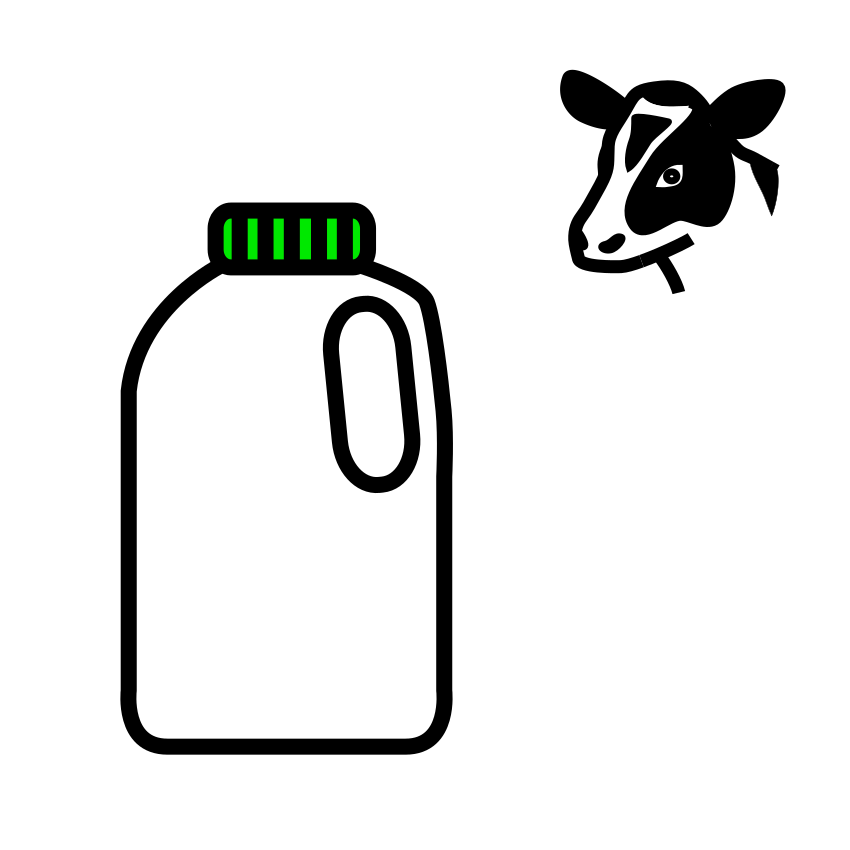
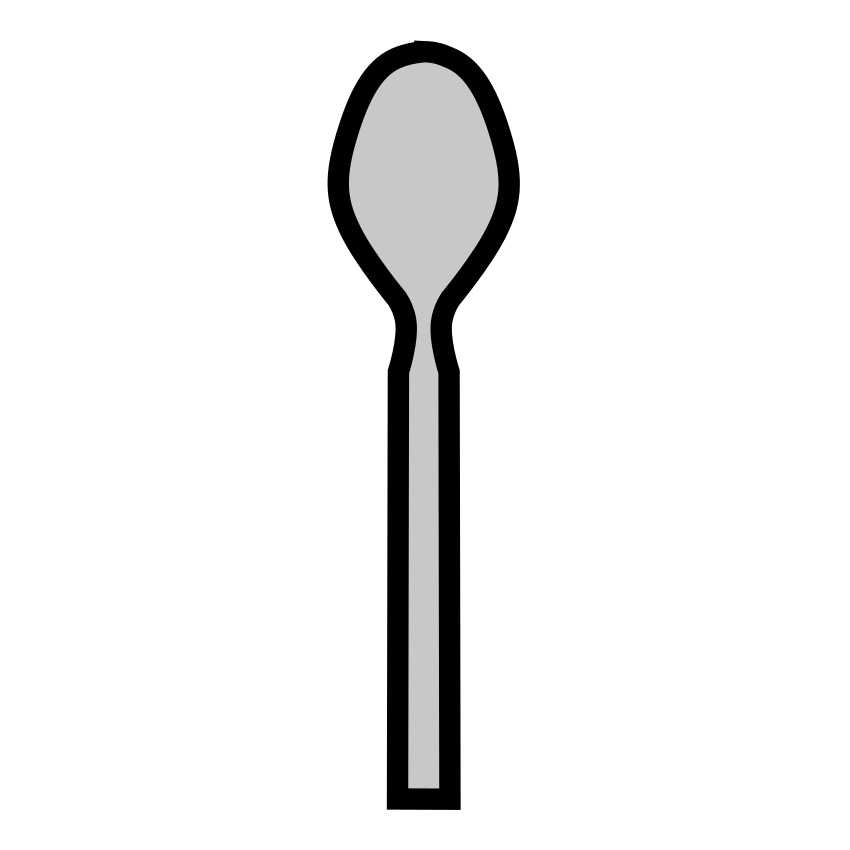
A five-word drag-and-drop round — chocolate, chaqueta, coche, leche, cuchara — derived from the fourteen-word che deck. Two of the five have the sound at the start and three in the middle, which makes it a small mixed sample rather than a focused set.
What to listen for
Watch the sound while the hands are busy. A che that is accurate on a flashcard and slips during a drag is not yet automatic, and divided attention is much closer to conversation than a clean repetition. Notice cuchara, where the target sits in the middle of a three-syllable word and is the hardest of the five.
Carrying it home
Moving objects while naming them works with anything. Leche and cuchara are both in the kitchen, which makes them easy to name at a real moment rather than on a card.
What's in this activity
- chocolate
- chaqueta
- coche
- leche
- cuchara
Questions
- How is this different from the flashcards?
- It uses five of the fourteen words and asks the student to place each one. It is a quick check, not the main practice.
- Do I need an account?
- No, it plays free in the browser.
- Which should I use first?
- The flashcard deck, which has fourteen words across both positions. Use this afterwards as a second pass under divided attention.
Use this board with your caseload
With a free account, every correct, cued and incorrect mark is saved to the student and scored against their IEP goal, with the data written up for you. Assign it as home practice through the parent portal.
Track progress freeFree for SLPs. No card, no trial clock.