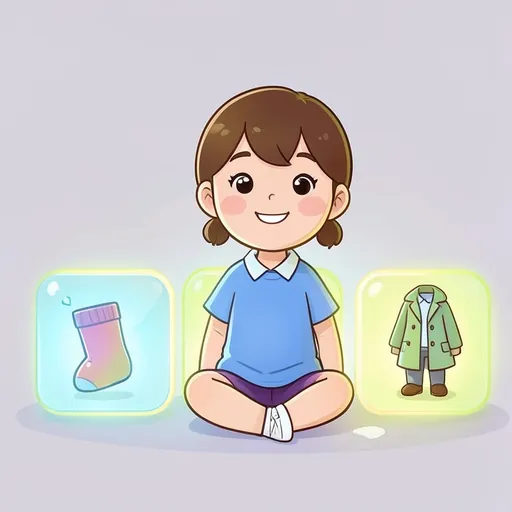
Remember It: Clothing
- Game
- PreK–3
- 1 page · 8 min
A sequence memory game with 9 clothing words. Watch the tiles light up, then tap them back in order: hat, shirt, sock, shoe, coat and more. Built for grades PreK–3, it works in pull-out, push-in, or teletherapy, in about 8 minutes. Sample stimuli: hat, shirt, sock, shoe, coat, and more. Plays in the browser with no login; add students to score trials against IEP goals.
Remember it
Remember It: Clothing
Watch carefully…
How to run it
Name the tiles together before the first round so every picture has a word attached. Encourage the student to say the items quietly as the sequence plays: rehearsing aloud is a strategy worth teaching, not cheating. After a few rounds, ask what helped. It works as a short warm-up or as a break between harder tasks, eight rounds at a time.
Cueing ladder
Start at the top. Add support one step at a time.
- IndependentLet the student watch the sequence, then tap it back in order. Wait 5 seconds before helping.Log as correct
- Name itOn the next sequence, have the student name each tile aloud as it lights up.Log as cued
- Chunk itSay the sequence in two short chunks with a pause between, and let the student repeat each chunk.Log as cued
- ModelTap the sequence back yourself while naming each tile, then the student tries the next one.Log as cued
Adjust it
Name every tile together before you start, and use the words the student knows best first.
Ask the student to say the whole sequence aloud before tapping, or to say it in reverse order.
Matching IEP goal
Given a sequence of clothing pictures shown one at a time, Student will tap back a sequence of 4 items in the order shown in 8 of 10 opportunities across 3 consecutive sessions, given no more than one verbal rehearsal prompt.
Send it home through the parent portal →About this activity
9 clothing tiles for a sequence memory game: hat, shirt, sock, shoe, coat, dress, glove, scarf and jacket. The board shows a short sequence, hides it, and the student taps the tiles back in the same order. A correct recall makes the next sequence one longer, up to six; a miss makes it one shorter, down to two. Clothing words also support a getting-dressed sequence, a routine many students practise at home.
What to listen for
Note the longest sequence the student recalls and whether it holds across sessions. Separate order errors, the right tiles in the wrong order, from item errors, a tile that was never shown. Notice whether naming the tiles aloud, such as hat, shirt, sock, makes the sequence longer.
Carrying it home
Play a kitchen-table version: line up three or four real things or pictures, such as shoe, coat and dress, point to them in an order and let your child copy the order. Take turns being the one who sets the sequence, and add one more item when it gets easy.
What's in this activity
- hat
- shirt
- sock
- shoe
- coat
- dress
- glove
- scarf
- jacket
Questions
- Who is this for?
- Students in pre-K through grade 3 working on working memory, following sequences or naming clothing words, and as a quick warm-up for any student.
- Why does the sequence get longer and shorter?
- The board adjusts the length after every answer, so each round stays challenging without becoming frustrating, and your notes show the length the student managed.
Use this board with your caseload
With a free account, every correct, cued and incorrect mark is saved to the student and scored against their IEP goal, with the data written up for you. Assign it as home practice through the parent portal.
Track progress freeFree for SLPs. No card, no trial clock.