Perspective-Taking Narrative
Retell a story from a different character's point of view.
Session summary (SOAP)
Stays on this screen. Nothing is saved or sent.
Mark a card Correct, Correct with cue or Incorrect and the summary writes itself here.
How to run it
Do the fairy tales before the real ones. A known story removes the recall load so all the effort goes into the perspective shift, and it is much safer emotionally than starting with a playground argument. The four real-life prompts at the end are the point of the board; a student who can voice the giant and cannot voice the other child in an argument has the skill and not the application.
Cueing ladder
Start at the top. Add support one step at a time.
- IndependentSet up the situation and wait for the student to respond on their own.Log as correct
- Nonverbal cueUse a look, a gesture or a point to the visual cue card.Log as cued
- Indirect promptAsk 'What could you say now?' or 'How do you think they feel?'Log as cued
- ModelShow what to say or do, then run the moment again so the student can try it.Log as cued
Adjust it
Give a script or two choices of what to say, and practise with you before a peer.
Role-play with a new partner, or add a twist the student has not planned for.
Matching IEP goal
Given social scenarios, Student will identify another person's thoughts or feelings and give a reason in 8 of 10 opportunities across 3 consecutive sessions, given no more than an indirect prompt.
Send it home through the parent portal →About this activity
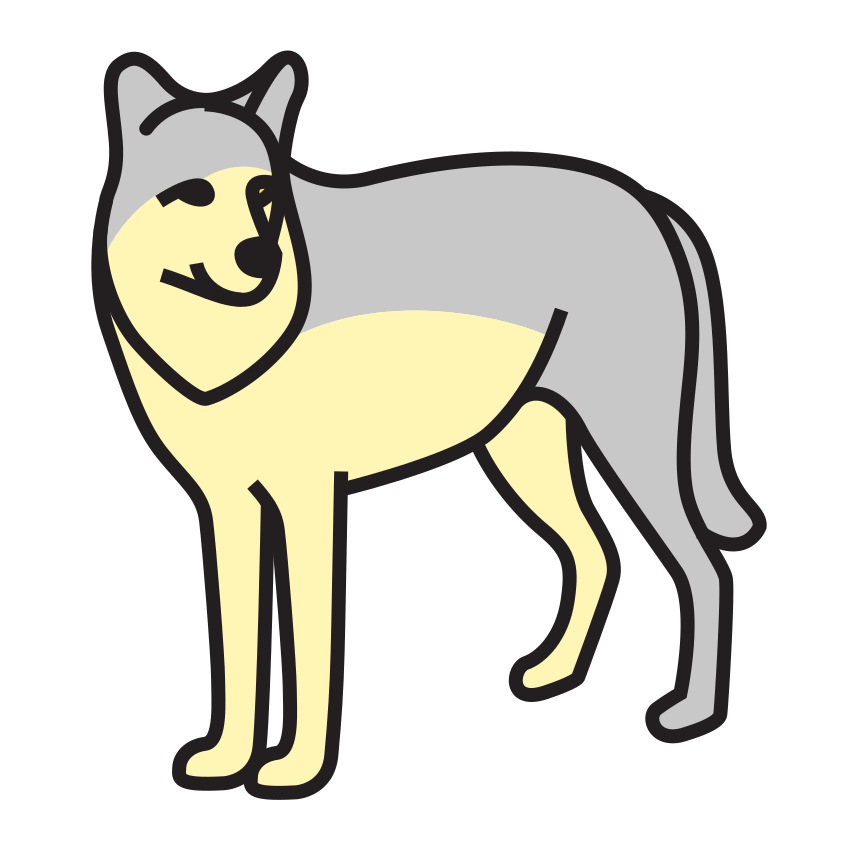
Ten retells from another character's point of view: Little Red Riding Hood from the wolf's; The Three Little Pigs from the wolf's; Goldilocks from Baby Bear's; Jack and the Beanstalk from the giant's; The Tortoise and the Hare from the hare's; and then four real ones — a playground argument from the other kid's, your morning from your parent's, a school day from the bus driver's.
What to listen for
Listen for the other character's motivation, not just their actions. A wolf's retell that describes the same events from a different position is a change of camera angle; one that says why the wolf did it is perspective-taking. Watch the parent and bus driver prompts, where students frequently produce a character who exists only in relation to them rather than one with their own day.
Carrying it home
Any argument at home is material. Asking a child to say what the other person was probably thinking, once everyone has calmed down, is the same task with the stakes attached.
What's in this activity
- Retell Little Red Riding Hood from the wolf's point of view.
- Retell The Three Little Pigs from the wolf's point of view.
- Retell Goldilocks from Baby Bear's point of view.
- Retell Cinderella from a stepsister's point of view.
- Retell Jack and the Beanstalk from the giant's point of view.
- Retell The Tortoise and the Hare from the hare's point of view.
- Retell a playground argument from the other kid's point of view.
- Retell your morning from your parent's point of view.
- Retell a school day from the bus driver's point of view.
- Retell a lost-dog story from the dog's point of view.
Questions
- What grades is this for?
- Fourth through seventh, and it works for older students with the real-life prompts.
- Is it free?
- Yes, all ten prompts play with no login.
- Why start with fairy tales?
- Because the story is already known, so all the effort goes into the perspective shift rather than into remembering the plot. It is also emotionally safer than starting with a real conflict.
Use this board with your caseload
With a free account, every correct, cued and incorrect mark is saved to the student and scored against their IEP goal, with the data written up for you. Assign it as home practice through the parent portal.
Track progress freeFree for SLPs. No card, no trial clock.