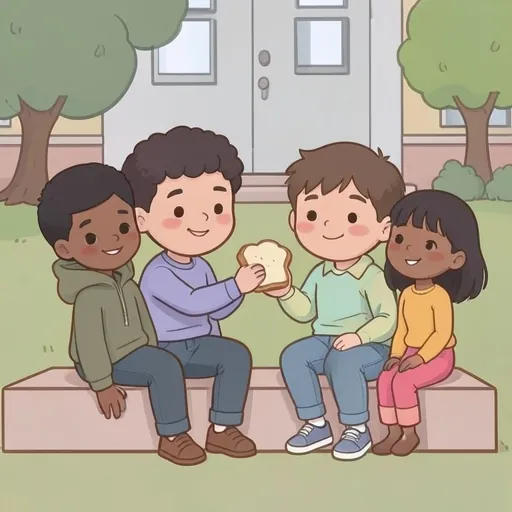
Good Friend or Not So Much? Sort Friendship Signals
- Sorting
- 6–10
- 1 page · 10 min
Twelve things a peer might do to sort into good friend signals (saves you a seat, keeps a secret you shared, says sorry after an argument) and not so much (only talks to you when they need homework, shares your secret in the group chat, laughs when others make fun of you). One signal does not settle it, so after each card ask what else the student would want to know. Score each sort and reason as independent, cued, or modeled in your own data.
Sort it
Good Friend or Not So Much? Sort Friendship Signals
Say the word, then put it in the right basket.
drop here
drop here
How to run it
Name the two piles first and sort one card of each kind together. Then read each card aloud, let the student place it, and ask for the reason before you respond. A card placed in the other pile with a sound reason is worth a conversation, not a correction. Work through the set once for a baseline, then return to the cards that were hard. Keep your own data: mark independent, cued, or modeled trials in your session notes.
Cueing ladder
Start at the top. Add support one step at a time.
- IndependentPresent the situation and wait 5 seconds of quiet before helping.Log as correct
- HintPoint to the part of the situation that matters, or ask what the other person might think.Log as cued
- Two choicesGive two possible lines and let the student pick one and say it.Log as cued
- ModelModel a full line the student can repeat, then try the next card.Log as cued
Adjust it
Sort six cards and ask one question for each: would this feel good or not good?
Have the student say what they could say or do next for each not so much card, including who they could talk to.
Matching IEP goal
Given a described peer behavior, Student will judge whether it shows a reciprocal friendship and explain why in 8 of 10 opportunities across 3 consecutive sessions, given no more than an indirect cue.
Send it home through the parent portal →About this activity
Good Friend or Not So Much? Sort Friendship Signals is a sorting board for grade 6 through grade 10 students. Twelve things a peer might do to sort into good friend signals (saves you a seat, keeps a secret you shared, says sorry after an argument) and not so much (only talks to you when they need homework, shares your secret in the group chat, laughs when others make fun of you). One signal does not settle it, so after each card ask what else the student would want to know. Score each sort and reason as independent, cued, or modeled in your own data. It suits a short therapy block, a small group or a station; you score the responses yourself.
What to listen for
Listen for reasoning about patterns: once could be a bad day, and every week is a signal. Some students are targets for being used, so the homework, money and secret cards deserve the most time. If a card matches something real and unsafe, follow your school's reporting steps. Cards here include keeps a secret you shared and asks you for money every week.
Carrying it home
Ask your teen what they look for in a friend and share one thing you look for. If a friendship sounds one-sided, ask what happens when they say no to that person. The answer usually tells you both what you need to know.
What's in this activity
- Good friend signals
- Not so much
Questions
- Who is this for?
- This board is for grade 6 through grade 10 students working on social skills, with items such as saves you a seat at lunch, and only talks to you when they need homework.
- What comes next?
- Move to the peer pressure quiz, then to reading the tone in a group chat. To make it easier: sort six cards and ask one question for each: would this feel good or not good?
- Is it free?
- Yes. It plays free in the browser with no login. An account adds session data, goal scoring, and assignment to a student.
Use this board with your caseload
With a free account, every correct, cued and incorrect mark is saved to the student and scored against their IEP goal, with the data written up for you. Assign it as home practice through the parent portal.
Track progress freeFree for SLPs. No card, no trial clock.