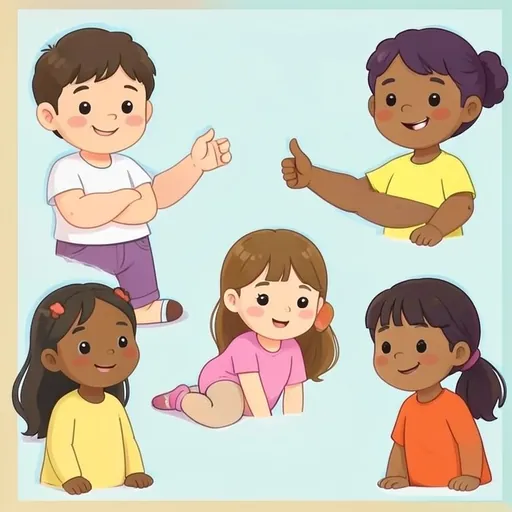
What Is Their Body Saying? Body Language Quiz
- Game
- 2–5
- 10 pages · 10 min
Ten described moments to read body language from: crossed arms, leaning in, a finger to the lips, foot tapping, stepping back, dropped shoulders, a wave, covered ears, a thumbs up, and a turned-away body. Read each moment, let the student choose what the body may be saying, and then ask what clue told them. Body language is a clue, not a certainty, so accept a reasonable answer with a good reason. Score each item as independent, cued, or modeled in your own data.
Quiz
What Is Their Body Saying? Body Language Quiz

Your friend crosses their arms and looks away while you talk. What might they feel?
Tap your answer.
Session summary (SOAP)
Stays on this screen. Nothing is saved or sent.
Mark a card Correct, Correct with cue or Incorrect and the summary writes itself here.
How to run it
Read each card or situation aloud, let the student respond, and then ask why. When they find a good answer, role-play it out loud before the next card so the line is practiced, not only chosen. Work through the set once for a baseline, then return to the cards that were hard. Keep your own data: mark independent, cued, or modeled trials in your session notes.
Cueing ladder
Start at the top. Add support one step at a time.
- IndependentPresent the situation and wait 5 seconds of quiet before helping.Log as correct
- HintPoint to the part of the situation that matters, or ask what the other person might think.Log as cued
- Two choicesGive two possible lines and let the student pick one and say it.Log as cued
- ModelModel a full line the student can repeat, then try the next card.Log as cued
Adjust it
Act out each body clue yourself and give two choices instead of three.
Ask the student to say what they would do next after reading the body clue.
Matching IEP goal
Given a described or pictured situation, Student will state what a person's body language may mean and name one supporting clue in 8 of 10 opportunities across 3 consecutive sessions, given no more than an indirect cue.
Send it home through the parent portal →About this activity
What Is Their Body Saying? Body Language Quiz is a quiz board for grade 2 through grade 5 students. Ten described moments to read body language from: crossed arms, leaning in, a finger to the lips, foot tapping, stepping back, dropped shoulders, a wave, covered ears, a thumbs up, and a turned-away body. Read each moment, let the student choose what the body may be saying, and then ask what clue told them. Body language is a clue, not a certainty, so accept a reasonable answer with a good reason. Score each item as independent, cued, or modeled in your own data. It is a sentence-level board for a short therapy block or a station; you score the responses yourself.
What to listen for
Listen for the clue the student names: arms, face, distance, or where the body is turned. The goal asks for the meaning and one clue, so a right choice with no reason is a cued answer. Body language looks different for different people, so do not require eye contact, and talk about other possible meanings when a student picks a reasonable second choice. Examples on this board include your friend crosses their arms and looks away while you talk. what might they feel, and a classmate leans in and nods while you tell a story. what does that show.
Carrying it home
When you watch a show together, pause on a character and ask what their body is saying and what clue tells you. Try it at the park too: is that child excited or tired, and how can you tell? A minute or two is plenty.
What's in this activity
- Your friend crosses their arms and looks away while you talk. What might they feel?
- Upset or not ready to talk
- Excited to hear more
- Sleepy and ready for bed
- A classmate leans in and nods while you tell a story. What does that show?
- They want you to stop
- They are interested and listening
- They are confused
- Your teacher puts a finger to her lips and looks at the class. What does she want?
- Everyone to talk louder
- Someone to answer a question
- Everyone to be quiet
- A boy keeps looking at the clock and tapping his foot. What might he feel?
- Calm and relaxed
- Bored or in a hurry
- Proud of his work
- Your friend steps back when you stand very close. What can you do?
- Step closer again
- Give them a little more space
- Stop talking to them
- A girl's shoulders drop and she looks down after a game. What might she feel?
- Sad or disappointed
- Surprised and happy
- Angry at the teacher
- Someone waves at you from across the lunchroom. What does that mean?
- They want you to leave
- They are saying hello
- They are telling you to hurry
- A classmate covers their ears during a loud game. What might they need?
- A quieter space or a break
- A louder game
- A new partner
- Your friend gives you a thumbs up after you share. What does that mean?
- They did not like it
- They want a turn
- They think you did well
- A student turns their body away and keeps reading when you say hi. What might it mean?
- They want to play right now
- They are busy or want to keep reading
- They did not hear you at all
Questions
- Who is this for?
- This board is for grade 2 through grade 5 students working on the skill in the description, with items such as your friend crosses their arms and looks away while you talk. what might they feel, and a classmate leans in and nods while you tell a story. what does that show.
- What comes next?
- Carry the same question into real moments at recess or in a show, then into the K-5 body language speaking cards. To make it easier: act out each body clue yourself and give two choices instead of three.
- Is it free?
- Yes. It plays free in the browser with no login. An account adds session data, goal scoring, and assignment to a student.
Use this board with your caseload
With a free account, every correct, cued and incorrect mark is saved to the student and scored against their IEP goal, with the data written up for you. Assign it as home practice through the parent portal.
Track progress freeFree for SLPs. No card, no trial clock.