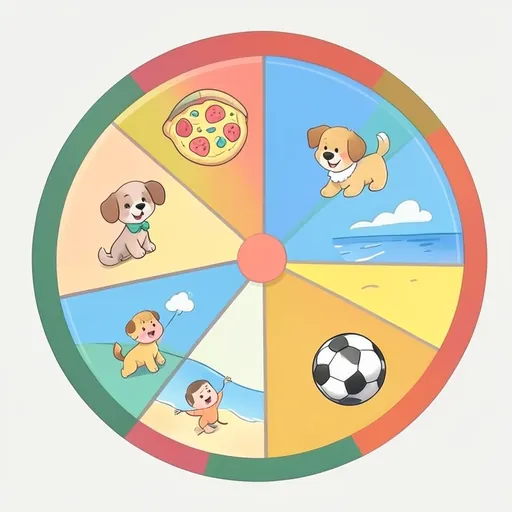
Conversation Starter Wheel
- Game
- 2–5
- 1 page · 10 min
Spin for one of eight conversation topics, then start and keep a conversation going. Practice only, never scored. Built for grades 2–5, it works in pull-out, push-in, or teletherapy, in about 10 minutes. Sample stimuli: pets, weekends, food, vacations, games, and more. Plays in the browser with no login; add students to score trials against IEP goals.
Spin the wheel
Conversation Starter Wheel
Spin to pick a word
Grown-ups: point to the picture and say the word slowly, then let your child try.
How to run it
Spin, then have the student start with a question rather than a statement: if it lands on pets, do you have a pet? Answer briefly and wait, so they have to ask a follow-up. Aim for three or four turns on one topic before spinning again. The wheel records nothing and never scores, so track turns and follow-up questions yourself if they are part of a goal.
Cueing ladder
Start at the top. Add support one step at a time.
- IndependentSet up the situation and wait for the student to respond on their own.Log as correct
- Nonverbal cueUse a look, a gesture or a point to the visual cue card.Log as cued
- Indirect promptAsk 'What could you say now?' or 'How do you think they feel?'Log as cued
- ModelShow what to say or do, then run the moment again so the student can try it.Log as cued
Adjust it
Give a script or two choices of what to say, and practise with you before a peer.
Role-play with a new partner, or add a twist the student has not planned for.
Matching IEP goal
In structured role-plays, Student will use the target conversation skill appropriately in 4 of 5 opportunities across 3 consecutive sessions, given no more than a nonverbal cue.
Send it home through the parent portal →About this activity
A wheel of eight conversation topics: pets, weekends, food, vacations, games, movies, jobs and holidays. The student spins, then has to open a conversation on whatever it lands on, ask a follow-up question, and keep the topic going for a few turns. The spin takes away the choice of topic, which is often where a student stalls before they have said anything.
What to listen for
Count the turns a student can keep on a topic before switching to their own interest. Notice whether they ask anything back or only answer. Listen for whether a follow-up is connected, such as asking which food you like best after you said pizza, or is a new question unrelated to what you just said. Weekends and vacations need a short story told in order, which makes them the hardest topics on the wheel.
Carrying it home
Write the eight topics on slips of paper and pull one out at dinner. Everyone takes a turn starting the talk. The rule is one question back before changing topic. Keep it light and short, two or three topics a meal, and let the child pick the next slip if they asked a good follow-up.
What's in this activity
- pets
- weekends
- food
- vacations
- games
- movies
- jobs
- holidays
Questions
- Who is this for?
- Second through fifth grade students working on starting conversations, asking follow-up questions and staying on topic, including students who talk at length about one favorite subject.
- Is it free?
- Yes. The wheel plays free in the browser with no login.
- Why does the wheel not record correct answers?
- Where it lands is chance, not a response from the student. The skill is the conversation afterward, which only the adult in the room can judge.
Use this board with your caseload
With a free account, every correct, cued and incorrect mark is saved to the student and scored against their IEP goal, with the data written up for you. Assign it as home practice through the parent portal.
Track progress freeFree for SLPs. No card, no trial clock.