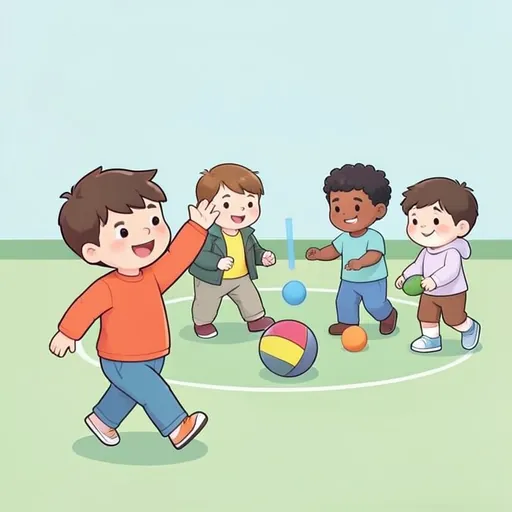
¿Cómo me uno al juego? Saludos y amistad en el recreo
- Game
- K–3
- 6 páginas · 7 min
Seis momentos de la escuela para saludar, unirse a un juego, agradecer y despedirse. Pensada para grados K–3, sirve en sesión presencial o por teleterapia, con 6 tarjetas o pantallas, en unos 7 minutos. Enfoca habilidades sociales, español. Se abre en el navegador sin crear cuenta.
¿Cómo me uno al juego? Saludos y amistad en el recreo
Llegas al salón en la mañana y ves a tu amigo Luis. ¿Qué le puedes decir?
Toca tu respuesta.
Session summary (SOAP)
Stays on this screen. Nothing is saved or sent.
Mark a card Correct, Correct with cue or Incorrect and the summary writes itself here.
Cómo usarla
Read each moment aloud in Spanish and let the student answer in their own words before choosing. Then role-play it: you play Luis, the new classmate or the team captain. Practice the exact phrases until they feel easy. The last item, a full team, is worth extra practice, because a calm next step keeps the door open for the next game.
Cueing ladder
Start at the top. Add support one step at a time.
- IndependentSet up the situation and wait for the student to respond on their own.Log as correct
- Nonverbal cueUse a look, a gesture or a point to the visual cue card.Log as cued
- Indirect promptAsk 'What could you say now?' or 'What might they be thinking?'Log as cued
- ModelShow what to say or do, then run the moment again so the student can try it.Log as cued
Adjust it
Practice one phrase at a time with you before trying it with a peer.
Role-play with a new partner, or add a twist such as a full team the student has not planned for.
Matching IEP goal
During structured role-plays, Student will greet, ask to join, thank or say goodbye with a fitting phrase in 8 of 10 opportunities across 3 consecutive sessions, given no more than a nonverbal cue.
Send it home through the parent portal →About this activity
Six school moments written in Spanish: greeting a friend in the morning, asking to join a ball game at recess, inviting a new classmate who is alone on a bench, thanking a classmate for a pencil, saying goodbye, and what to do when a team is full. The student chooses what to say or do. The phrases are the ones children actually use, like ¿Puedo jugar con ustedes? and ¡Nos vemos mañana!
What to listen for
Notice which phrases the student already has and which are new. Many students know hola but not how to ask to join a game. Listen for natural intonation on questions. Notice how the student handles the full team item; disappointment is understandable, and having a plan like asking about the next round helps it pass.
Carrying it home
At home, families can practice greetings and goodbyes in Spanish with relatives and neighbors, and talk about how to ask to join a game at the park. Role-playing with siblings or cousins works well. Speaking Spanish at home is a strength, and these social phrases transfer to friendships in any language.
What's in this activity
- Llegas al salón en la mañana y ves a tu amigo Luis. ¿Qué le puedes decir?
- «Dame tu goma.»
- «¡Buenos días! ¿Cómo estás?»
- «¿Por qué llegaste tarde?»
- Unos niños juegan a la pelota en el recreo y tú quieres jugar. ¿Qué puedes decir?
- «¿Puedo jugar con ustedes?»
- «Esa pelota es mía.»
- «Ustedes juegan muy mal.»
- Una niña nueva está sola en una banca. ¿Qué podrías hacer?
- Contarles a todos que es nueva
- Mirarla y no decir nada
- Acercarte y decirle «¡Hola! ¿Quieres jugar?»
- Tu compañero te prestó su lápiz. ¿Qué le dices?
- «Gracias.»
- «Este lápiz es feo.»
- «Ya no lo quiero.»
- Se acabó el recreo y te despides de tus amigos. ¿Qué puedes decir?
- «¿Me das tu jugo?»
- «¡Nos vemos mañana!»
- «Hoy no jugué.»
- Quieres jugar pero te dicen que el equipo ya está completo. ¿Qué puedes hacer?
- Preguntar si puedes jugar en la próxima ronda
- Quitarles la pelota
- Gritarles que son malos
Questions
- Who is this for?
- Spanish-speaking and bilingual students in kindergarten through third grade working on social skills, greetings and joining play (habilidades sociales).
- Can I change the items?
- Yes. Open it in the Activity Studio, edit or add items and keep the same board, or switch it to another template that fits the content.
- Is it free?
- Yes. It plays free in the browser with no login. An account adds session data, goal scoring and assignment to a student.
Usa este tablero con tu caseload
Con una cuenta gratis, cada acierto, pista o error se guarda en el estudiante y se califica contra su meta del IEP, con el informe hecho por ti. Asígnalo como práctica en casa por el portal de padres.
Sigue el progreso gratisGratis para SLP. Sin tarjeta, sin límite de prueba.