
We Want Different Things: Find a Fair Plan
- Game
- 2–5
- 10 pages · 10 min
Ten moments where two friends want different things: tag or soccer, the red marker, the window seat, who goes first, which book to read. The student picks the plan that is fair to both, then says it as an offer. More than one fair plan exists, so accept another answer with a good reason. Score each offer as independent, cued, or modeled in your own data.
Quiz
We Want Different Things: Find a Fair Plan
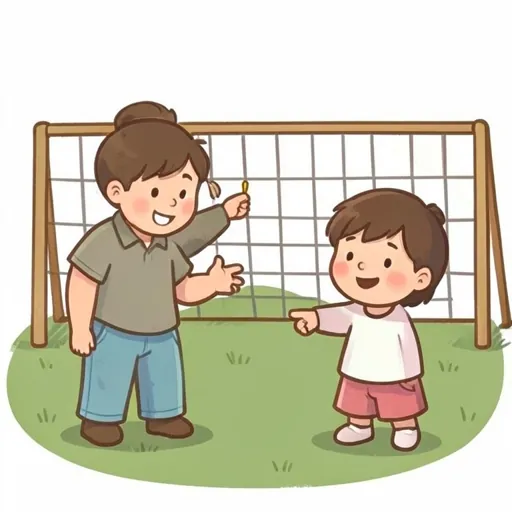
You want to play tag. Your friend wants soccer. What is a fair plan?
Tap your answer.
Session summary (SOAP)
Stays on this screen. Nothing is saved or sent.
Mark a card Correct, Correct with cue or Incorrect and the summary writes itself here.
How to run it
Read each situation aloud, let the student choose, and then ask why. When they find a line worth trying, role-play it out loud before the next card so the words are practiced, not only chosen. Accept a different answer when the reason is sound. Work through the set once for a baseline, then return to the cards that were hard. Keep your own data: mark independent, cued, or modeled trials in your session notes.
Cueing ladder
Start at the top. Add support one step at a time.
- IndependentPresent the situation and wait 5 seconds of quiet before helping.Log as correct
- HintPoint to the part of the situation that matters, or ask what the other person might think.Log as cued
- Two choicesGive two possible lines and let the student pick one and say it.Log as cued
- ModelModel a full line the student can repeat, then try the next card.Log as cued
Adjust it
Teach one plan only, first yours and then mine, and give two choices on each card.
Cover the choices and have the student make up a fair plan, then a second different one.
Matching IEP goal
Given a peer disagreement about a choice, Student will state a solution that considers both people in 8 of 10 opportunities across 3 consecutive sessions, given no more than an indirect cue.
Send it home through the parent portal →About this activity
We Want Different Things: Find a Fair Plan is a quiz board for grade 2 through grade 5 students. Ten moments where two friends want different things: tag or soccer, the red marker, the window seat, who goes first, which book to read. The student picks the plan that is fair to both, then says it as an offer. More than one fair plan exists, so accept another answer with a good reason. Score each offer as independent, cued, or modeled in your own data. It suits a short therapy block, a small group or a station; you score the responses yourself.
What to listen for
Listen for a plan that names what each person gets, such as yours first and mine after. A student who always gives in is not compromising either, so check that their own wish is in the plan sometimes. Ask what the friend wants before choosing, which is the perspective step. Items include you want to play tag and your friend wants soccer, and there is one swing and three kids.
Carrying it home
When two people at home want different things, such as which show to watch, ask your child to offer a fair plan before you solve it. First this and then that, taking turns and mixing both ideas are the three easy ones. Follow through on the plan so it is worth offering.
What's in this activity
- You want to play tag. Your friend wants soccer. What is a fair plan?
- Play tag first and soccer after
- Play tag or I will not play
- Walk away and play alone
- You both want the last red marker. What can you say?
- I had it first so it is mine
- You use it first and then I will
- Then nobody gets it
- Two friends both want the window seat on the bus. What is fair?
- The faster one pushes in
- Both stand in the aisle
- One sits there now and one on the ride home
- Your group cannot agree on a poster color. What can you try?
- Use both colors on the poster
- Pick your color when nobody is looking
- Stop working on the poster
- You and your friend both want to go first. What is a fair way?
- Say you called it in your head
- Play rock paper scissors for it
- Keep arguing until recess ends
- Your friend wants to read a space book. You want a dog book. What can you say?
- Space books are boring
- I will not read with you
- Let us read yours today and mine tomorrow
- There is one swing and three kids. What is a fair plan?
- Count to twenty and then switch
- The biggest kid stays on
- Hold the swing so nobody can use it
- You want to build a tower. Your partner wants to build a bridge. What can you say?
- My idea is better than yours
- What if we build a tower with a bridge?
- Fine. Do it all by yourself
- Your friend picked the game yesterday. Today you both want to pick. What is fair?
- Your friend picks every day
- Nobody plays a game today
- It is my turn to pick today
- You want quiet. Your friend wants to chat at lunch. What can you say?
- Can we talk for a bit and then have quiet time?
- Stop talking to me
- Move to a table alone without a word
Questions
- Who is this for?
- This board is for grade 2 through grade 5 students working on social skills, with items such as you want to play tag. your friend wants soccer. what is a fair plan, and you both want the last red marker. what can you say.
- What comes next?
- Use a fair plan in a real partner task, then try the group project problems board. To make it easier: teach one plan only, first yours and then mine, and give two choices on each card.
- Is it free?
- Yes. It plays free in the browser with no login. An account adds session data, goal scoring, and assignment to a student.
Use this board with your caseload
With a free account, every correct, cued and incorrect mark is saved to the student and scored against their IEP goal, with the data written up for you. Assign it as home practice through the parent portal.
Track progress freeFree for SLPs. No card, no trial clock.