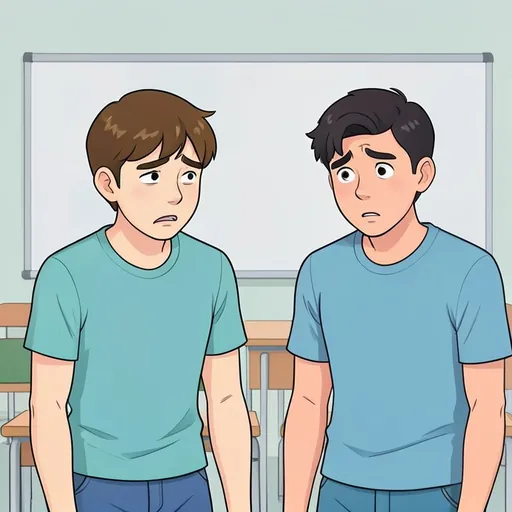
Two Sides of a Disagreement
- Game
- 6–9
- 12 pages · 12 min
Twelve secondary social conflicts where two people have different information or feelings: credit for an idea, sitting alone at lunch, a delayed text, a late bus and a benching, a joke that landed wrong, an offer to edit, being called on twice, a group-chat plan, returned headphones, a substitute's seating chart, not clapping during notes, and a club acceptance post. The best answer names both sides or what each person might know, not a verdict that one person is simply mean. After each item, have the student say one sentence from each person's point of view.
Quiz
Two Sides of a Disagreement
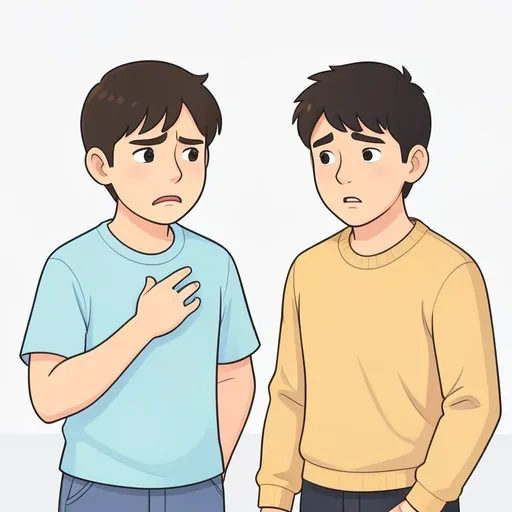
Jordan used Maya's idea in the presentation and didn't say it was hers. Maya is upset. Jordan says they were just combining notes. Why might both feel that way?
Tap your answer.
Session summary (SOAP)
Stays on this screen. Nothing is saved or sent.
Mark a card Correct, Correct with cue or Incorrect and the summary writes itself here.
How to run it
Read or play the question, then let the student choose an answer. If they miss, ask them to explain the choice and try again. Do not show the written listening passage until you have already played it twice. Work through the set once for a baseline, then return to the cards that were hard. Keep your own data: mark independent, cued, or modeled trials in your session notes. If the student is tired, do a shorter set rather than rushing the last cards.
Cueing ladder
Start at the top. Add support one step at a time.
- IndependentPresent the situation and wait 5 seconds of quiet before helping.Log as correct
- HintPoint to the part of the picture that matters, or ask what the other person might think.Log as cued
- Two choicesGive two possible lines and let the student pick one and say it.Log as cued
- ModelModel a full line the student can repeat, then try the next card.Log as cued
Adjust it
Act out the situation with puppets or role-play and offer the first few words of a line.
Ask the student to give a reason for the line they chose, or to try a second option.
Matching IEP goal
Given a pictured social situation, Student will choose or produce an expected comment or request in 8 of 10 opportunities across 3 consecutive sessions, given no more than an indirect cue.
Send it home through the parent portal →About this activity
Two Sides of a Disagreement is a English quiz board for middle and high school students. Twelve secondary social conflicts where two people have different information or feelings: credit for an idea, sitting alone at lunch, a delayed text, a late bus and a benching, a joke that landed wrong, an offer to edit, being called on twice, a group-chat plan, returned headphones, a substitute's seating chart, not clapping during notes, and a club acceptance post. The best answer names both sides or what each person might know, not a verdict that one person is simply mean. After each item, have the student say one sentence from each person's point of view. Targets on the board include Two Sides of a Disagreement. Use it in a short therapy block or a station, and score the productions or responses yourself.
What to listen for
Listen and watch for the skill named in the description, not only whether the student finishes the board. Notice whether errors cluster on certain items (for example the first card) or show up across the set. For pictured items, confirm the student is talking about the picture you meant. If a listening item is missed, replay it once before you show the words. Write down the cue level that made the next try successful so you can fade it next session.
Carrying it home
Pick three items from the board and use them in a real routine at home or in class the same day. An adult can show the picture, wait, and then model the word or sentence if needed. Keep practice short and specific: one or two minutes on one card is enough. If you send the link home, tell families the board is a practice tool, not a test, and that the SLP will interpret the responses.
What's in this activity
- Jordan used Maya's idea in the presentation and didn't say it was hers. Maya is upset. Jordan says they were just combining notes. Why might both feel that way?
- Maya wanted credit; Jordan thought they were sharing work.
- Maya is overreacting and Jordan is right.
- Jordan stole it on purpose and Maya should stay quiet.
- Neither of them has a reason to be upset.
- Luis sits alone at lunch. His classmates think he wants space. Luis thinks no one wants him there. What might help?
- They should leave him alone forever.
- Someone could ask once if he wants to sit together and accept either answer.
- They should tell him he's being weird.
- Luis should just move to their table without asking.
- Ava didn't text back for a day. Her friend thinks Ava is mad. Ava's phone was in a locker during a rehearsal. What's a fair first step?
- The friend should post about it.
- The friend should stop talking to Ava.
- The friend could ask "Is everything okay? I didn't hear from you."
- Ava should be expected to answer instantly every time.
- Coach benches Sam for being late. Sam thinks it's unfair because the bus was late. The coach only saw Sam arrive last. What does each person know?
- The coach already knows about the bus.
- Sam was late on purpose.
- Both people have the same information.
- Sam knows about the bus; the coach only saw the late arrival.
- Priya laughs at a joke about a classmate. The classmate thinks Priya is being mean. Priya thought the joke was about a TV show. What got missed?
- They may be talking about two different things and it needs a check-in.
- Priya was definitely being mean.
- The classmate should just get over it.
- Jokes never need to be explained.
- Dante offered to edit the essay. His partner thinks Dante is saying the essay is bad. Dante meant he had time to help. How can they clear it up?
- The partner should throw the draft away.
- Dante can say "I like the draft. I just have time to help tighten it."
- Dante should stop offering help.
- They should ignore the tension.
- Ms. Ortiz calls on Riley twice in a row. Riley thinks the teacher is picking on them. Ms. Ortiz thought Riley looked ready. What's another possible reason?
- The teacher is definitely picking on Riley.
- Riley should refuse to talk in class now.
- The teacher may have read Riley's face as ready not as a target.
- No other reason is possible.
- A group chat leaves Kai out of a weekend plan. Kai thinks it was on purpose. The others added people from a different class thread. What might be true?
- Kai should assume the worst and drop them.
- The group definitely did it on purpose.
- Kai shouldn't care about being left out.
- It could be a messy thread but Kai's feeling still makes sense to name.
- Elena borrowed headphones and returned them to the wrong backpack. The owner thinks someone stole them. What does each person believe right now?
- The owner thinks they were taken; Elena thinks she put them back.
- Elena stole them.
- The owner is lying.
- No one is confused — someone is just mean.
- A substitute changes the seating chart. Students think it's a punishment. The substitute was given a blank seating chart and made one quickly. What's a fair read?
- The sub is definitely punishing them.
- The sub may be solving a practical problem not punishing the class.
- Students should refuse to move.
- Seating charts are always a punishment.
- Noah doesn't clap after a classmate's presentation. The presenter thinks Noah hated it. Noah was taking notes. What could the presenter check before deciding?
- The presenter should assume Noah hated it.
- Noah should never take notes.
- The presenter could notice Noah was writing and ask later if they had a question.
- Clapping is the only way to show respect.
- Two friends want the same after-school club. One gets in. The other thinks the friend is gloating by posting a photo. The friend just wanted to share good news. How might both be true?
- The friend is definitely gloating.
- The one who didn't get in shouldn't feel anything.
- No one should post anything ever.
- Sharing good news and feeling left out can both be real at the same time.
Questions
- Who is this for?
- This board is for middle and high school students working on the skills in the description, including Two Sides of a Disagreement.
- Is it free?
- Yes. It plays free in the browser with no login. An account adds session data, goal scoring, and assignment to a student.
- Can I change the items?
- Yes. Copy the activity to your library or rebuild the list in Activity Studio with the same template. Keep the same target and grade band so the pictures and wording still fit.
Use this board with your caseload
With a free account, every correct, cued and incorrect mark is saved to the student and scored against their IEP goal, with the data written up for you. Assign it as home practice through the parent portal.
Track progress freeFree for SLPs. No card, no trial clock.