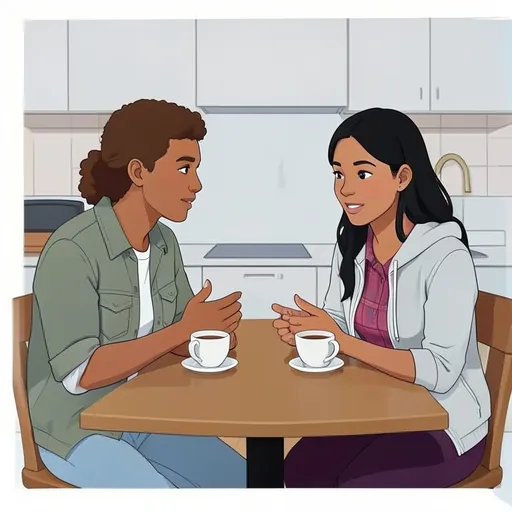
Making It Clear: Adult Conversations
- Game
- 11–12
- 10 pages · 10 min
10 adult situations where something was unclear: at the pharmacy, at work, at the bank. Pick the best way to ask and check. Built for grades 11–12, it works in pull-out, push-in, or teletherapy, with 10 screens, in about 10 minutes. Skill tags on this board: self-advocacy, conversation repair, transition. Plays in the browser with no login; add students to score trials against IEP goals.
Quiz
Making It Clear: Adult Conversations
The pharmacist explains your dose too fast. What could you say?
Tap your answer.
Session summary (SOAP)
Stays on this screen. Nothing is saved or sent.
Mark a card Correct, Correct with cue or Incorrect and the summary writes itself here.
How to run it
Role-play each situation after the student chooses: you are the pharmacist or the boss, and the student says the line aloud. Then say the unclear message again and let the student use a different kind of request. Talk about which request fits which problem.
Cueing ladder
Start at the top. Add support one step at a time.
- IndependentSet up the situation and wait for the student to respond on their own.Log as correct
- Nonverbal cueUse a look, a gesture or a point to the visual cue card.Log as cued
- Indirect promptAsk 'What could you say now?' or 'How do you think they feel?'Log as cued
- ModelShow what to say or do, then run the moment again so the student can try it.Log as cued
Adjust it
Give a script or two choices of what to say, and practise with you before a peer.
Role-play with a new partner, or add a twist the student has not planned for.
Matching IEP goal
Given school and community scenarios, Student will state a need or a plan clearly to the right person in 4 of 5 opportunities across 3 consecutive sessions, given no more than an indirect prompt.
Send it home through the parent portal →About this activity
Ten adult situations where a message was unclear: a pharmacist explaining a dose too fast, a boss giving five tasks at once, a bank clerk using unfamiliar words, a form you need more time to read, an abbreviation like EOD. The student picks the best way to ask: a repeat, a slower pace, another explanation, more time, one step at a time or a check-back ('So I turn left at the bank. Right?').
What to listen for
Notice whether the student chooses a request that matches the problem: a repeat when they did not hear, another explanation when they did not understand, one step at a time when there was too much. Watch for nodding-and-leaving answers, which often reflect real habits worth working on.
Carrying it home
Practise at real appointments and errands: before a call or visit, agree on one clarifying question the young adult will ask, and talk afterward about how it went.
What's in this activity
- The pharmacist explains your dose too fast. What could you say?
- Could you say that again more slowly
- Nod and leave
- Guess the dose
- Your boss gives five tasks at once. What could you ask?
- Do them in any order
- Can we go one step at a time
- Say nothing and hope
- The bank clerk uses words you do not know. What could you ask?
- Pretend to understand
- Walk out
- Could you explain that another way
- You need more time to read a form. What could you say?
- Can I have a few minutes to read this
- Sign it quickly
- Throw it away
- After getting directions how can you check you understood?
- Thanks bye
- So I turn left at the bank. Right?
- That makes no sense
- A coworker says 'Do the usual.' You are new. What could you ask?
- Do nothing
- Ask a customer
- What does the usual include
- The doctor's office calls with a time you did not catch. What could you say?
- Sorry could you repeat the time
- Hang up
- Guess the time
- You did not hear the order at a noisy café. What could you do?
- Make any drink
- Ask them to repeat it
- Ignore the customer
- Instructions say 'Submit by EOD.' You are unsure. What could you ask?
- Submit next week
- Never submit
- Does EOD mean end of day
- Why ask instead of guessing?
- a wrong guess can cause a bigger problem
- asking is rude
- guessing is always right
Questions
- Who is this for?
- Older teens and adults, including transition students and adults after a brain injury who need to manage everyday conversations.
- Why check back?
- Saying back what you heard catches a misunderstanding before it becomes a problem.
Use this board with your caseload
With a free account, every correct, cued and incorrect mark is saved to the student and scored against their IEP goal, with the data written up for you. Assign it as home practice through the parent portal.
Track progress freeFree for SLPs. No card, no trial clock.