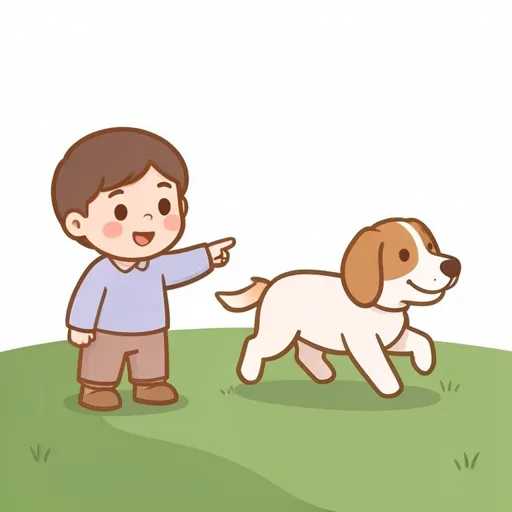
Subject-Verb Agreement Quiz
- Game
- 1–4
- 10 pages · 10 min
10 sentences: one dog runs, two dogs run. Choose the verb that matches the subject. Built for grades 1–4, it works in pull-out, push-in, or teletherapy, with 10 screens, in about 10 minutes. Sample stimuli: The cat ___ on the mat., The cats ___ on the mat., My brother ___ fast., The kids ___ to school., We ___ soccer after school., and more. Plays in the browser with no login; add students to score trials against IEP goals.
Quiz
Subject-Verb Agreement Quiz
The cat ___ on the mat.
Tap your answer.
Session summary (SOAP)
Stays on this screen. Nothing is saved or sent.
Mark a card Correct, Correct with cue or Incorrect and the summary writes itself here.
How to run it
Point to the subject in each sentence and ask 'One or more than one?' before choosing. Pair the first two questions, the cat and the cats, and read them together so the student hears the change move from the noun to the verb. Afterwards, ask for a new sentence about one person and then about a group.
Cueing ladder
Start at the top. Add support one step at a time.
- IndependentPresent the item and wait 5 seconds of quiet before helping.Log as correct
- HintStress the part of the sentence that changes, or point to the word ending.Log as cued
- Sentence starterSay the first half of the sentence and let the student finish it.Log as cued
- ModelSay the correct form in the whole sentence; the student repeats it.Log as cued
Adjust it
Give a sentence starter every time, and do fewer cards.
Ask for a new sentence of the student's own with the same form, with no card to lean on.
Matching IEP goal
Given sentence cards, Student will produce the target grammatical form in sentences in 8 of 10 opportunities across 3 consecutive sessions, given no more than an indirect cue.
Send it home through the parent portal →About this activity
Ten sentences where the verb has to match its subject. One cat sits; two cats sit. One brother runs; the kids walk. The choices are the verb with -s, the verb without it, and the -ing form with no helper, so the student has to listen for who is doing the action and how many.
What to listen for
Notice whether the student drops the -s on verbs with one subject (the dog bark), adds it with plural subjects (the kids walks), or picks the -ing form. Each points to a different next step: marking third person -s, noticing the plural noun, or using a helper verb such as is or are.
Carrying it home
Narrate what people and pets are doing: 'The dog sleeps. The birds sing.' Then switch one or many and let your child say the new sentence. Model the right form gently if they miss it.
What's in this activity
- The cat ___ on the mat.
- sits
- sit
- sitting
- The cats ___ on the mat.
- My brother ___ fast.
- run
- running
- runs
- The birds ___ in the morning.
- sing
- sings
- singing
- She ___ her teeth every night.
- brush
- brushes
- brushing
- The kids ___ to school.
- walks
- walking
- walk
- The dog ___ at the mail carrier.
- barks
- bark
- barking
- We ___ soccer after school.
- plays
- play
- playing
- The baby ___ a lot.
- laugh
- laughing
- laughs
- My friends ___ pizza.
- like
- likes
- liking
Questions
- Why is the -s on the verb for one person?
- In English the verb takes -s when the subject is he, she, it or one thing, such as the cat. With I, you, we, they or more than one, it does not.
- What about the -ing choice?
- The -ing form needs a helper like is or are. Without one, the sentence is incomplete, so it is never the answer here.
Use this board with your caseload
With a free account, every correct, cued and incorrect mark is saved to the student and scored against their IEP goal, with the data written up for you. Assign it as home practice through the parent portal.
Track progress freeFree for SLPs. No card, no trial clock.