Sound Position Sort — Initial/Final
Sort words by whether target sound is first or last.
Drop here
Drop here





0/8 sorted
How to run it
Say the word slowly and ask whether the sound comes at the beginning or the end. Stretch the target so its location is obvious — sssssun against busssss. Once sorting is reliable, ask for a word of the child's own for each bin, which is a generative task and much harder. Eight minutes covers the eight with the extension.
Cueing ladder
Start at the top. Add support one step at a time.
- IndependentThe student says the word and places it by where the sound is. Wait 3 seconds.Log as correct
- Stretch itSay the word again slowly, stretching the target sound.Log as cued
- Two choicesAsk 'Is it at the start or at the end?'Log as cued
- ModelSay the word, point to where the sound is, and have the student say it after you.Log as cued
Adjust it
Sort only start-of-word cards against end-of-word cards that are very different.
Add middle-of-word cards, then have the student say each word in a phrase.
Matching IEP goal
Given picture cards, Student will identify whether the target sound is at the start or the end of a word in 8 of 10 opportunities across 3 consecutive sessions, given no more than one repetition.
Send it home through the parent portal →About this activity
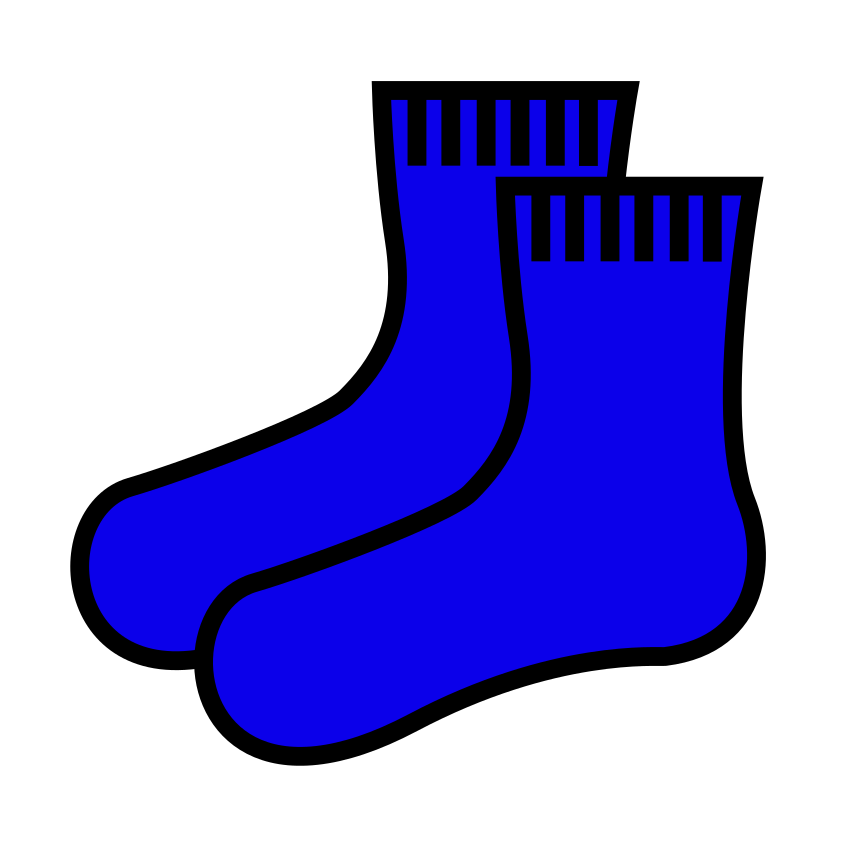
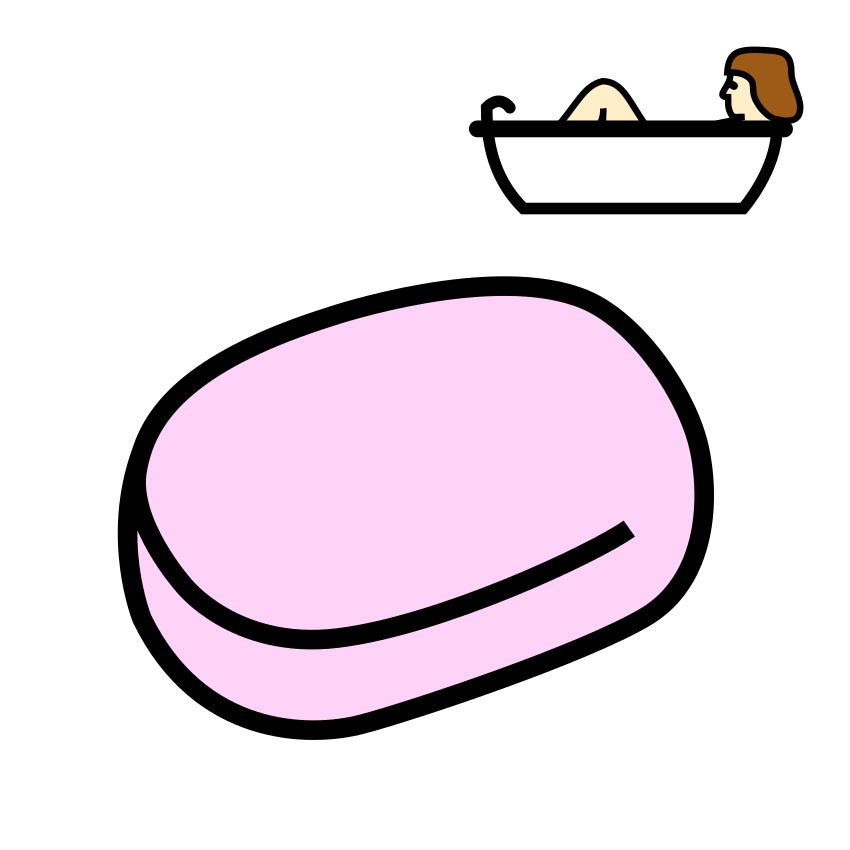
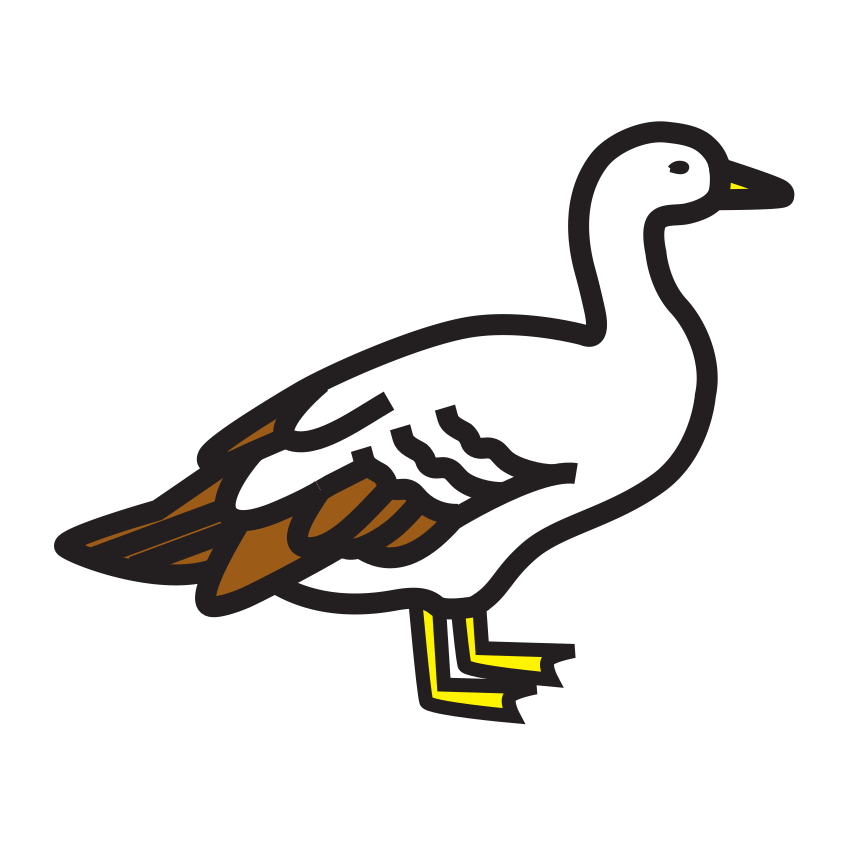
Eight words sorted by where the /s/ falls: sun, sock, seed and soap have it at the start; bus, kiss, goose and horse have it at the end. Position awareness is a small skill with a large payoff — a child who can say where a sound is in a word can be told which position they are working on, and can hear their own errors more precisely.
What to listen for
Watch whether the child confuses position with prominence. Initial sounds are louder and more salient, so a child may say every word starts with /s/ simply because that is where they notice it. Notice whether they can hear a final /s/ they do not produce — a child who omits the final sound but sorts correctly has the perception, which is a good position to be in.
Carrying it home
Asking whether a sound is at the start or the end of a word takes five seconds. Doing it with the child's own name is usually the most interesting place to begin.
What's in this activity
- Initial
- Final
Questions
- What ages is this for?
- Kindergarten through third grade, alongside articulation work on /s/.
- Is it free?
- Yes, all eight words play with no account.
- Why does position awareness matter?
- Because it lets a child follow instruction about their own speech. A child who can hear that the /s/ in bus is at the end can understand what you are asking them to fix.
Use this board with your caseload
With a free account, every correct, cued and incorrect mark is saved to the student and scored against their IEP goal, with the data written up for you. Assign it as home practice through the parent portal.
Track progress freeFree for SLPs. No card, no trial clock.