Articulation Bingo — /s/
Bingo game targeting /s/ in all positions.
Drop here
Drop here
Drop here
Drop here















0/25 sorted
How to run it
Call one position group at a time to start, then mix once the student is accurate across them. Ask for the word before the square gets covered, and for a phrase before the second square — the game will still be a game and you will have doubled the practice. The blends deserve their own pass: spoon and snake are a different motor task from sun, and a student who has initial /s/ can still lose it inside a cluster.
Cueing ladder
Start at the top. Add support one step at a time.
- IndependentThe student says the word on their turn before moving. Wait 3 seconds.Log as correct
- Visual cuePoint to your mouth, or show the mouth picture for /s/, before the student tries again.Log as cued
- Verbal modelSay the word; the student says it right after you.Log as cued
- Placement cueTeeth close together, tongue tip just behind your top teeth without touching them, sides of the tongue against your top side teeth. Send a thin stream of air down the middle.Log as cued
Adjust it
Drop to syllables ('sa' and 'see'), or use fewer cards.
Put each word in a short carrier phrase with no /s/ in it.
Matching IEP goal
Given picture cards, Student will produce /s/ in single words in 8 of 10 opportunities across 3 consecutive sessions, given no more than a visual cue.
Send it home through the parent portal →About this activity
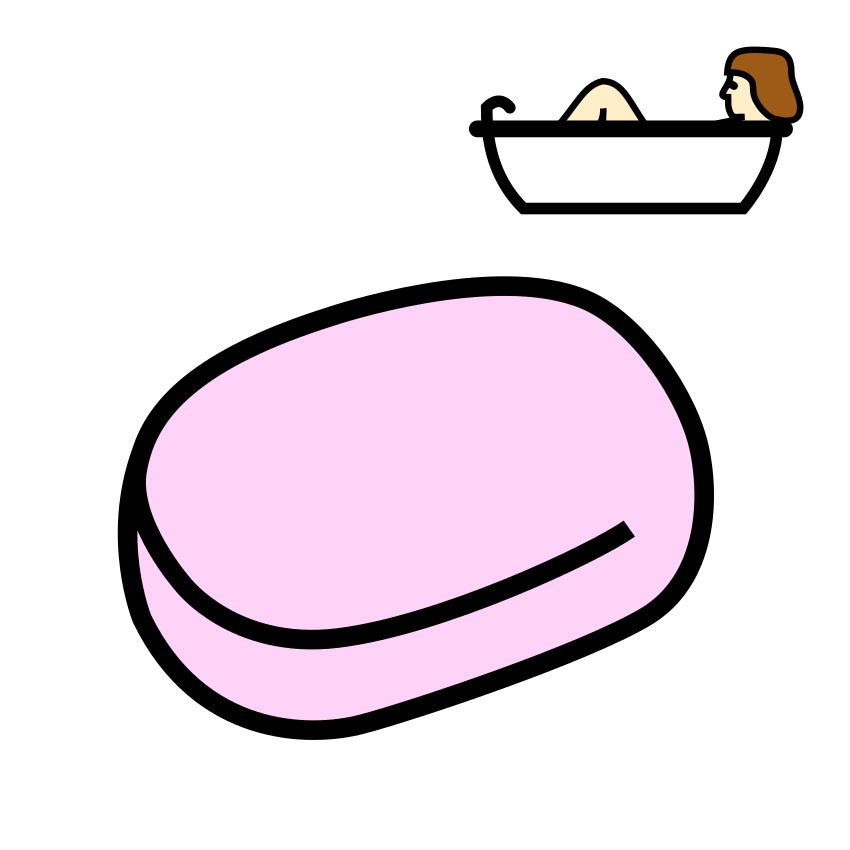
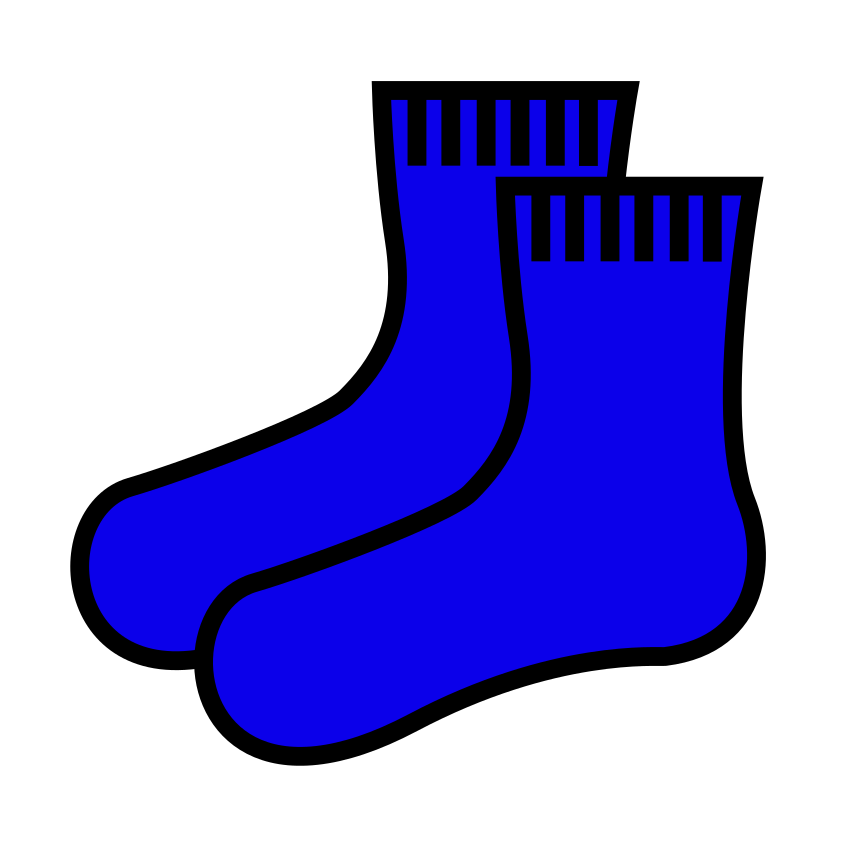
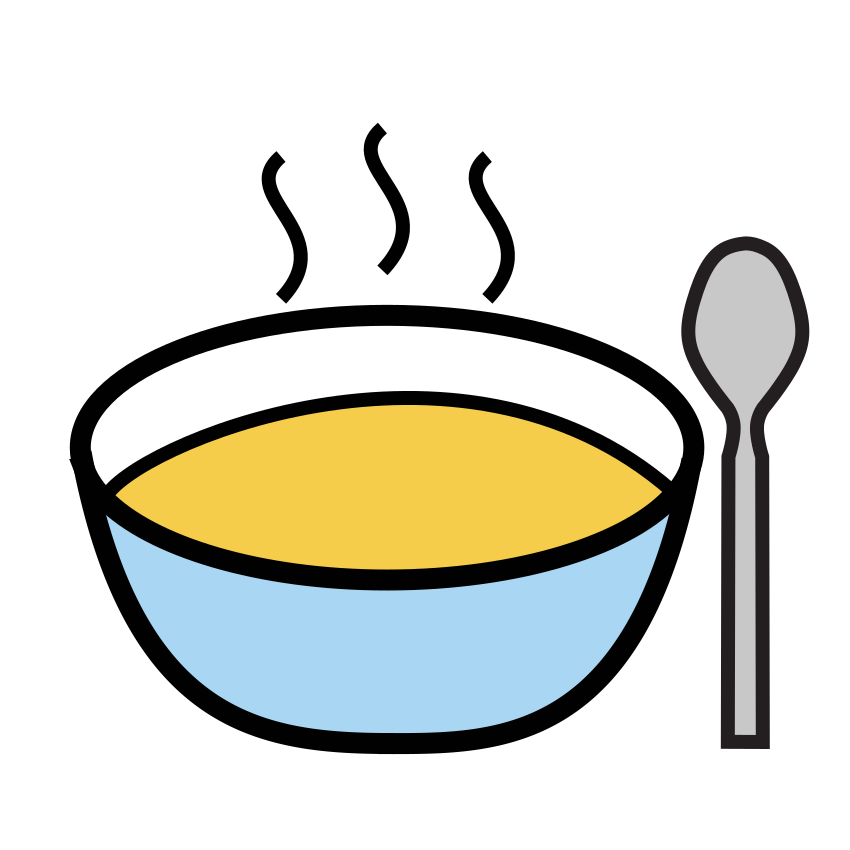
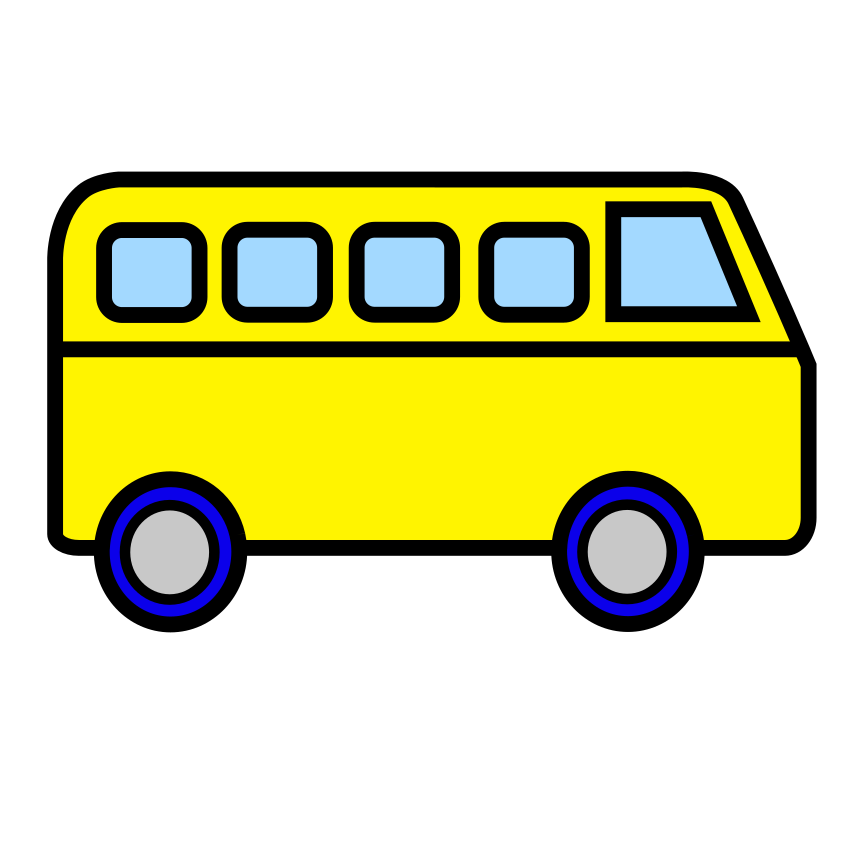
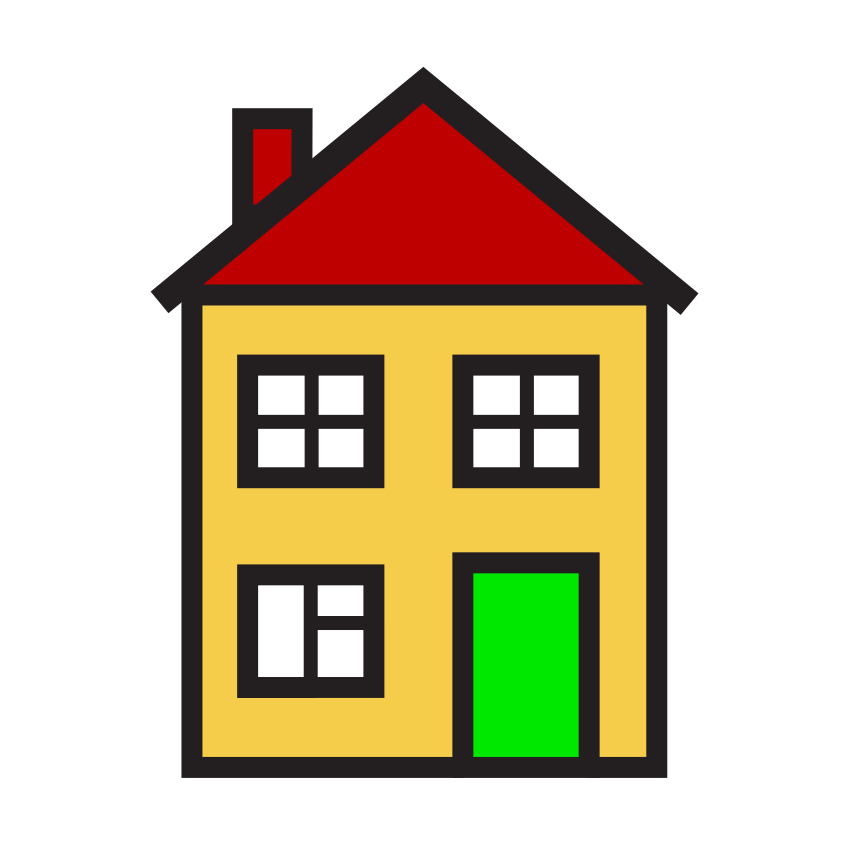
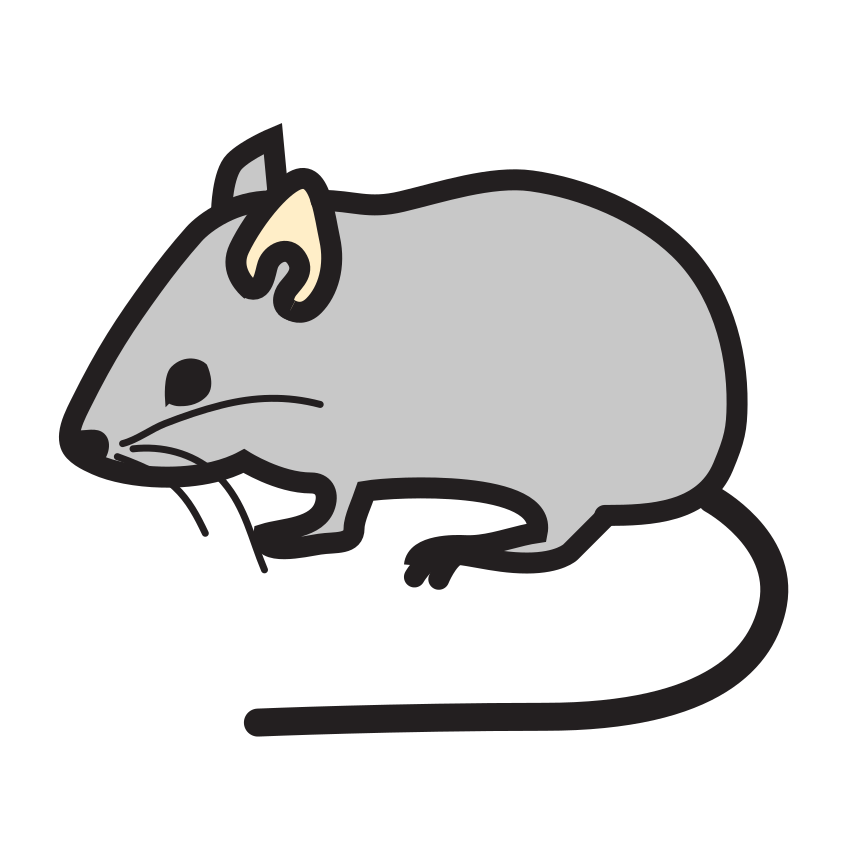
Twenty-five /s/ words arranged by position: sun, soap, sock, seal, six, sandwich, sister, soup, sing and sit for initial; bicycle, pencil, dinosaur, castle and messy for medial; bus, glass, house, mouse and grass for final; and spoon, star, sky, smile and snake for the blends. A full bingo board is a lot of repetitions disguised as a game, which is the honest reason it earns its place.
What to listen for
Listen for where the airstream goes. A frontal lisp shows up most clearly on the initial words — sun and six — while a lateral one is often easier to hear on the final words like glass and house, where the sound is held longer. Watch the blends separately: a student who says poon for spoon is simplifying the cluster, which is a phonological pattern rather than an articulation error and calls for different work.
Carrying it home
Give the family the position the student is already good at and one routine to notice it in. Bus, house and grass turn up on any walk to school, and hearing the sound produced correctly in the world is what carries the skill out of the room.
What's in this activity
- initial /s/
- medial /s/
- final /s/
- /s/ blend
Questions
- What ages is this for?
- Kindergarten through fourth grade, which covers most of the window in which /s/ is an active target.
- Is it free?
- Yes, the whole board plays with no account and no card.
- My student is fine on sun but says 'poon' for spoon. Why?
- That is cluster reduction, not an /s/ error — the sound is available and the cluster is not. It is worth targeting as its own pattern rather than as more /s/ practice.
Use this board with your caseload
With a free account, every correct, cued and incorrect mark is saved to the student and scored against their IEP goal, with the data written up for you. Assign it as home practice through the parent portal.
Track progress freeFree for SLPs. No card, no trial clock.