/s/ Initial Phrases
Two-to-four word phrases with word-initial /s/, the step between words and sentences.
Session summary (SOAP)
Stays on this screen. Nothing is saved or sent.
Mark a card Correct, Correct with cue or Incorrect and the summary writes itself here.
How to run it
Take the two-target phrases first — a silly sock, see the sun — before sit on the sofa, which has three. The work is holding the sound across a word boundary, which is exactly where single-word accuracy starts to slip. Say it, have the student repeat, then have them produce it without your model. Five minutes covers the ten.
Cueing ladder
Start at the top. Add support one step at a time.
- IndependentShow the card and let the student say the whole phrase on their own.Log as correct
- Visual cuePoint to your mouth, or show the mouth picture for /s/, before the student tries again.Log as cued
- Verbal modelSay the phrase with the /s/ word slightly stressed; the student repeats it.Log as cued
- Placement cueTeeth close together, tongue tip just behind your top teeth without touching them, sides of the tongue against your top side teeth. Send a thin stream of air down the middle.Log as cued
Adjust it
Go back to single words: the student says just the /s/ word from each card.
Move to sentences: the student puts the phrase into a sentence of their own.
Matching IEP goal
Given phrase cards, Student will produce /s/ in the word-initial position in phrases in 8 of 10 opportunities across 3 consecutive sessions, given no more than a visual cue.
Send it home through the parent portal →About this activity
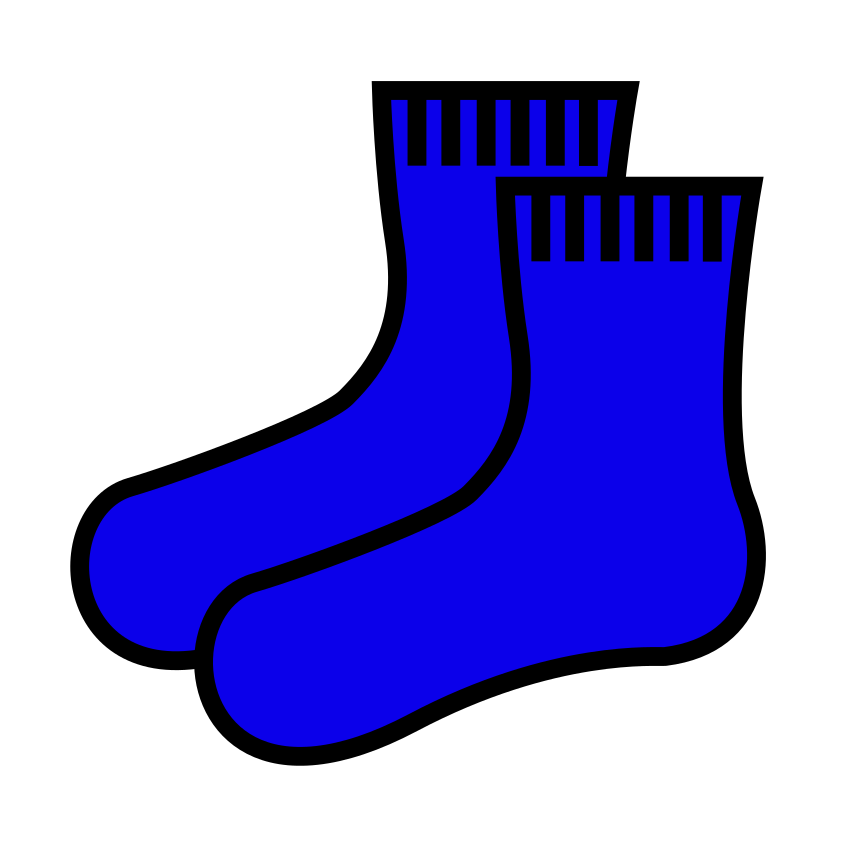
Ten short phrases with /s/ in more than one word: a silly sock, see the sun, sip the soup, a soft seal, sit on the sofa, a sunny sky, seven seeds, a salty sea, sing a song, a sad sound. Phrase level is the step between single words and sentences, and skipping it is why techniques so often fall apart when the utterance gets longer.
What to listen for
Listen for the second target. Almost every student holds the sound on the first /s/ and loses the second, which is the whole reason phrase level exists as a step. Watch a sunny sky, where the second word begins with an /s/ cluster and the demand jumps again.
Carrying it home
A phrase is short enough to actually use. Asking a child to say a silly sock five times is a task a family will finish, unlike a page of sentences — and see the sun works on any walk without anybody having to remember to bring something.
What's in this activity
- a silly sock
- see the sun
- sip the soup
- a soft seal
- sit on the sofa
- a sunny sky
- seven seeds
- a salty sea
- sing a song
- a sad sound
Questions
- What grades is this for?
- First through fourth, for students accurate on /s/ in single words.
- Is it free?
- Yes, all ten phrases play with no account.
- Why not go straight to sentences?
- Because the jump is large. A phrase adds one word boundary and one extra target, which most students can manage when a full sentence is still out of reach.
Use this board with your caseload
With a free account, every correct, cued and incorrect mark is saved to the student and scored against their IEP goal, with the data written up for you. Assign it as home practice through the parent portal.
Track progress freeFree for SLPs. No card, no trial clock.