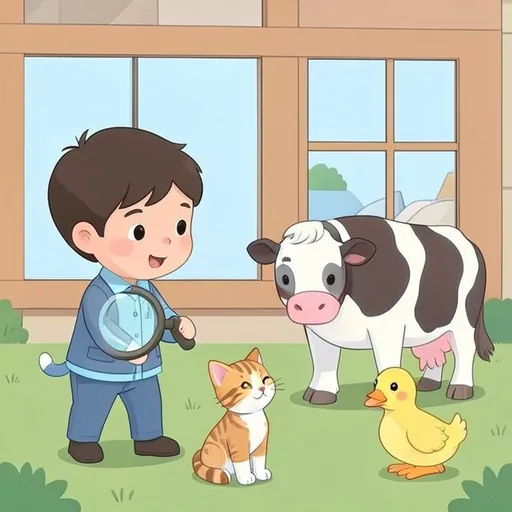
Pistas misteriosas: En casa y en la granja
- Game
- PreK–2
- 1 página · 10 min
Seis adivinanzas en español con pistas una por una: gato, vaca, pato, cama, reloj y cuchara. Pensada para grados PreK–2, sirve en sesión presencial o por teleterapia, en unos 10 minutos. Incluye estímulos como gato, vaca, pato, cama, reloj. Se abre en el navegador sin crear cuenta.
Pistas misteriosas: En casa y en la granja
¿Quién o qué soy?
- Pista 1Tengo bigotes largos
Cómo usarla
Read each clue aloud in Spanish and pause for a guess before the next. When the student guesses, ask which clue helped most. Then let the student choose an answer and give you clues in Spanish, starting with the hardest.
Cueing ladder
Start at the top. Add support one step at a time.
- IndependentPresent the item and wait 5 seconds of quiet before helping.Log as correct
- HintGive a clue about the word's category, what it does, or where you find it.Log as cued
- Two choicesOffer two answers, the right one not always second.Log as cued
- ModelGive the answer in a sentence; the student says it back and uses it once more.Log as cued
Adjust it
Use fewer items and start with the ones the student already knows, such as 'gato' and 'vaca'.
Ask for the word in a sentence of the student's own, or a second example from the same group.
Matching IEP goal
Given vocabulary cards, Student will name, sort or define target words in 8 of 10 opportunities across 3 consecutive sessions, given no more than an indirect cue.
Send it home through the parent portal →About this activity
Six Spanish riddles about animals and things at home: gato, vaca, pato, cama, reloj and cuchara. Clues appear one at a time, from the trickiest ('Tengo manecillas pero no tengo dedos') to the giveaway ('Te digo la hora'), and the student can guess after any clue. The clues are written as a Spanish speaker would say them, not translated.
What to listen for
Notice how many clues each answer takes and whether early guesses make sense ('perro' for gato after 'Tengo bigotes largos' is a good guess). Listen to the student's own clues for describing words in Spanish.
Carrying it home
Play adivinanzas at home: think of something in the room and give one clue at a time in Spanish. Take turns being the one who gives the clues, starting with the hardest one.
What's in this activity
- gato
- vaca
- pato
- cama
- reloj
- cuchara
Questions
- Is this a vocabulary activity?
- It practises understanding descriptions and naming, in Spanish.
- Why one clue at a time?
- Guessing early and checking against the next clue is the reasoning skill; the last clue makes sure everyone can finish.
Usa este tablero con tu caseload
Con una cuenta gratis, cada acierto, pista o error se guarda en el estudiante y se califica contra su meta del IEP, con el informe hecho por ti. Asígnalo como práctica en casa por el portal de padres.
Sigue el progreso gratisGratis para SLP. Sin tarjeta, sin límite de prueba.