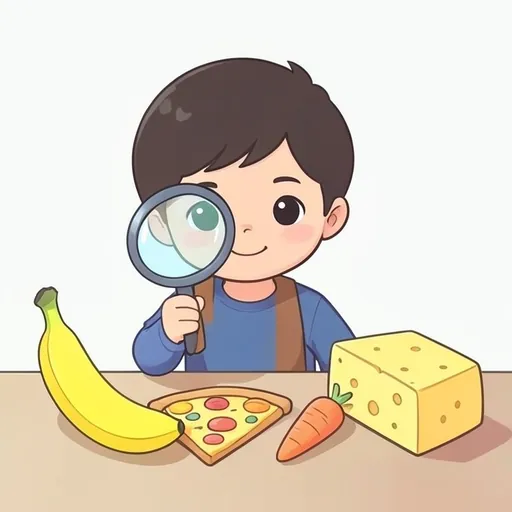
Mystery Clues: Foods
- Game
- K–3
- 1 page · 10 min
6 riddles about everyday foods. Clues appear one at a time, hardest first; the student guesses from four answers. Answers: banana, pizza, carrot, cheese, egg and strawberry. Built for grades K–3, it works in pull-out, push-in, or teletherapy, in about 10 minutes. Sample stimuli: banana, pizza, carrot, cheese, egg, and more. Plays in the browser with no login; add students to score trials against IEP goals.
Mystery clues
Mystery Clues: Foods
Who or what am I?
- Clue 1People often eat me at parties
How to run it
Read the first clue aloud, or let a confident reader read it, and invite a guess before showing the next one. Ask the student which clue told them and why the other choices do not fit. Turn it around at the end: the student picks one answer and makes up three clues of their own, in order from hardest to easiest, for you to guess.
Cueing ladder
Start at the top. Add support one step at a time.
- IndependentPresent the item and wait 5 seconds of quiet before helping.Log as correct
- HintReread the key sentence, or point back to the clue in the text or picture.Log as cued
- Two choicesOffer two answers, the right one not always second.Log as cued
- ModelThink aloud: say how you worked it out, then the student says the answer and why.Log as cued
Adjust it
Read it aloud to the student and offer two choices from the start.
Ask the student to say which words gave them the clue, not just the answer.
Matching IEP goal
Given short texts or spoken prompts, Student will make an inference and say which clue they used in 8 of 10 opportunities across 3 consecutive sessions, given no more than an indirect cue.
Send it home through the parent portal →About this activity
6 riddles about everyday foods. The answers are banana, pizza, carrot, cheese, egg and strawberry. Each mystery gives up to four clues, one at a time, starting with the hardest and ending with the giveaway, and the student can guess from four choices after any clue. The clues move from where a food comes from to how it looks and tastes, which is the same order a good description follows.
What to listen for
Notice whether early guesses stay in the right group even when they are wrong: a student who guesses pizza when the answer is banana heard the category clue. Watch how many clues each mystery takes and whether the student can name the clue that settled it. Waiting for the last clue every time suggests they need help linking a feature to the whole food.
Carrying it home
Play it in the car or at dinner: think of one food from this set, such as carrot, and give one clue at a time until your child guesses. Then swap so your child gives the clues. Encourage clues about what it looks like, what it does and where you find it, rather than its first letter.
What's in this activity
- banana
- pizza
- carrot
- cheese
- egg
- strawberry
Questions
- Who is this for?
- Students in kindergarten through grade 3 working on inferencing, describing and vocabulary, including students who know the words but need practice reaching them from clues.
- Can students make their own clues?
- Yes. After playing, ask the student to choose an answer and give three clues from hardest to easiest. Describing an object this way practises the same features in reverse.
Use this board with your caseload
With a free account, every correct, cued and incorrect mark is saved to the student and scored against their IEP goal, with the data written up for you. Assign it as home practice through the parent portal.
Track progress freeFree for SLPs. No card, no trial clock.