Irregular Plurals Quiz
- Game
- 1–4
- 11 pages · 10 min
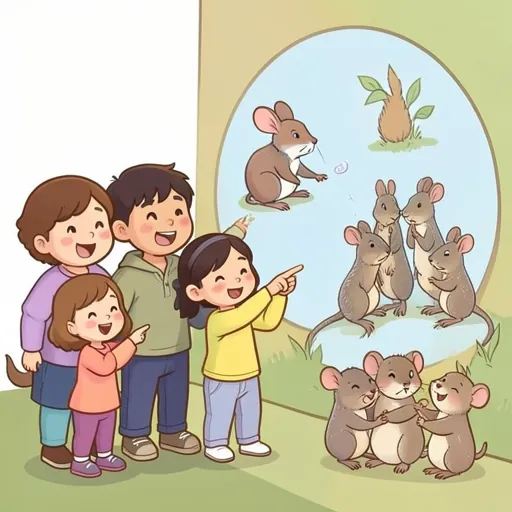
11 nouns with irregular plurals: one mouse, two mice. Feet, teeth, children, geese and more. Built for grades 1–4, it works in pull-out, push-in, or teletherapy, with 11 screens, in about 10 minutes. Sample stimuli: One mouse. Two ___., One foot. Two ___., One tooth. Two ___., One child. Three ___., One man. Two ___., and more. Plays in the browser with no login; add students to score trials against IEP goals.
Quiz
Irregular Plurals Quiz
One mouse. Two ___.
Tap your answer.
Session summary (SOAP)
Stays on this screen. Nothing is saved or sent.
Mark a card Correct, Correct with cue or Incorrect and the summary writes itself here.
How to run it
Say 'one mouse' and hold up one finger, then 'two' and hold up two, so the number is clear. After each answer, have the student say the plural in a short sentence, such as 'The mice ran away.' Group the vowel-change words (mice, feet, teeth, geese) and the no-change words (sheep, deer) and point out each pattern.
Cueing ladder
Start at the top. Add support one step at a time.
- IndependentPresent the item and wait 5 seconds of quiet before helping.Log as correct
- HintStress the part of the sentence that changes, or point to the word ending.Log as cued
- Sentence starterSay the first half of the sentence and let the student finish it.Log as cued
- ModelSay the correct form in the whole sentence; the student repeats it.Log as cued
Adjust it
Give a sentence starter every time, and do fewer cards.
Ask for a new sentence of the student's own with the same form, with no card to lean on.
Matching IEP goal
Given sentence cards, Student will produce regular and irregular plurals in sentences in 8 of 10 opportunities across 3 consecutive sessions, given no more than an indirect cue.
Send it home through the parent portal →About this activity
Eleven nouns whose plurals do not take a plain -s: mice, feet, teeth, children, men, women, geese, sheep, deer, leaves and knives. Each question says one, then two or more, and the student chooses the plural. The wrong choices include the regular -s form and a double-marked form like feets, which are the errors students usually make.
What to listen for
Notice whether the student over-applies -s (mouses, sheeps) or doubles the plural (feets, childrens). Doubling shows they know the special word but are still adding the usual ending; that is close, and a quick reminder that feet already means more than one is often enough.
Carrying it home
Look for the words in real life: count feet at the table, look at teeth in the mirror or point to geese at the park. Say 'one' and 'two' out loud and let your child finish with the plural.
What's in this activity
- One mouse. Two ___.
- mice
- mouses
- mouse
- One foot. Two ___.
- foots
- feet
- feets
- One tooth. Two ___.
- tooths
- toothes
- teeth
- One child. Three ___.
- children
- childs
- childrens
- One man. Two ___.
- mans
- men
- mens
- One woman. Two ___.
- womans
- womens
- women
- One goose. Four ___.
- geese
- gooses
- geeses
- One sheep. Five ___.
- sheeps
- sheep
- shoop
- One deer. Two ___.
- deers
- dears
- deer
- One leaf. Many ___.
- leaves
- leafs
- leafes
- One knife. Two ___.
- knifes
- knives
- knive
Questions
- Which plurals should come first?
- Everyday words like feet, teeth, children and men come up most, so start with those before geese or knives.
- Why are sheep and deer included?
- They stay the same for one or many, which is a pattern of its own. Students often add -s to them.
Use this board with your caseload
With a free account, every correct, cued and incorrect mark is saved to the student and scored against their IEP goal, with the data written up for you. Assign it as home practice through the parent portal.
Track progress freeFree for SLPs. No card, no trial clock.