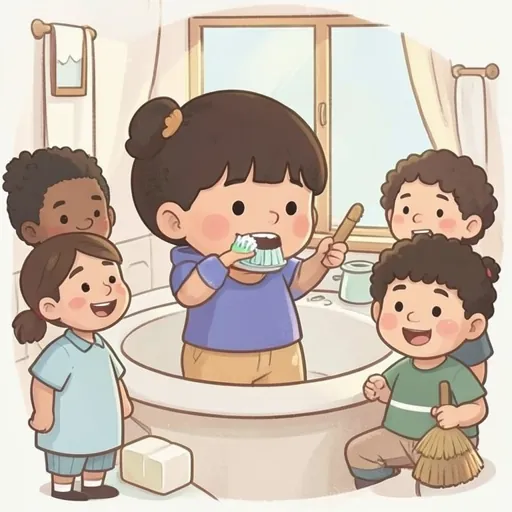
Picture Word Finder: Things We Use at Home
- Game
- PreK–2
- 1 page · 8 min
A picture vocabulary game: read what someone is doing and find the picture of the thing they use: toothbrush, broom, soap and clock and more. Built for grades PreK–2, it works in pull-out, push-in, or teletherapy, in about 8 minutes. Sample stimuli: brushing your teeth toothbrush, sweeping the floor broom, washing your hands soap, telling the time clock, staying dry in the rain umbrella, and more. Plays in the browser with no login; add students to score trials against IEP goals.
Find the match
Picture Word Finder: Things We Use at Home
What goes with brushing your teeth?
How to run it
Read the action aloud and let the student find the picture. After each match, ask the student to name the thing and say what it is for in their own words: 'A broom is for sweeping the floor.' For a student who is still learning the words, name all the pictures together before you start.
Cueing ladder
Start at the top. Add support one step at a time.
- IndependentLet the student find the picture on their own and wait 5 seconds before helping.Log as correct
- Act it outAct out the action, such as sweeping, and ask again.Log as cued
- Two choicesCover all but two pictures and ask the student to choose.Log as cued
- ModelPoint to the right picture and name it, then the student finds the next one.Log as cued
Adjust it
Use only the first five actions and name each picture before the student looks.
Cover the pictures and ask the student to name the thing before finding it.
Matching IEP goal
Given a spoken description of what an object is used for, Student will identify and name the object in 8 of 10 opportunities across 3 consecutive sessions.
Send it home through the parent portal →About this activity
A home picture vocabulary set for young students. Each round names an everyday action, such as brushing your teeth, and the student finds the picture of the thing used for it among the picture cards, here the toothbrush. The 10 words include broom, soap, clock and umbrella, all pictured, so the board works like a picture dictionary organised by what things are for.
What to listen for
Notice whether the student finds the picture but cannot name it, or names it but chooses a related picture. A student who knows the use but not the name may say 'the thing for hair' and needs the word modelled.
Carrying it home
Walk through your home and ask 'What do we use for...?' for brushing teeth, sweeping and telling the time. Let your child run to the thing and name it.
What's in this activity
- brushing your teeth toothbrush
- sweeping the floor broom
- washing your hands soap
- telling the time clock
- staying dry in the rain umbrella
- sleeping at night bed
- eating soup spoon
- drinking hot cocoa mug
- opening a lock key
- taking a bath bathtub
Questions
- What does this practise?
- Everyday vocabulary through function: knowing what a thing is for, finding its picture and naming it.
- Why match by use?
- Linking a word to what it does gives the student a second way to find the word when the name does not come.
Use this board with your caseload
With a free account, every correct, cued and incorrect mark is saved to the student and scored against their IEP goal, with the data written up for you. Assign it as home practice through the parent portal.
Track progress freeFree for SLPs. No card, no trial clock.