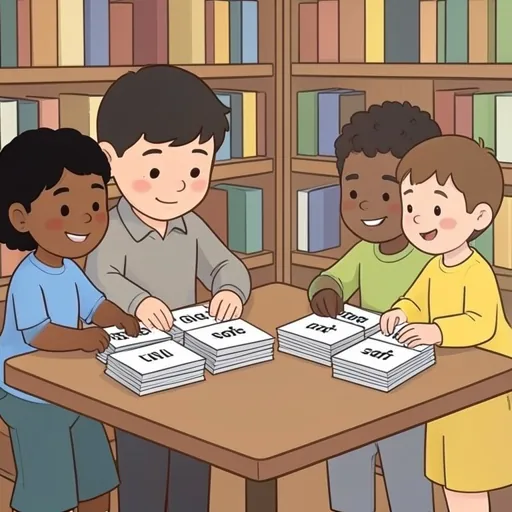
Four Groups of Four: Grades 6-8
- Game
- 6–8
- 1 page · 10 min
Sort 16 words into four synonym groups: words for happy, angry, small and big. Cheerful, livid, minute and vast are among them. Built for grades 6–8, it works in pull-out, push-in, or teletherapy, in about 10 minutes. Sample stimuli: Words for happy, Words for angry, Words for small, Words for big. Plays in the browser with no login; add students to score trials against IEP goals.
Sort it
Four Groups of Four: Grades 6-8
Say the word, then put it in the right basket.
drop here
drop here
drop here
drop here
How to run it
Read all sixteen words aloud first. Ask the student to find the easiest group before sorting, then work toward the trickiest. When a word could fit two groups, talk about it: which group needs it to make four? Finish by asking the student to name a fifth word for each group.
Cueing ladder
Start at the top. Add support one step at a time.
- IndependentLet the student sort all sixteen words on their own.Log as correct
- Easiest groupAsk which group is easiest and sort only that one first.Log as cued
- Name the linkFor a stuck word, ask what it has in common with words already in a group.Log as cued
- ModelSort one group while thinking aloud, then the student sorts the next.Log as cued
Adjust it
Sort two groups of four first, then add the other two.
Ask the student to add a fifth word to each group, or to make a new four-group puzzle.
Matching IEP goal
Given 16 words, Student will sort them into 4 groups of 4 and name what each group shares in 4 of 5 opportunities across 3 consecutive sessions.
Send it home through the parent portal →About this activity
Sixteen words that make four synonym groups: words for happy (cheerful, glad, joyful, content), angry (furious, irate, cross, livid), small (tiny, petite, minute, compact) and big (huge, vast, enormous, massive). Several are tricky: minute here means very small, cross means annoyed and content means satisfied.
What to listen for
Notice how the student handles the multiple-meaning words. Minute, cross and content each have a more common meaning, and a student who knows only that meaning will be stuck. Ask the student to use each in a sentence with the meaning that fits the group.
Carrying it home
Play a four-groups game at dinner: one person names a group, like things that are round, and everyone adds a word. Try groups with a twist, like things you can catch.
What's in this activity
- Words for happy
- Words for angry
- Words for small
- Words for big
Questions
- Why groups of four?
- Four even groups mean every word has to go somewhere, so the student uses the last words to check the earlier ones.
- What if a word fits two groups?
- That is part of the puzzle. Count what each group still needs and decide together.
Use this board with your caseload
With a free account, every correct, cued and incorrect mark is saved to the student and scored against their IEP goal, with the data written up for you. Assign it as home practice through the parent portal.
Track progress freeFree for SLPs. No card, no trial clock.