/f/ Initial and Final Flashcards
Drill /f/ in initial and final word positions.


How to run it
Show the lip and tooth contact rather than describing it. /f/ is one of the few sounds a child can see being made, and a mirror does more here than any verbal cue. Ask for the word, then for a two-word phrase — big fish, my fan — and stop there for a young child. Five minutes is a full pass, which makes this a good short activity inside a longer session.
Cueing ladder
Start at the top. Add support one step at a time.
- IndependentShow the card and wait 3 seconds for the student to say it.Log as correct
- Visual cuePoint to your mouth, or show the mouth picture for /f/, before the student tries again.Log as cued
- Verbal modelSay the word; the student says it right after you.Log as cued
- Placement cueTop teeth rest lightly on your bottom lip. Blow air out between them with your voice off.Log as cued
Adjust it
Drop to syllables ('fa' and 'fee'), or use fewer cards.
Put each word in a short carrier phrase with no /f/ in it or mix in /f/ words from another position.
Matching IEP goal
Given picture cards, Student will produce /f/ in the word-initial position in single words in 8 of 10 opportunities across 3 consecutive sessions, given no more than a visual cue.
Send it home through the parent portal →About this activity
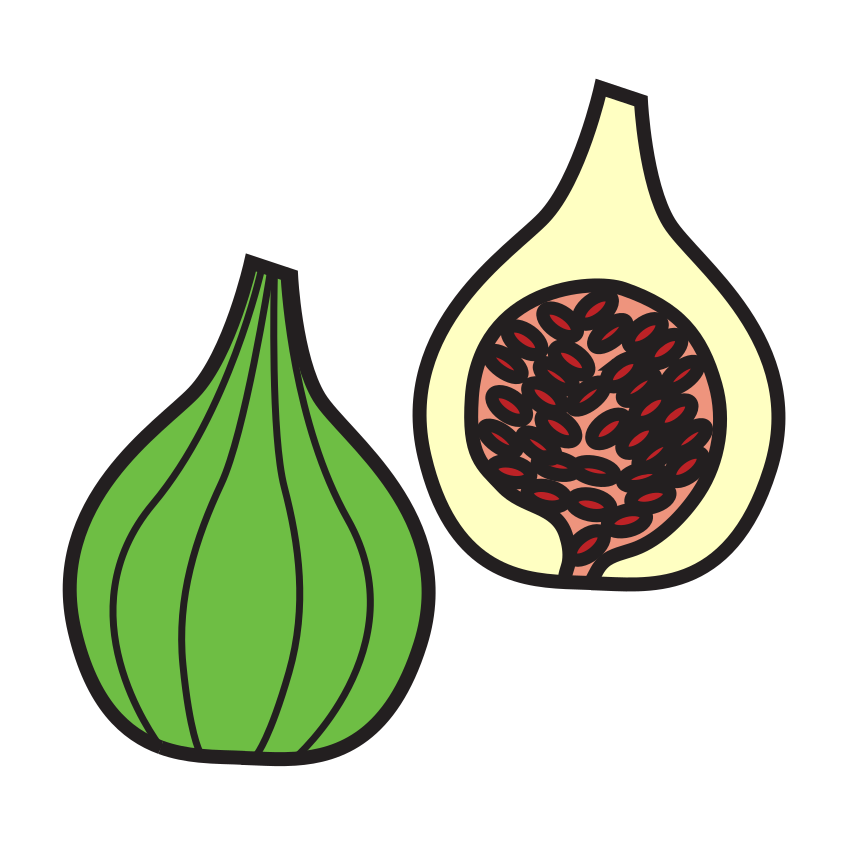
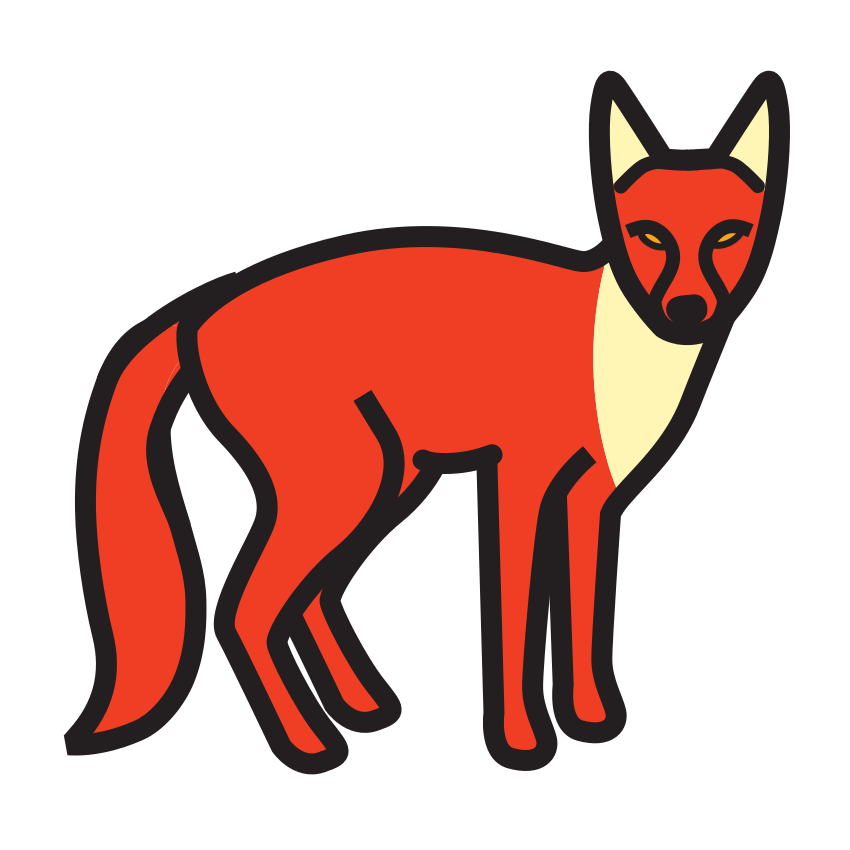
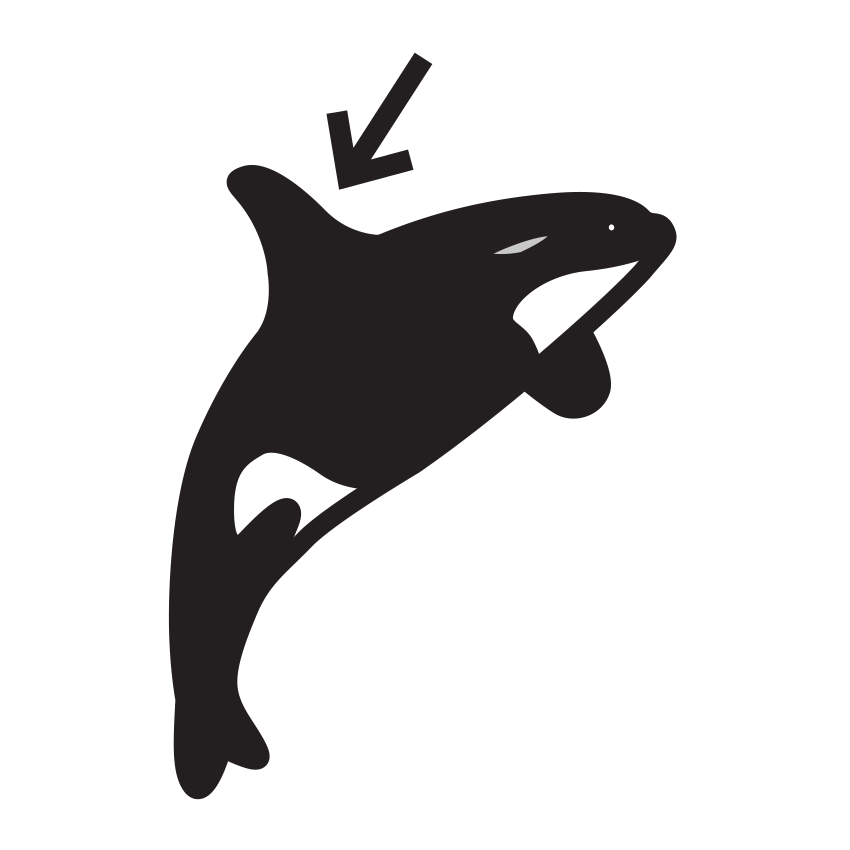
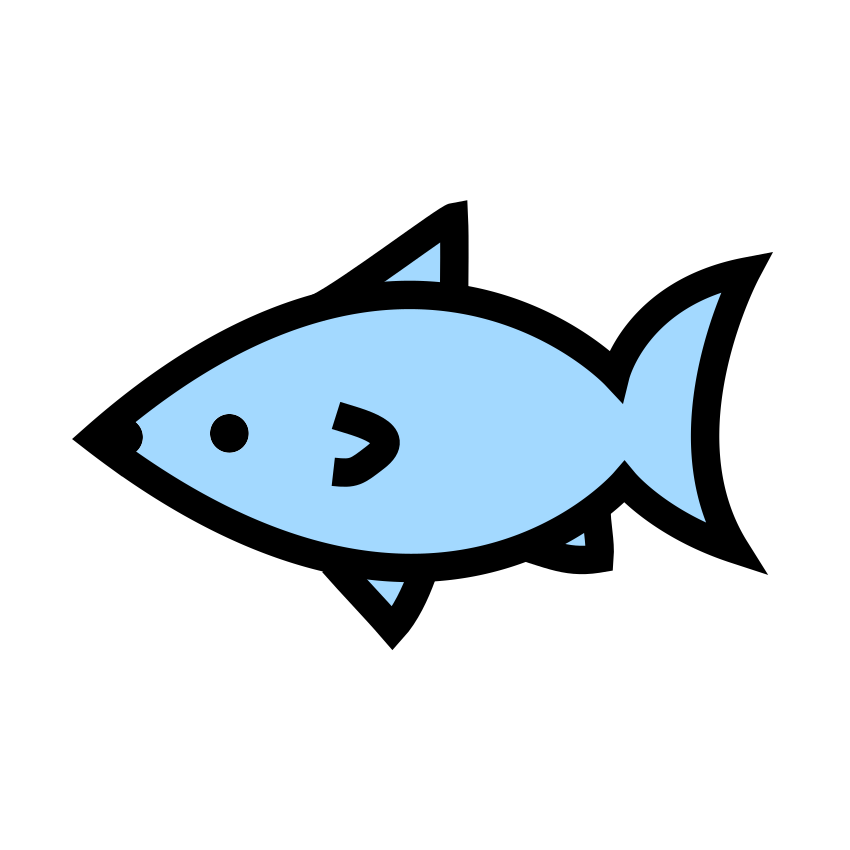
Eight short /f/ words: fan, fig, fox, fog, fat, fin, fun, fish. Every one is a single syllable with a simple structure, which is deliberate — /f/ is one of the earlier sounds to develop and a child working on it is usually young, so the words are short enough to be produced without the rest of the word getting in the way.
What to listen for
Listen for /p/ or /b/ replacing it. A child saying pan for fan is producing a stop where a fricative should be, which means the lips are closing completely rather than letting air through — and that is a visible thing you can show them in a mirror. Watch fish and fin, where the following vowel is high and the lip position is harder to hold.
Carrying it home
Fish, fan, fun and fox are common enough words that a family can listen for one of them without arranging anything. Asking for the word rather than correcting the sound keeps it from becoming a correction routine at home.
What's in this activity
- fan
- fig
- fox
- fog
- fat
- fin
- fun
- fish
Questions
- What ages is this for?
- Kindergarten through third grade. /f/ develops relatively early, so it is usually a target for younger children.
- Is it free?
- Yes, all eight cards play with no login.
- My child says 'pan' for 'fan'. What do I do?
- Use a mirror. /f/ is made with the top teeth on the bottom lip and air flowing through, and a child producing /p/ is closing the lips instead. Seeing the difference usually works faster than hearing it.
Use this board with your caseload
With a free account, every correct, cued and incorrect mark is saved to the student and scored against their IEP goal, with the data written up for you. Assign it as home practice through the parent portal.
Track progress freeFree for SLPs. No card, no trial clock.