/d/ Final Flashcards
Conventional word-final /d/ targets at the single-word level.
Session summary (SOAP)
Stays on this screen. Nothing is saved or sent.
Mark a card Correct, Correct with cue or Incorrect and the summary writes itself here.
How to run it
Have the student say the whole word, then exaggerate the ending: tongue tip up on the ridge behind the top teeth, voice on, and hold it for a beat. Start with the open-vowel words like dad, mad and bad, then move to food and hood with rounded lips before the tongue lifts. Hand is the hardest here, since the /d/ comes straight after /n/ in the same spot. Six minutes covers the deck twice.
Cueing ladder
Start at the top. Add support one step at a time.
- IndependentShow the card and wait 3 seconds for the student to say it.Log as correct
- Visual cuePoint to your mouth, or show the mouth picture for /d/, before the student tries again.Log as cued
- Verbal modelSay the word; the student says it right after you.Log as cued
- Placement cueTongue tip up on the bumpy ridge behind your top teeth, then drop it with your voice on.Log as cued
Adjust it
Drop to syllables ('ad' and 'eed'), or use fewer cards.
Put each word in a short carrier phrase with no /d/ in it or mix in /d/ words from another position.
Matching IEP goal
Given picture cards, Student will produce /d/ in the word-final position in single words in 8 of 10 opportunities across 3 consecutive sessions, given no more than a visual cue.
Send it home through the parent portal →About this activity
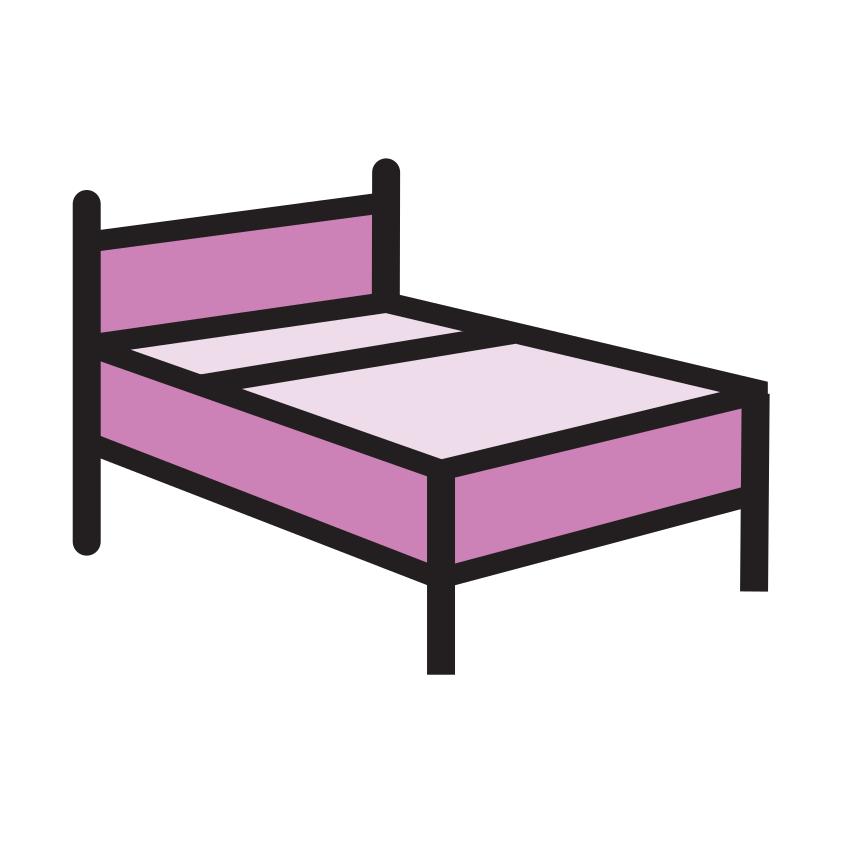
Twelve single words ending in /d/: bed, bad, mad, dad, kid, mud, food, head, hand, toad, nod, hood. Final /d/ is where students often drop the sound entirely, so bed becomes beh, or devoice it so bed sounds like bet. These are short, picturable words with a clear vowel before the target, which keeps the ending easy to hear and easy to judge.
What to listen for
Listen for three errors: a missing ending (mud said as muh), a devoiced ending (bed said as bet), and a glottal stop in place of the /d/. Watch whether the tongue tip actually rises on kid and nod. Minimal-pair contrast helps if devoicing is the pattern, since bed and bet, or bad and bat, mean different things and the student can hear why the ending matters.
Carrying it home
Go on a word hunt around the house for the words on the board: head, hand, bed, food. Point and name each one, and give a thumbs up when the ending is clear. Keep it short, and praise the ending rather than correcting every miss.
What's in this activity
- bed
- bad
- mad
- dad
- kid
- mud
- food
- head
- hand
- toad
- nod
- hood
Questions
- What grades is this for?
- PreK through second grade, at the single-word level.
- Do I need an account?
- No. The board plays free in the browser with no login. An account adds session data, goal scoring and assignment to a student.
- What comes after single words?
- Short phrases that keep /d/ at the end of a word, like a red bed or my head, and then sentences, once the student is steady on these twelve words.
Use this board with your caseload
With a free account, every correct, cued and incorrect mark is saved to the student and scored against their IEP goal, with the data written up for you. Assign it as home practice through the parent portal.
Track progress freeFree for SLPs. No card, no trial clock.