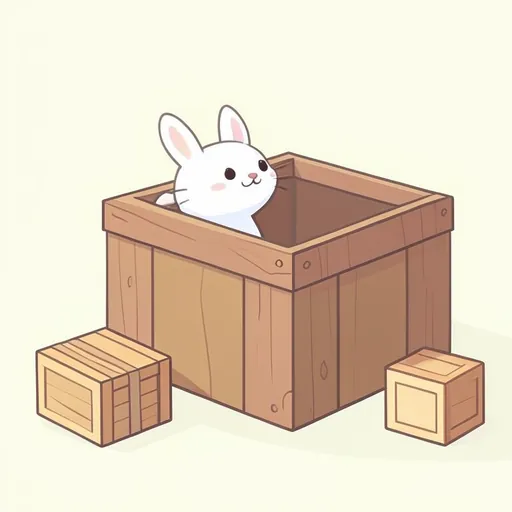
Bunny Hide & Seek: Spatial Prepositions
- Game
- PreK–3
- 1 page · 8 min
Build scenes with a bunny, a star-window box, and a block to practice spatial prepositions. Match the card, follow spoken directions, or describe the picture — 32 leveled challenges with English and Spanish prompts. Built for grades PreK–3, it works in pull-out, push-in, or teletherapy, in about 8 minutes. Sample stimuli: bunny in the box, bunny on the box, bunny next to the block, bunny in the block hole, bunny on the block, and more. Plays in the browser with no login; add students to score trials against IEP goals.
Bunny Hide & Seek: Spatial Prepositions
How to run it
Open Match the card first so the student sees the goal picture beside the stage. Name the preposition you are targeting, then let them drag the bunny, box, and block or tap a placement chip. Press Check when the build looks right; a short celebration marks a match before the next card. Switch to Follow directions and hide the picture — the written and spoken line is the only cue. Use Tell me when you want production: the student describes the card while you mark correct, cued, or incorrect and reveal the model sentence afterward.
Cueing ladder
Start at the top. Add support one step at a time.
- IndependentShow the target card or read the direction once in English or Spanish. Wait five seconds before cueing.Log as correct
- GesturePoint to the bunny, box, or block the student should move, or trace the relation (in, on, under) in the air.Log as cued
- Binary choiceOffer two placements: 'Should the bunny go in the box or beside the box?' Log the answer after the choice.Log as cued
- ModelBuild the scene while naming each preposition aloud, then invite the student to copy with the same words.Log as cued
Adjust it
Stay on level 1 challenges with only the bunny and one prop. Use Match the card before Follow directions. Read Spanish directions aloud if that is the home language.
Switch to Tell me mode and ask for a full sentence. Add box rotations (open side down, star to the back) before checking the build.
Matching IEP goal
Given a picture or verbal direction, Student will demonstrate understanding of spatial concepts (in, on, under, behind, beside, between) by building or describing a scene with the bunny, box, and block in 8 of 10 trials across 3 sessions, given no more than a gestural cue.
Send it home through the parent portal →About this activity
Bunny Hide & Seek is a tabletop-style builder on screen: a wooden bunny, a blue box with a star window, and a yellow block with a hole. Each challenge shows a target arrangement or reads a direction — put the bunny in the box, stack the box on the block, hide the bunny behind the box with only its ears showing. Students drag pieces on a grassy stage, then check their work. Three modes cover matching, following directions (receptive), and describing the scene (expressive). Every challenge ships with English and Spanish direction sentences.
What to listen for
Listen for the preposition in the student's speech and watch whether their hands match their words. A student who says in but places the bunny beside the box is showing a receptive–expressive gap worth noting. Watch whether they use the box rotation controls on harder cards — upside-down openings and hidden star windows are where confusions cluster. When the block joins the scene, check that they distinguish stacking (box on block versus block on box) as different meanings.
Carrying it home
Parents can play one card a day without scoring. Read the direction in whichever language is comfortable at home, let the child move the bunny and box, and celebrate when the picture matches. Ask the child to describe the finished scene in one sentence — The bunny is in the box — before moving on. Real toys on the floor work too: a stuffed animal, a tissue box, and a block substitute for the same in/on/under practice away from the screen.
What's in this activity
- bunny in the box
- bunny on the box
- bunny next to the block
- bunny in the block hole
- bunny on the block
- bunny beside the box
- +26 more
Questions
- What ages is this for?
- Preschool through third grade, whenever you are teaching spatial concepts receptively or in short sentences.
- Is it free?
- Yes. The board plays in the browser with no login. Signed-in clinicians can save trials to goals in a session.
- Does it include Spanish?
- Every challenge includes Spanish direction and model sentences. Switch the activity language to Spanish in session settings to prefer those strings for TTS and on-screen text.
- How is this different from flashcards?
- The child builds the scene instead of only pointing at a picture, which gives you richer data about whether they understand in versus on versus under.
Use this board with your caseload
With a free account, every correct, cued and incorrect mark is saved to the student and scored against their IEP goal, with the data written up for you. Assign it as home practice through the parent portal.
Track progress freeFree for SLPs. No card, no trial clock.