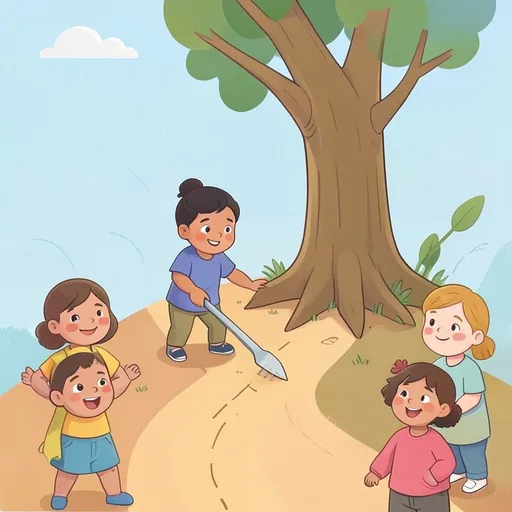
Another Way: Flexible Thinking
- Game
- 2–8
- 10 pages · 10 min
10 moments when plan A does not work. Pick a plan B, another use for an object or another way to see it. Built for grades 2–8, it works in pull-out, push-in, or teletherapy, with 10 screens, in about 10 minutes. Skill tags on this board: executive function, flexible thinking, problem solving. Plays in the browser with no login; add students to score trials against IEP goals.
Quiz
Another Way: Flexible Thinking

The scissors are missing and you need to open a package. What else could work?
Tap your answer.
Session summary (SOAP)
Stays on this screen. Nothing is saved or sent.
Mark a card Correct, Correct with cue or Incorrect and the summary writes itself here.
How to run it
After each answer, ask the student for one more plan B of their own; there is always more than one. Practise a flexible phrase like 'OK, what else can we do?' and use it during the rest of the session when something goes wrong.
Cueing ladder
Start at the top. Add support one step at a time.
- IndependentPresent the item and wait 5 seconds of quiet before helping.Log as correct
- RepeatRepeat the direction once, at the same speed, stressing the key words.Log as cued
- Chunk itBreak the direction into its steps and give them one at a time.Log as cued
- ModelShow the steps yourself, then the student does them.Log as cued
Adjust it
Give one step at a time, with a picture or a written list for each step.
Add a step, or a concept word such as 'before', 'after' or 'except'.
Matching IEP goal
Given spoken or written directions, Student will complete every step of the direction in order in 8 of 10 opportunities across 3 consecutive sessions, given no more than one repetition.
Send it home through the parent portal →About this activity
Ten moments when the first plan does not work: missing scissors, rain on picnic day, a friend who wants a different game, a failed project idea, a closed road, a math method that will not work. The student picks a plan B, another use for something (a box as a fort) or another way to see it (a cloud as a dog or a boat). The stuck choices are always there too: give up, insist, blame.
What to listen for
Notice which kind of change is hardest: a change of plans, a change of seat, or someone seeing things differently. Students who can name a plan B in a quiz but get stuck in the moment need the flexible phrase practised when calm.
Carrying it home
When plans change at home, model the flexible phrase out loud: 'OK, what else can we do?' Play 'what else could this be?' with everyday objects, like a spoon or a towel.
What's in this activity
- The scissors are missing and you need to open a package. What else could work?
- a key to cut the tape
- a sandwich
- your shoe
- It rains on the day of the picnic. What is a plan B?
- cancel forever
- have the picnic indoors
- eat in the rain
- Your friend wants a different game than you. What is a flexible choice?
- quit
- insist on yours
- take turns picking
- A cardboard box can be used for what besides storage?
- a fort to play in
- a drink
- a pillow
- Your team's first idea for the project failed. What should you do?
- give up
- try a different idea
- blame someone
- The road is closed on the way to school. What could you do?
- go home
- wait all day
- take a different route
- You got a different seat than you wanted. What is a flexible thought?
- I can still learn from here
- the day is ruined
- I will not work
- A math problem does not work one way. What could you try?
- stop
- draw a picture or try another method
- write any answer
- Someone sees a cloud as a dog and you see a boat. What is true?
- one of you is lying
- clouds are only dogs
- people can see things differently
- What can you say when plans change?
- OK what else can we do
- That's not fair
- I'm done
Questions
- Why practise when calm?
- Flexible thinking is hardest when upset. Practising it in a game makes it easier to use when plans really change.
- Is there only one right plan B?
- No. The answer marked right is one good option; adding more is encouraged.
Use this board with your caseload
With a free account, every correct, cued and incorrect mark is saved to the student and scored against their IEP goal, with the data written up for you. Assign it as home practice through the parent portal.
Track progress freeFree for SLPs. No card, no trial clock.