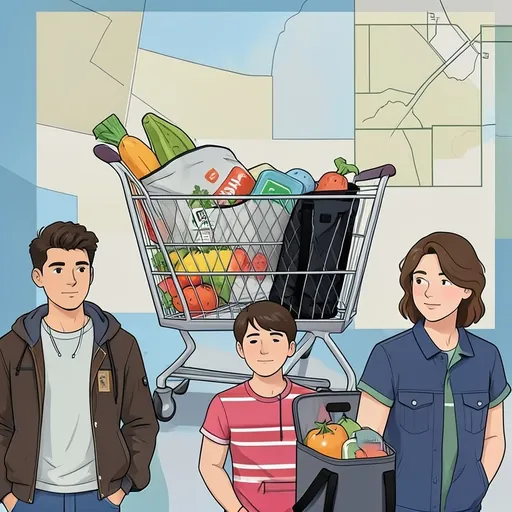
Errand Route: Frozen Food Last
- Game
- 6–12
- 1 page · 6 min
Plan five errands around real limits: the post office closes at noon, the pharmacy closes later, and frozen food has to come last. Built for grades 6–12, it works in pull-out, push-in, or teletherapy, in about 6 minutes. Skill tags on this board: executive function, planning, daily living. Plays in the browser with no login; add students to score trials against IEP goals.
Put it in order
Errand Route: Frozen Food Last
Put it in order. First, then, last.
Pick the next step
How to run it
Read each errand and ask the student what limit it has: a closing time, a melting item, or none. Have them put the errands with deadlines first and the frozen food last, then fill in the rest. After ordering, change one limit (the pharmacy closes at 11) and ask how the plan changes.
Cueing ladder
Start at the top. Add support one step at a time.
- IndependentLet the student order the errands on their own and explain the order.Log as correct
- Find the limitsAsk 'Which errands have a deadline or something that can melt?'Log as cued
- Compare twoPoint to two errands and ask what happens if they are swapped.Log as cued
- ModelPlan the route aloud, then the student orders a new set.Log as cued
Adjust it
Use three errands with one clear limit, such as frozen food last.
Change a closing time and ask the student to re-plan, or add a sixth errand.
Matching IEP goal
Given 5 errands with time and order limits, Student will sequence them to meet every limit and explain the plan in 4 of 5 opportunities across 3 consecutive sessions.
Send it home through the parent portal →About this activity
Five errands with real limits: a package to mail before the post office closes at noon, medicine to pick up before the pharmacy closes, books for the library return box, groceries that include ice cream, and the drive home. The student orders the stops so every errand gets done and nothing melts. The order comes from the limits, not from a routine.
What to listen for
Notice whether the student uses the limits or orders by what sounds most important. A student who puts groceries first has not connected ice cream with melting. Ask about each swap: 'What would happen if you did this one first?'
Carrying it home
Before running real errands, ask your teen to plan the order. Tell them one limit, such as a closing time or frozen food, and let them explain the route.
What's in this activity
- Mail the package before the post office closes at noon
- Pick up the medicine before the pharmacy closes
- Drop the books in the library return box
- Buy groceries including ice cream
- Drive home and put the ice cream in the freezer
Questions
- Why add limits?
- Real planning means working around closing times and things that spoil. The limits are what make one order right.
- What changes the order?
- Change one closing time and ask the student to re-plan. Being able to adjust a plan is the next step.
Use this board with your caseload
With a free account, every correct, cued and incorrect mark is saved to the student and scored against their IEP goal, with the data written up for you. Assign it as home practice through the parent portal.
Track progress freeFree for SLPs. No card, no trial clock.