/sh/ vs. /s/ Sort
Discriminate /sh/ from /s/ by sorting pictures.
Drop here
Drop here






0/10 sorted
How to run it
Say the words yourself and let the child sort, before asking them to produce anything. Their own productions are unreliable evidence at this stage; yours are consistent. Once sorting your speech is accurate, have them say the word as they place it, which adds production without losing the listening task. Eight minutes covers the ten.
Cueing ladder
Start at the top. Add support one step at a time.
- IndependentThe student says each word aloud as they place it. Wait 3 seconds.Log as correct
- Visual cuePoint to your mouth, or show the mouth picture for /sh/, before the student tries again.Log as cued
- Verbal modelSay the word; the student says it right after you.Log as cued
- Placement cueLips rounded and pushed forward, tongue pulled a little further back than for /s/ and raised. Blow a wide, quiet stream of air.Log as cued
Adjust it
Drop to syllables ('sha' and 'shee'), or use fewer cards.
Put each word in a short carrier phrase with no /sh/ in it.
Matching IEP goal
Given word cards, Student will produce /sh/ in single words in 8 of 10 opportunities across 3 consecutive sessions, given no more than a visual cue.
Send it home through the parent portal →About this activity
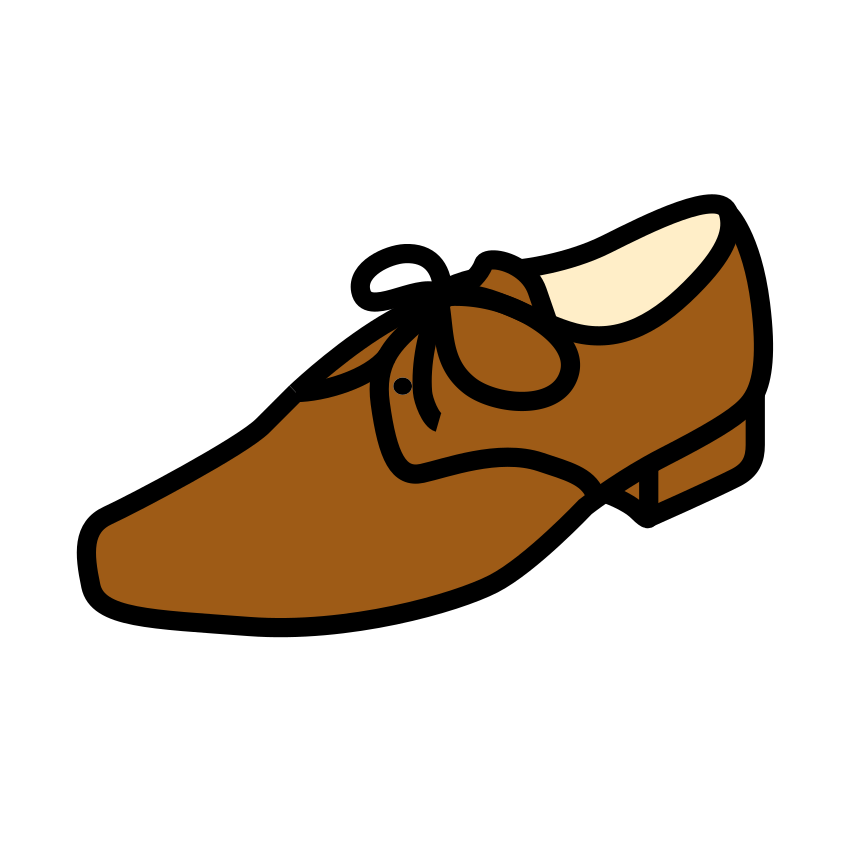
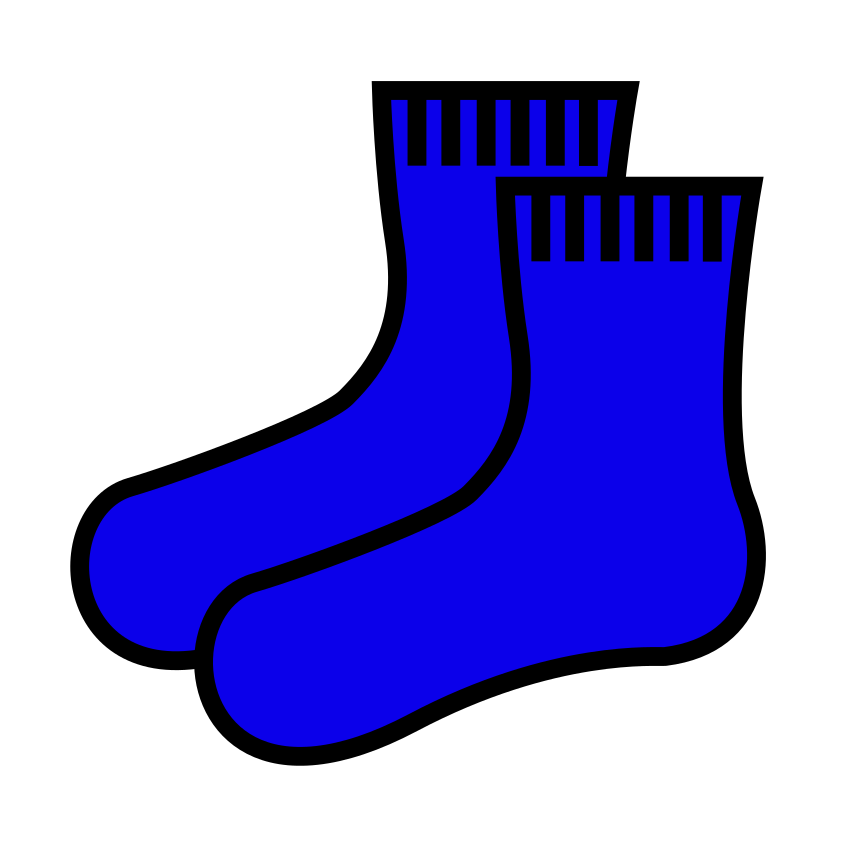
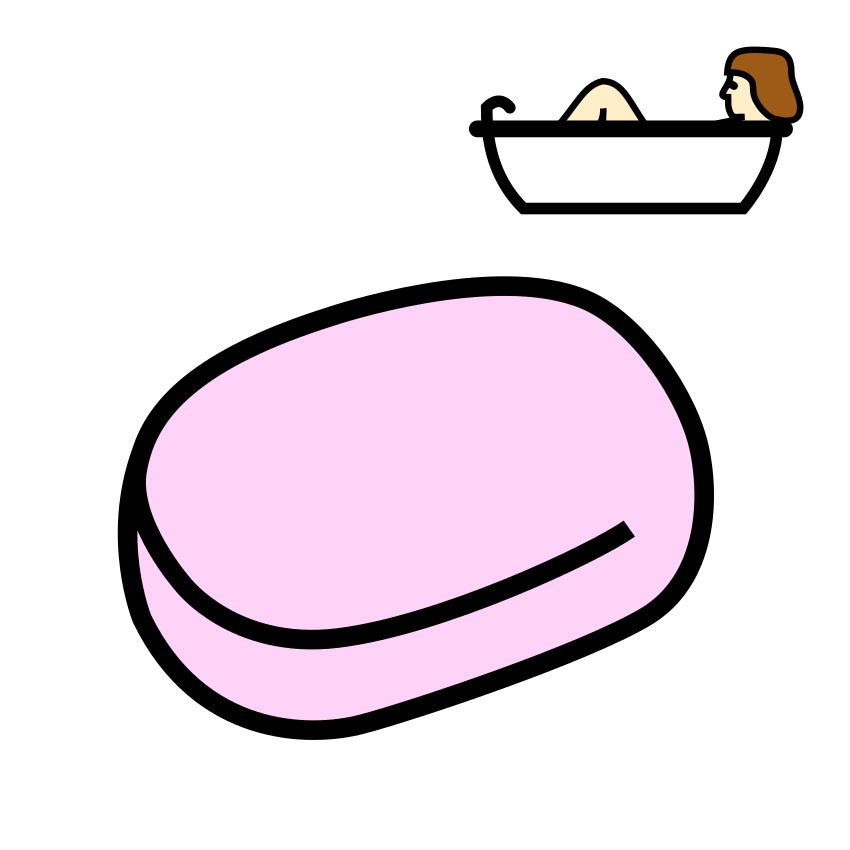
Ten pictures sorted by their first sound: shoe, ship, sheep, shop and shelf are /sh/; sun, sock, seed, soap and sail are /s/. Discrimination comes before production for a child who substitutes one sound for the other — if the two sound the same to them, no amount of practice will tell them when they have got it right.
What to listen for
Watch whether the child can sort accurately at all. A child who cannot hear the difference in your speech has a perception issue, and that comes first — production work with no perceptual base produces a child who complies in the room and cannot self-correct anywhere else. Notice shoe against soap, where the rounded vowel makes the two sounds more similar.
Carrying it home
Asking which word an adult said — shoe or sue — is a game that takes seconds. Getting it wrong on purpose is even better, because children enjoy correcting an adult and it makes them listen closely.
What's in this activity
- /sh/
- /s/
Questions
- What ages is this for?
- Kindergarten through third grade, for students who substitute /s/ for /sh/.
- Do I need an account?
- No, all ten pictures play free.
- Why sort before practising production?
- Because production depends on hearing the difference. A child who cannot distinguish the two sounds has no way of knowing whether their own attempt was correct.
Use this board with your caseload
With a free account, every correct, cued and incorrect mark is saved to the student and scored against their IEP goal, with the data written up for you. Assign it as home practice through the parent portal.
Track progress freeFree for SLPs. No card, no trial clock.