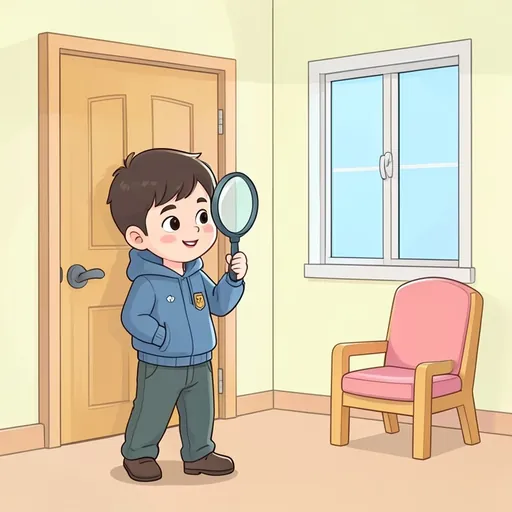
Room Detective: Find It Where You Are
- Game
- PreK–2
- 1 page · 10 min
6 riddles about things in almost any room: a door, a window, a clock, a chair, a book and a pencil. Guess it, then go and find the real one. Built for grades PreK–2, it works in pull-out, push-in, or teletherapy, in about 10 minutes. Sample stimuli: door, window, clock, chair, book, and more. Plays in the browser with no login; add students to score trials against IEP goals.
Mystery clues
Room Detective: Find It Where You Are
Who or what am I?
- Clue 1I have a face but no eyes
How to run it
Read the first clue and let the student look around the room for ideas before guessing. When they guess, have them walk to the real object and say one more thing about it. With a group, play as a team: one student guesses, another finds it, and nobody is out.
Cueing ladder
Start at the top. Add support one step at a time.
- IndependentPresent the item and wait 5 seconds of quiet before helping.Log as correct
- HintReread the key sentence, or point back to the clue in the text or picture.Log as cued
- Two choicesOffer two answers, the right one not always second.Log as cued
- ModelThink aloud: say how you worked it out, then the student says the answer and why.Log as cued
Adjust it
Read it aloud to the student and offer two choices from the start.
Ask the student to say which words gave them the clue, not just the answer.
Matching IEP goal
Given short texts or spoken prompts, Student will make an inference and say which clue they used in 8 of 10 opportunities across 3 consecutive sessions, given no more than an indirect cue.
Send it home through the parent portal →About this activity
Six riddles about things in almost every classroom or home: a door, a window, a clock, a chair, a book and a pencil. Clues appear one at a time, starting with the trickiest ('I have a face but no eyes') and ending with the giveaway. Once the student guesses, they get up and find the real one in the room and touch it.
What to listen for
Notice whether early guesses make sense for the clue, even when wrong. Guessing the window for 'I have a handle' shows the student is using the clue. Watch whether finding the real object helps the student say more about it.
Carrying it home
Play the same game at home with things in the kitchen or bedroom: give one clue at a time and let your child go and touch the answer. Swap so your child gives you the clues.
What's in this activity
- door
- window
- clock
- chair
- book
- pencil
Questions
- Why move around the room?
- Finding the real object links the word to the thing and gives a restless student a reason to move.
- What if the room has no clock?
- Skip that riddle or point to a picture of a clock instead.
Use this board with your caseload
With a free account, every correct, cued and incorrect mark is saved to the student and scored against their IEP goal, with the data written up for you. Assign it as home practice through the parent portal.
Track progress freeFree for SLPs. No card, no trial clock.