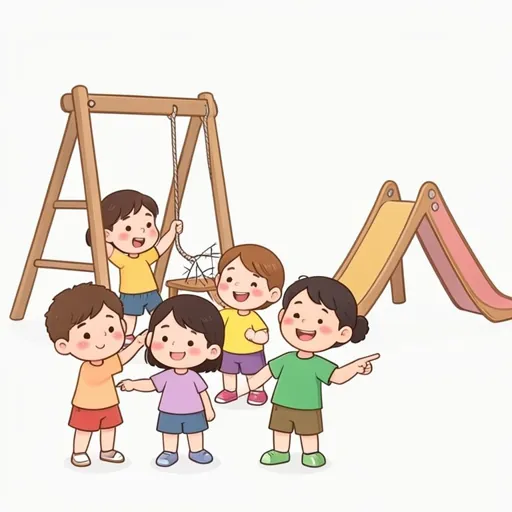
Plan B: What Else Could You Do?
- Game
- 2–8
- 10 pages · 10 min
Ten everyday snags with three choices each: the swing is taken, a marker runs out, the picnic gets rained out, a lunch is left at home, a friend wants a different game, a tower keeps falling. Read each snag, let the student pick the best Plan B, and then ask for a second Plan B of their own. Flexible thinking means having another way ready when the first one does not work. Score each item, and each new idea the student gives, as independent, cued, or modeled in your own data.
Quiz
Plan B: What Else Could You Do?

The swing is taken at recess. What is a good Plan B?
Tap your answer.
Session summary (SOAP)
Stays on this screen. Nothing is saved or sent.
Mark a card Correct, Correct with cue or Incorrect and the summary writes itself here.
How to run it
Read each item aloud, let the student respond, and then have them say a new example of their own. If they miss, read the choices again with stress on the key part, then try again. Work through the set once for a baseline, then return to the cards that were hard. Keep your own data: mark independent, cued, or modeled trials in your session notes.
Cueing ladder
Start at the top. Add support one step at a time.
- IndependentPresent the item and wait 5 seconds of quiet before helping.Log as correct
- RepeatRepeat the item once, stressing the key part, and wait again.Log as cued
- Two choicesNarrow it to two choices or give the first word of the answer.Log as cued
- ModelModel the answer in a full sentence; the student says it after you.Log as cued
Adjust it
Give two choices instead of three, and model one Plan B before the student tries.
Ask for two different Plan Bs for each snag and have the student say which one is better and why.
Matching IEP goal
Given an everyday problem, Student will choose or generate a workable second plan in 8 of 10 opportunities across 3 consecutive sessions, given no more than an indirect cue.
Send it home through the parent portal →About this activity
Plan B: What Else Could You Do? is a quiz board for grade 2 through grade 8 students. Ten everyday snags with three choices each: the swing is taken, a marker runs out, the picnic gets rained out, a lunch is left at home, a friend wants a different game, a tower keeps falling. Read each snag, let the student pick the best Plan B, and then ask for a second Plan B of their own. Flexible thinking means having another way ready when the first one does not work. Score each item, and each new idea the student gives, as independent, cued, or modeled in your own data. It is a sentence-level board for a short therapy block or a station; you score the responses yourself.
What to listen for
The second Plan B the student makes up is the stronger trial, since the goal asks them to generate as well as choose. Listen for a plan that solves the problem, not one that only avoids it. Notice which snags bring a stuck response, such as quitting or staying mad, and talk through how the body feels when a plan changes. Examples on this board include the swing is taken at recess. what is a good plan b, and your blue marker ran out in the middle of your picture. what can you do.
Carrying it home
When a plan changes at home, such as a rained-out park trip, say it out loud: Plan A is off, what is our Plan B? Let your child suggest one. Praise the idea, even if you use a different one. Keep it calm and quick.
What's in this activity
- The swing is taken at recess. What is a good Plan B?
- Stand and wait by the swing all recess
- Play on the slide and try the swing later
- Go inside and stop playing
- Your blue marker ran out in the middle of your picture. What can you do?
- Use a different color for that part
- Throw the picture away
- Stop drawing for the day
- It rains on the day of the class picnic. What could the class do?
- Cancel the picnic for the year
- Wait outside in the rain
- Have the picnic inside on a blanket
- You forgot your lunch at home. What is a good next step?
- Tell an adult and ask what to do
- Skip lunch and say nothing
- Take a friend's lunch
- Your friend wants to play a different game than you. What could you try?
- Play alone instead
- Take turns picking the game
- Say your game is the only fun one
- The bus is late and you will miss the start of a game. What can you do?
- Get upset and go home
- Call or tell the coach you will be late
- Never go to games again
- Your tower keeps falling over. What could you change?
- Build a wider base at the bottom
- Knock it down and quit
- Build it exactly the same way
- The library does not have the book you wanted. What is a Plan B?
- Leave without a book
- Get upset at the librarian
- Pick another book or put the first one on hold
- Your group cannot agree on a project idea. What could help?
- Let one person decide every time
- Vote or mix two ideas together
- Stop working on the project
- Your favorite cereal is gone at breakfast. What can you do?
- Eat something else today
- Refuse to eat breakfast
- Stay mad all morning
Questions
- Who is this for?
- This board is for grade 2 through grade 8 students working on the skill in the description, with items such as the swing is taken at recess. what is a good plan b, and your blue marker ran out in the middle of your picture. what can you do.
- What comes next?
- Sort flexible and stuck thoughts on the companion board in this batch, then try a real Plan B in class. To make it easier: give two choices instead of three, and model one Plan B before the student tries.
- Is it free?
- Yes. It plays free in the browser with no login. An account adds session data, goal scoring, and assignment to a student.
Use this board with your caseload
With a free account, every correct, cued and incorrect mark is saved to the student and scored against their IEP goal, with the data written up for you. Assign it as home practice through the parent portal.
Track progress freeFree for SLPs. No card, no trial clock.