Odd One Out: What Is It For?
- Game
- 1–3
- 1 page · 8 min
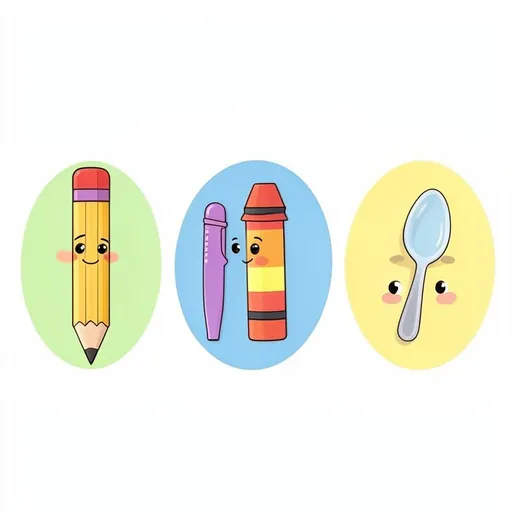
Which one doesn't belong? Three pictures share a group and one does not. Groups: things you write or draw with, things you clean with and things you eat or drink from. Built for grades 1–3, it works in pull-out, push-in, or teletherapy, in about 8 minutes. Sample stimuli: mop – things you clean with, soap – things you clean with. Plays in the browser with no login; add students to score trials against IEP goals.
Odd one out
Odd One Out: What Is It For?
Which one doesn't belong?
How to run it
Have the student name all four pictures before choosing. After each pick, ask the student to say what the other three have in common before the board does. If they choose a different picture with a good reason, such as a size or a color, accept the reasoning and then ask which one is not things you write or draw with or not things you clean with.
Cueing ladder
Start at the top. Add support one step at a time.
- IndependentLet the student look at the four pictures and tap the one that does not belong. Wait 5 seconds before helping.Log as correct
- Name themHave the student name all four pictures aloud, then choose.Log as cued
- Group questionAsk 'Which three go together? What are they all?' and let the student find the odd one from there.Log as cued
- ModelName the group for the three that belong and say why the fourth does not, then play the next round.Log as cued
Adjust it
Start with groups that look very different, and name every picture together before the student chooses.
Ask the student to name the group and explain why the odd one does not fit before the board says it.
Matching IEP goal
Given sets of four pictures, Student will identify the item that does not belong and name the category the other three share in 8 of 10 opportunities across 3 consecutive sessions, given no more than an indirect cue.
Send it home through the parent portal →About this activity
Groups by what things are used for, not by what they look like. Each round shows four pictures: three from one group and one from another. The student taps the one that does not belong, and the board then names the group, for example 'The others are all things you write or draw with.' The groups are things you write or draw with, things you clean with and things you eat or drink from, with pictures such as pencil, pen and crayon and broom and mop.
What to listen for
Function groups are harder than look-alike groups; ask 'What do you do with it?' about each picture. Listen for the reason as well as the tap: a student who can say why the odd one is out is using the category, while a correct tap with no reason may be a guess.
Carrying it home
Around the house, gather three things you clean with and one you eat from, such as a broom, a mop, soap and a bowl. Ask 'Which one doesn't belong, and why?' and then let your child make a set for you to solve.
What's in this activity
- mop – things you clean with
- soap – things you clean with
Questions
- What skill does this build?
- Categorization and verbal reasoning: comparing items, finding what three share, and naming the group, such as things you write or draw with. Saying the reason aloud is the most useful part.
- What if my student picks a different answer with a good reason?
- Praise the reasoning, then point the student back to the group the board is using. There is often more than one way to sort, and noticing that is a good sign.
Use this board with your caseload
With a free account, every correct, cued and incorrect mark is saved to the student and scored against their IEP goal, with the data written up for you. Assign it as home practice through the parent portal.
Track progress freeFree for SLPs. No card, no trial clock.