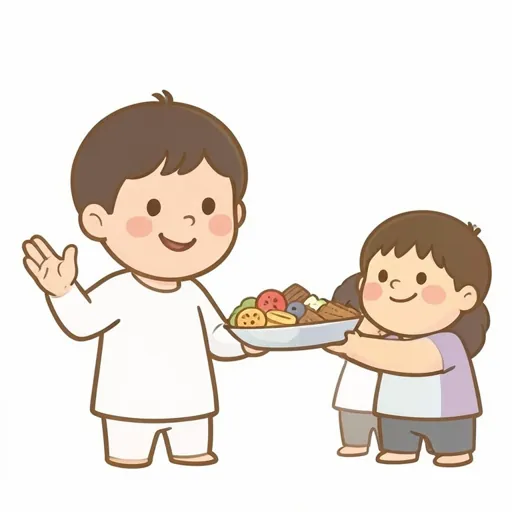
No Thank You: Kind Ways to Say No
- Game
- 2–5
- 10 pages · 10 min
Ten moments where the student wants to say no: a friend offers food they do not like, someone wants a hug, a classmate wants to copy their work, a friend wants to play a game that feels too rough. The student picks a clear and kind no, then says it out loud. Saying no is allowed; the board practices doing it clearly without being unkind. Score each line as independent, cued, or modeled in your own data.
Quiz
No Thank You: Kind Ways to Say No
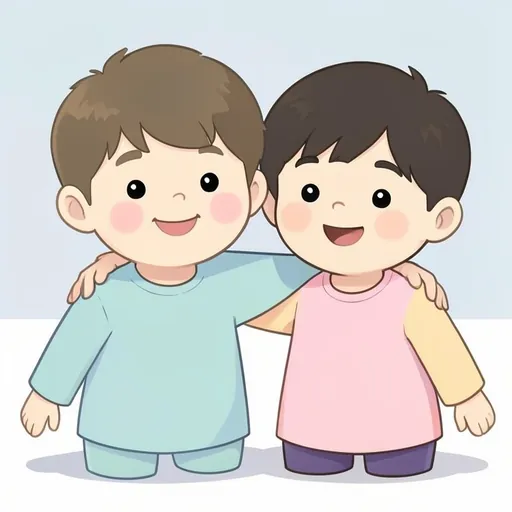
A friend offers you a snack you do not like. What can you say?
Tap your answer.
Session summary (SOAP)
Stays on this screen. Nothing is saved or sent.
Mark a card Correct, Correct with cue or Incorrect and the summary writes itself here.
How to run it
Read each situation aloud, let the student choose, and then ask why. When they find a line worth trying, role-play it out loud before the next card so the words are practiced, not only chosen. Accept a different answer when the reason is sound. Work through the set once for a baseline, then return to the cards that were hard. Keep your own data: mark independent, cued, or modeled trials in your session notes.
Cueing ladder
Start at the top. Add support one step at a time.
- IndependentPresent the situation and wait 5 seconds of quiet before helping.Log as correct
- HintPoint to the part of the situation that matters, or ask what the other person might think.Log as cued
- Two choicesGive two possible lines and let the student pick one and say it.Log as cued
- ModelModel a full line the student can repeat, then try the next card.Log as cued
Adjust it
Practice two lines only, no thank you and stop please, with you offering pretend snacks.
Have the student say no, give a reason, and offer something else, then hold the no when you ask twice.
Matching IEP goal
Given an unwanted offer or request from a peer, Student will refuse clearly and politely in 8 of 10 opportunities across 3 consecutive sessions, given no more than an indirect cue.
Send it home through the parent portal →About this activity
No Thank You: Kind Ways to Say No is a quiz board for grade 2 through grade 5 students. Ten moments where the student wants to say no: a friend offers food they do not like, someone wants a hug, a classmate wants to copy their work, a friend wants to play a game that feels too rough. The student picks a clear and kind no, then says it out loud. Saying no is allowed; the board practices doing it clearly without being unkind. Score each line as independent, cued, or modeled in your own data. It suits a short therapy block, a small group or a station; you score the responses yourself.
What to listen for
A clear no has the word no in it. Listen for that, then for the kind part: a thank you, a reason, or another offer. Students who always say yes need the body cards most, such as hugs and tickling, where no should be respected the first time. Items include a classmate wants a hug and you do not want one, and someone wants to copy your answers.
Carrying it home
Let your child practice no with you on small things, such as a food they do not want, and accept it when it is said kindly. Show that no to a hug or a tickle is always respected at home. That is where the words get their strength.
What's in this activity
- A friend offers you a snack you do not like. What can you say?
- No thank you
- Yuck. That is gross
- Take it and throw it on the floor
- A classmate wants a hug and you do not want one. What can you say?
- Get away from me
- No thanks. How about a high five?
- Let them and feel upset
- Someone wants to copy your answers. What can you say?
- Okay. Do not tell anyone
- You are not smart
- No. I can show you how I did number one
- A friend wants to play a game that is too rough for you. What can you say?
- That is too rough for me. Let us play catch
- You are mean
- Play and get hurt
- A friend wants to borrow your new toy. You are not ready to share it. What can you say?
- Never. It is mine
- Not today. You can use my other one
- Hide the toy and say it is lost
- Kids ask you to help hide a classmate's hat. What can you say?
- Okay. Give it to me
- Laugh and watch them do it
- No. That would not be kind
- A friend wants you to come over but you are tired. What can you say?
- Not today. Maybe on Saturday?
- Your house is boring
- Say yes and then do not go
- Someone keeps tickling you and you want it to stop. What can you say?
- Giggle and say nothing
- Stop please. I do not like that
- Push them down
- A friend dares you to climb over the school fence. What can you say?
- Okay. Watch me
- You do it first
- No. That is not safe
- You said no kindly and your friend asks again. What can you say?
- I said no. Please stop asking
- Fine. I guess so
- Cry and run away
Questions
- Who is this for?
- This board is for grade 2 through grade 5 students working on social skills, with items such as a friend offers you a snack you do not like. what can you say, and a classmate wants a hug and you do not want one. what can you say.
- What comes next?
- Role-play two cards with a peer, then try asking for a break or the self-advocacy boards for older students. To make it easier: practice two lines only, no thank you and stop please, with you offering pretend snacks.
- Is it free?
- Yes. It plays free in the browser with no login. An account adds session data, goal scoring, and assignment to a student.
Use this board with your caseload
With a free account, every correct, cued and incorrect mark is saved to the student and scored against their IEP goal, with the data written up for you. Assign it as home practice through the parent portal.
Track progress freeFree for SLPs. No card, no trial clock.