/j/ and /y/ — Drag Drop
Articulation · Grades K–3 · 1 card

How to run it
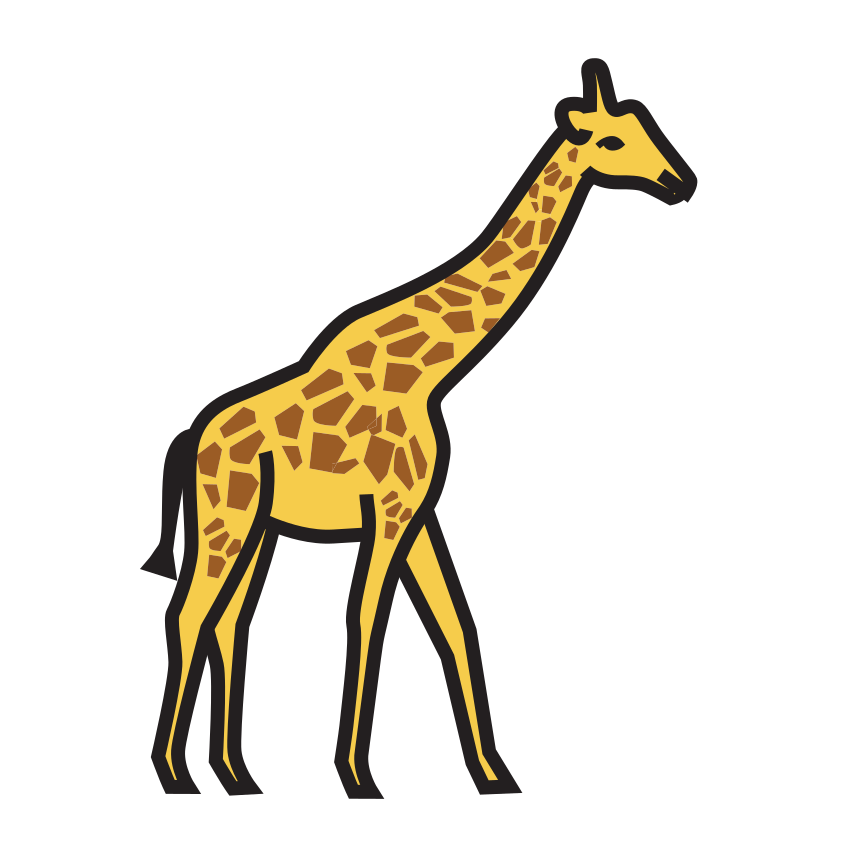
Say the word before each move and name the sound. Giraffe is the interesting one here — it starts with a g and makes the /j/ sound, which is the whole reason the two sounds get confused in writing even when they are clear in speech. Use this after the flashcard deck rather than instead of it; four items will not build a sound but they will show whether the contrast is there.
Cueing ladder
Start at the top. Add support one step at a time.
- IndependentThe student says the word on their turn before moving. Wait 3 seconds.Log as correct
- Visual cuePoint to your mouth, or show the mouth picture for /j/ and /y/, before the student tries again.Log as cued
- Verbal modelSay the word; the student says it right after you.Log as cued
- Placement cueFor j as in 'jump': lips rounded, tongue up on the ridge behind the top teeth, hold and let go with voice. For y as in 'yes': tongue tip down, middle of the tongue high, glide into the vowel.Log as cued
Adjust it
Go back to /j/ and /y/ on their own or in syllables, and use fewer cards.
Put each word in a short carrier phrase with no /j/ or /y/ in it.
Matching IEP goal
Given picture cards, Student will produce /j/ and /y/ in single words in 8 of 10 opportunities across 3 consecutive sessions, given no more than a visual cue.
Send it home through the parent portal →About this activity
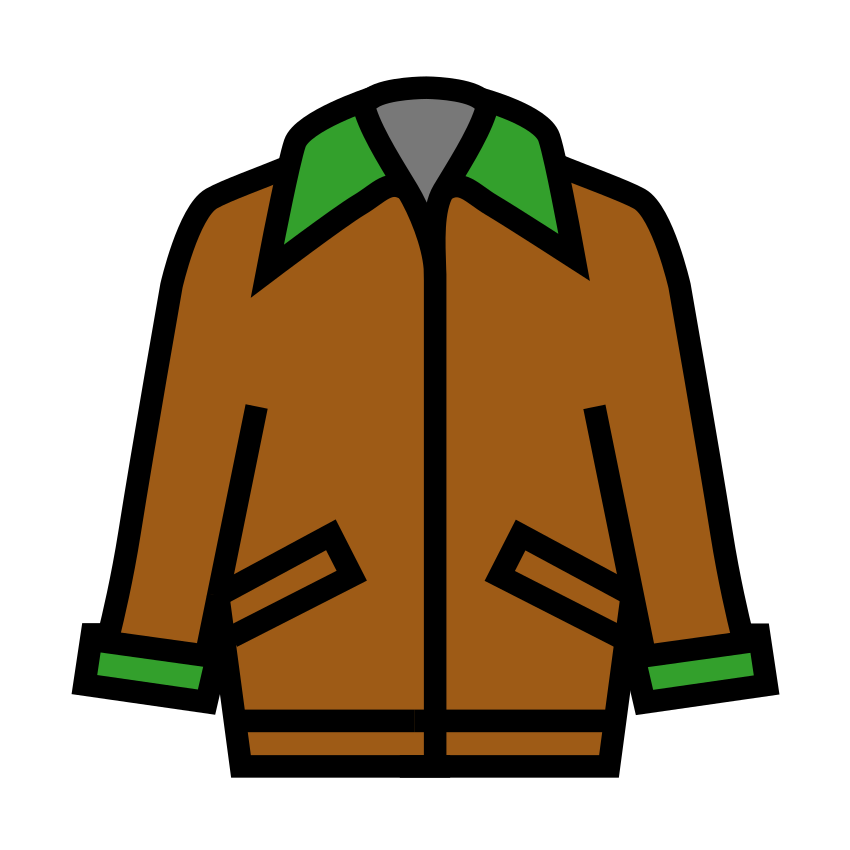
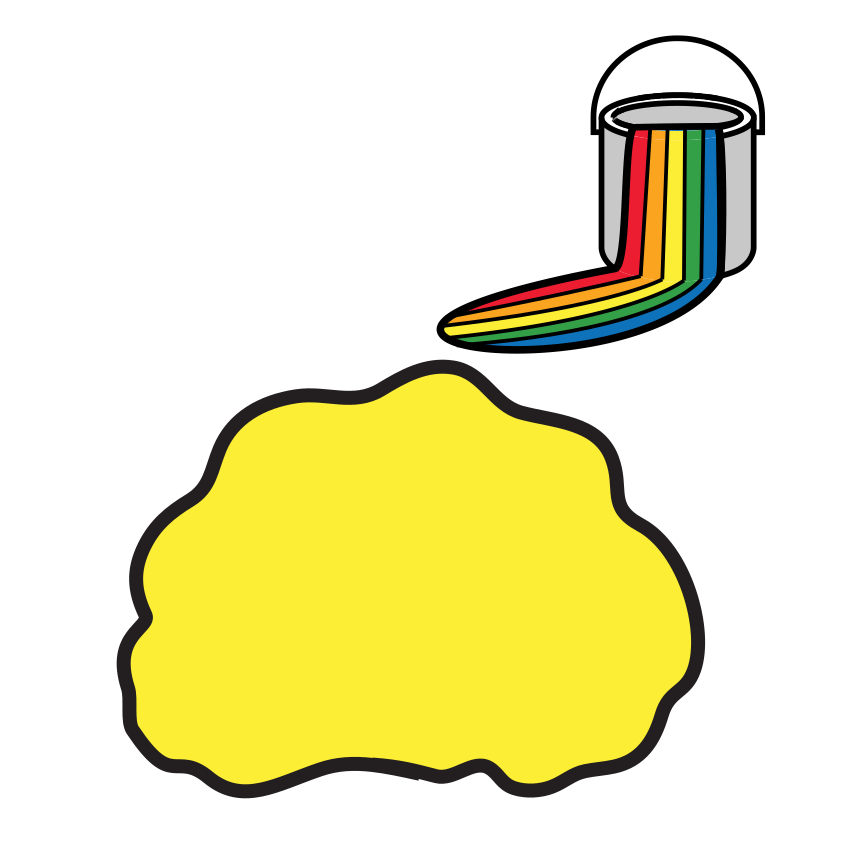
A short drag-and-drop round with four words — jar, jacket, giraffe and yellow — sorted by whether they start with /j/ as in jam or /y/ as in yes. Derived from the sixteen-word flashcard deck. The set is small, which makes it a check rather than a practice: four items is two minutes, and the value is in the contrast rather than the repetition.
What to listen for
Watch for a student who sorts by the letter rather than the sound. Giraffe placed with the /g/ words, if you offer that option, or hesitated over, tells you the student is reading rather than listening. Notice whether /j/ and /y/ are confused with each other at all — they are quite distinct, and a student who mixes them may have a discrimination difficulty worth checking.
Carrying it home
Sorting four things by first sound works at home with anything. The point is naming the sound out loud, which takes a second and is the part that does the work.
What's in this activity
- jar
- jacket
- giraffe
- yellow
Questions
- How is this different from the flashcards?
- It uses four of the sixteen words and asks the student to place them rather than read them. It is a quick check on the contrast, not a full practice.
- Do I need an account?
- No, it plays free in the browser.
- Why is 'giraffe' in a /j/ set?
- Because it makes the /j/ sound despite starting with a g. Soft g is one of the main reasons this sound is spelled inconsistently, which matters for spelling even when speech is clear.
Use this board with your caseload
With a free account, every correct, cued and incorrect mark is saved to the student and scored against their IEP goal, with the data written up for you. Assign it as home practice through the parent portal.
Track progress freeFree for SLPs. No card, no trial clock.