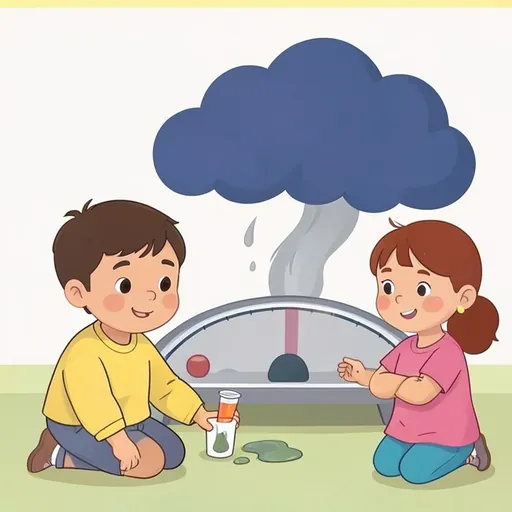
How Big Is the Problem?
- Game
- K–4
- 10 pages · 10 min
10 problems from tiny to big: an untied shoelace, a lost lunch, a friend who got hurt. Pick the size, then match a reaction to it. Built for grades K–4, it works in pull-out, push-in, or teletherapy, with 10 screens, in about 10 minutes. Skill tags on this board: feelings, size of the problem, social problem solving. Plays in the browser with no login; add students to score trials against IEP goals.
Quiz
How Big Is the Problem?
Your shoelace came untied. How big is this problem?
Tap your answer.
Session summary (SOAP)
Stays on this screen. Nothing is saved or sent.
Mark a card Correct, Correct with cue or Incorrect and the summary writes itself here.
How to run it
Draw a three-step scale (small, medium, big) and put a mark on it for each problem. Talk about who can fix it: small problems the student can fix alone, medium ones need some help, big ones need an adult now. Then go back to the reaction questions and connect each size to its reaction.
Cueing ladder
Start at the top. Add support one step at a time.
- IndependentSet up the situation and wait for the student to respond on their own.Log as correct
- Nonverbal cueUse a look, a gesture or a point to the visual cue card.Log as cued
- Indirect promptAsk 'What could you say now?' or 'How do you think they feel?'Log as cued
- ModelShow what to say or do, then run the moment again so the student can try it.Log as cued
Adjust it
Give a script or two choices of what to say, and practise with you before a peer.
Role-play with a new partner, or add a twist the student has not planned for.
Matching IEP goal
In structured role-plays, Student will use the target conversation skill appropriately in 4 of 5 opportunities across 3 consecutive sessions, given no more than a nonverbal cue.
Send it home through the parent portal →About this activity
Ten questions about how big a problem is and what size reaction fits it. Seven describe a problem, from an untied shoelace and a pencil that needs sharpening to a lost coat on a cold day and a friend who is hurt, and the student sorts each into small, medium or big. The last three match a reaction to each size: a deep breath, asking an adult calmly, getting help right away.
What to listen for
Notice whether the student rates everything as big, which often matches big reactions in real life, or rates real emergencies as small. Both are worth working on. The goal is a reaction that matches the problem, not no feelings at all.
Carrying it home
When something goes wrong at home, ask 'How big is this problem?' together before reacting. Praise a small reaction to a small problem, and model it yourself when your pen runs out of ink.
What's in this activity
- Your shoelace came untied. How big is this problem?
- small
- medium
- big
- You forgot your lunch at home. How big is this problem?
- Your friend fell off the slide and is bleeding. How big is this problem?
- Someone is sitting in the seat you wanted. How big is this problem?
- small
- big
- medium
- You lost your coat on a cold day. How big is this problem?
- Your pencil needs sharpening. How big is this problem?
- medium
- big
- small
- There is smoke coming out of a classroom. How big is this problem?
- big
- medium
- small
- A small problem happens. What size reaction fits?
- a big one like screaming
- a small one like a deep breath
- crying for an hour
- A medium problem happens. What fits best?
- ignore it forever
- throw something
- ask an adult for help calmly
- A big problem happens. What fits best?
- get an adult right away
- keep it a secret
- laugh and walk away
Questions
- Is it wrong to be upset about a small problem?
- No. Feelings are fine. The skill is choosing a reaction that fits the size of the problem.
- Who decides the size?
- Ask who can fix it and how fast it needs fixing. That makes the size something the student can work out.
Use this board with your caseload
With a free account, every correct, cued and incorrect mark is saved to the student and scored against their IEP goal, with the data written up for you. Assign it as home practice through the parent portal.
Track progress freeFree for SLPs. No card, no trial clock.