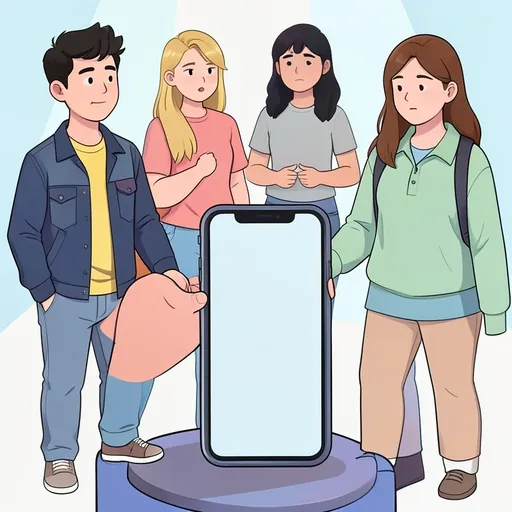
Does the Ad Hold Up?
- Game
- 9–12
- 9 pages · 10 min
3 product ads with a test, a review and a paid post read aloud. Decide whether each claim is supported, contradicted or not backed by evidence. Built for grades 9–12, it works in pull-out, push-in, or teletherapy, with 9 screens, in about 10 minutes. Skill tags on this board: evidence, persuasion, media literacy. Plays in the browser with no login; add students to score trials against IEP goals.
Quiz
Does the Ad Hold Up?
This device has no voice — read the passage aloud to the student.
An ad says the SnapGlow water bottle keeps drinks cold for 48 hours. A product test found drinks stayed cold for about 20 hours. A customer review says 'Mine kept ice all weekend!' and is the only review that mentions time.
Does the evidence support keeping drinks cold for 48 hours?
Tap your answer.
Session summary (SOAP)
Stays on this screen. Nothing is saved or sent.
Mark a card Correct, Correct with cue or Incorrect and the summary writes itself here.
How to run it
Play each ad with the words hidden and ask the student to list the claim and the evidence separately. Then answer the questions. After each ad, have the student say whether they would buy it based on the evidence and why. Point out that one ad's claim does hold up, which matters as much as spotting the ones that do not.
Cueing ladder
Start at the top. Add support one step at a time.
- IndependentPresent the item and wait 5 seconds of quiet before helping.Log as correct
- HintRephrase the prompt and point to the part that matters.Log as cued
- Two choicesOffer two answers, the right one not always second.Log as cued
- ModelGive the answer; the student says it back in their own words.Log as cued
Adjust it
Use fewer items and offer two choices from the start.
Ask for a full-sentence answer and a reason.
Matching IEP goal
Given the activity prompts, Student will respond correctly in 8 of 10 opportunities across 3 consecutive sessions, given no more than an indirect cue.
Send it home through the parent portal →About this activity
Three made-up product ads read aloud, each with evidence to check: a water bottle that claims 48 hours of cold but tested at about 20, headphones a paid creator says will boost grades with nothing to back it up, and hiking shoes that really are the lightest the company has made. The student decides which claims hold up and why, and notices how 'we have ever made' quietly narrows a claim.
What to listen for
Notice whether the student trusts the review or the paid post because they sound confident. Watch the shoe ad: a student who calls it contradicted may be assuming all ads lie, which is its own mistake. The skill is matching each claim to its evidence.
Carrying it home
Pick an ad you see together and ask what it claims, what evidence it gives and what evidence would convince you. Look for 'up to', 'ever' and 'paid partnership' and talk about what they mean.
What's in this activity
- Does the evidence support keeping drinks cold for 48 hours?
- no the test shows about 20 hours
- yes the review proves it
- yes because it is an ad
- Why is one review weak evidence?
- reviews are always fake
- it is one person and it may not be typical
- it is too long
- What would be the most trustworthy evidence?
- the ad itself
- a celebrity opinion
- a fair test of many bottles
- What does paid partnership tell you?
- the creator was paid to promote it
- the headphones are free
- it is a science report
- Is the grades claim supported?
- yes it is in a video
- no there is no evidence about grades
- yes headphones help everyone
- Which claim on the company page could you check?
- that you will be happier
- that you will be popular
- the battery life
- Is the lightest shoe claim supported?
- yes by the weights on the page
- no it is contradicted
- it is not about weight
- What does 'we have ever made' limit the claim to?
- every shoe in the world
- only this company's shoes
- only red shoes
- Why is that phrase important?
- it makes the shoe heavier
- it means the shoe is new
- the shoe may not be the lightest of all brands
Questions
- Are these real products?
- No. The products, tests and reviews were made up for this activity.
- Does one ad hold up?
- Yes. The shoe claim is supported by the weights listed, which shows that careful reading cuts both ways.
Use this board with your caseload
With a free account, every correct, cued and incorrect mark is saved to the student and scored against their IEP goal, with the data written up for you. Assign it as home practice through the parent portal.
Track progress freeFree for SLPs. No card, no trial clock.