Describing Objects — 3 Attributes
Describe items using color, size, and function.
Session summary (SOAP)
Stays on this screen. Nothing is saved or sent.
Mark a card Correct, Correct with cue or Incorrect and the summary writes itself here.
How to run it
Show the model, then take one attribute away and let the student supply it, then take two. Fading the support in that order gets to independent description faster than asking for all three from the start. Function is the attribute to hold on to longest — you eat it and you write with it are the hardest to produce and the most useful for word finding. Ten minutes covers the twelve with fading.
Cueing ladder
Start at the top. Add support one step at a time.
- IndependentPresent the item and wait 5 seconds of quiet before helping.Log as correct
- HintGive a clue about the word's category, what it does, or where you find it.Log as cued
- Two choicesOffer two answers, the right one not always second.Log as cued
- ModelGive the answer in a sentence; the student says it back and uses it once more.Log as cued
Adjust it
Use fewer items and start with the ones the student already knows, such as 'round' and 'bouncy'.
Ask for the word in a sentence of the student's own, or a second example from the same group.
Matching IEP goal
Given vocabulary cards, Student will name, sort or define target words in 8 of 10 opportunities across 3 consecutive sessions, given no more than an indirect cue.
Send it home through the parent portal →About this activity
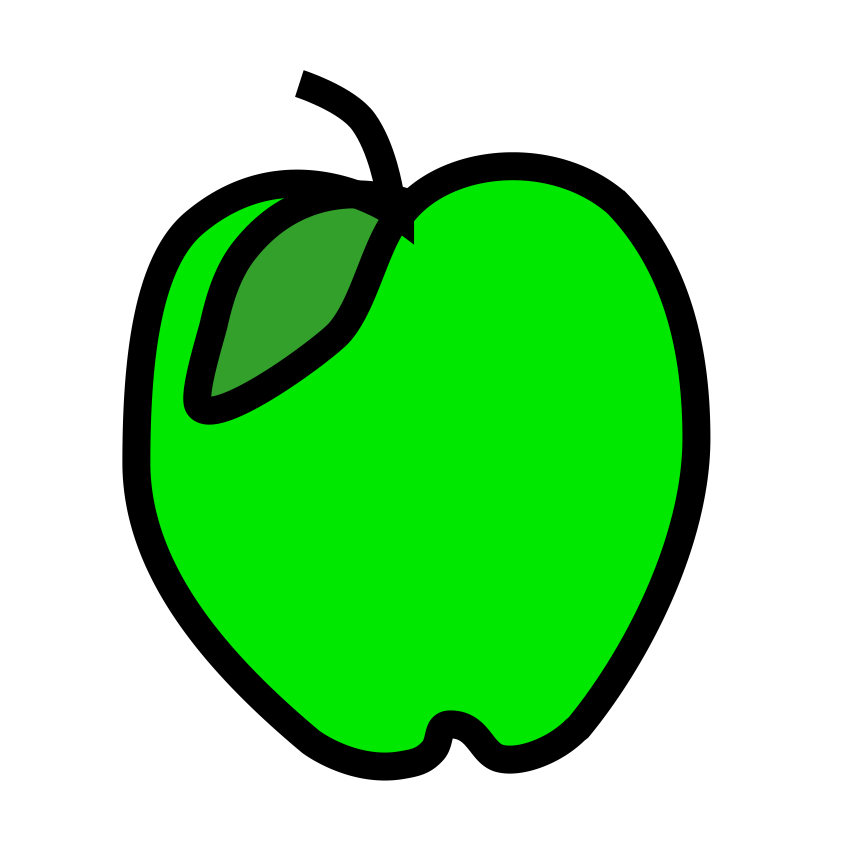
Twelve objects with a three-part description each: apple is red, round, you eat it; ball is blue, bouncy, you throw it; chair is wooden, tall, you sit on it; spoon is shiny, small, you eat with it. Three attributes is the standard frame for early describing goals, and having the model in front of the student is what makes the frame learnable rather than something they are asked to invent.
What to listen for
Listen for which of the three is missing. Colour is almost always available, size usually, and function frequently not — a student who says an apple is red and round has described its appearance and not what it is for. Notice whether the descriptions distinguish the object: red and round also describes a ball, and a description that does not identify the item is incomplete even when all three slots are filled.
Carrying it home
Describing games while tidying up work well — what colour, how big, what do we use it for. Three questions per object and no preparation, and the third one is the one worth insisting on, because function is the attribute children skip.
What's in this activity
- apple: red, round, you eat it
- ball: blue, bouncy, you throw it
- banana: yellow, curved, you peel it
- book: flat, colorful, you read it
- cup: small, smooth, you drink from it
- chair: wooden, tall, you sit on it
- shoe: soft, brown, you wear it
- spoon: shiny, small, you eat with it
- pencil: yellow, long, you write with it
- towel: soft, big, you dry with it
- orange: orange, round, it's sweet
- hat: warm, round, you wear it
Questions
- What ages is this for?
- Kindergarten through third, and it suits older students with word-retrieval goals.
- Do I need an account?
- No, all twelve cards play free.
- Why three attributes?
- Because it is enough to identify most objects and few enough for a young child to hold. Colour, size and function cover appearance and purpose, which are the two routes into a word.
Use this board with your caseload
With a free account, every correct, cued and incorrect mark is saved to the student and scored against their IEP goal, with the data written up for you. Assign it as home practice through the parent portal.
Track progress freeFree for SLPs. No card, no trial clock.