Beginning /s/ Sort
Sort pictures by initial /s/ vs. other sounds.
Drop here
Drop here






0/10 sorted
How to run it
Say each word yourself and ask where it goes before the child says anything. Perception first is the whole point of the board, and a child who cannot reliably hear initial /s/ will not benefit from more production practice. Once sorting is accurate, ask the child to say the word as they place it, which adds production without losing the listening task. Eight minutes covers all ten with a second pass on the ones that were guesses.
Cueing ladder
Start at the top. Add support one step at a time.
- IndependentThe student says each word aloud as they place it. Wait 3 seconds.Log as correct
- Visual cuePoint to your mouth, or show the mouth picture for /s/, before the student tries again.Log as cued
- Verbal modelSay the word; the student says it right after you.Log as cued
- Placement cueTeeth close together, tongue tip just behind your top teeth without touching them, sides of the tongue against your top side teeth. Send a thin stream of air down the middle.Log as cued
Adjust it
Drop to syllables ('sa' and 'see'), or use fewer cards.
Put each word in a short carrier phrase with no /s/ in it.
Matching IEP goal
Given word cards, Student will produce /s/ in single words in 8 of 10 opportunities across 3 consecutive sessions, given no more than a visual cue.
Send it home through the parent portal →About this activity
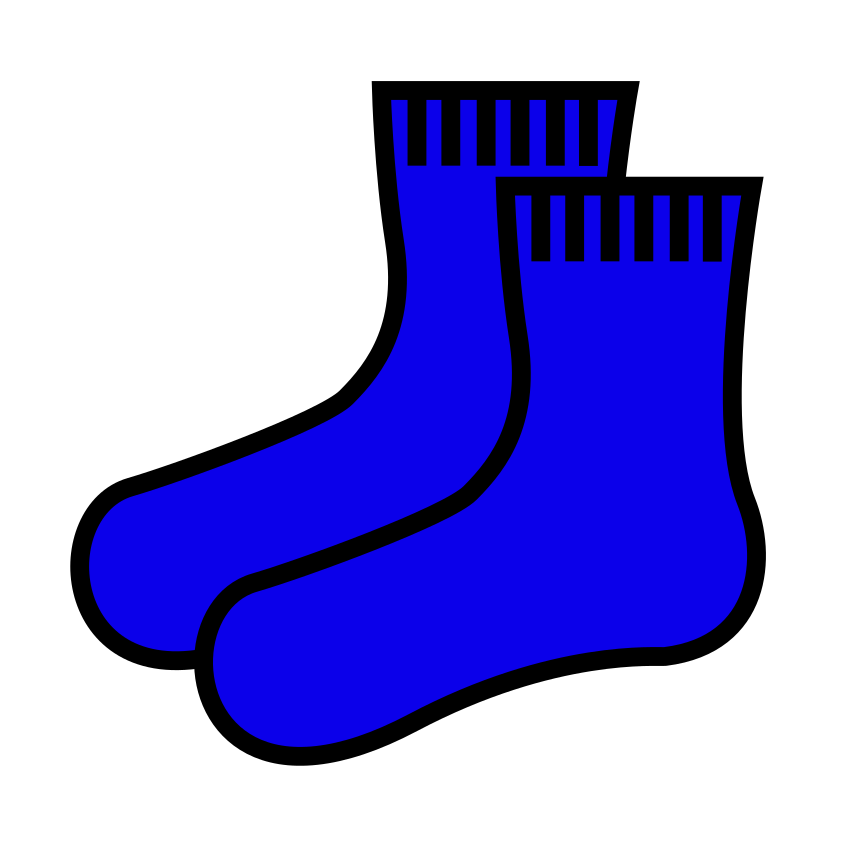
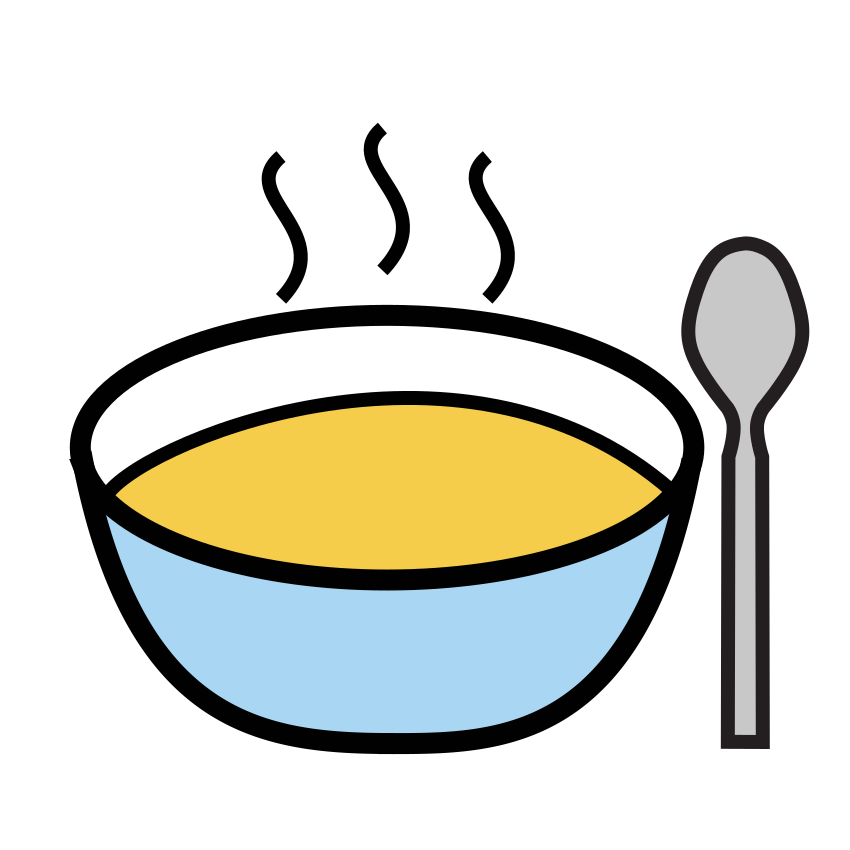
Ten pictures, two bins. Sun, sock, seed, soup and sail begin with /s/; cat, dog, ball, moon and cup do not. Before a child can practise a sound they have to hear it, and this board sits at that earlier stage — it is an ear task with a motor payoff, not a production drill.
What to listen for
Notice whether errors cluster. A child who puts seed in the wrong bin but has sun right is probably hearing the vowel rather than the consonant, which is a specific and fixable problem. Watch for the contrast set too — cup and cat are there because /k/ is the substitution some children make, and a child who calls cup an /s/ word is telling you something about their own production.
Carrying it home
Sound sorting works with anything in a cupboard. Ask which of two items starts with the /s/ sound — soup or bread — and let the child answer. Say the sound rather than the letter name, because /s/ and ess are different things to a five-year-old.
What's in this activity
- /s/
- Other
Questions
- What ages is this for?
- Kindergarten through second grade, and any child at the perception stage of /s/ work.
- Is it free to play?
- Yes, no account or card needed.
- Why sort before practising the sound?
- Because production work depends on the child being able to hear the difference between their attempt and the target. A child who cannot yet hear it has no way to know when they have got it right.
Use this board with your caseload
With a free account, every correct, cued and incorrect mark is saved to the student and scored against their IEP goal, with the data written up for you. Assign it as home practice through the parent portal.
Track progress freeFree for SLPs. No card, no trial clock.