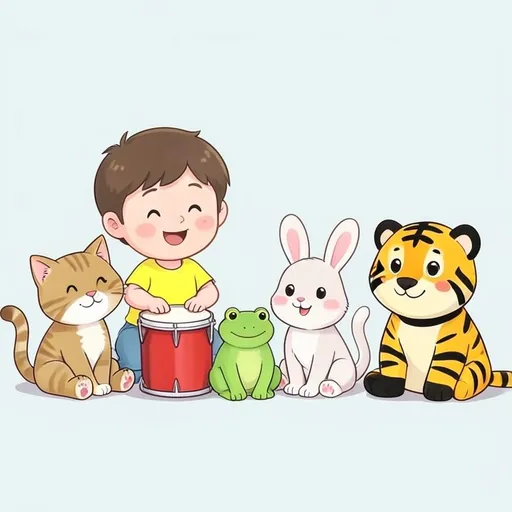
Beat It: Animal Syllables
- Game
- PreK–1
- 1 page · 8 min
Tap a drum once for each syllable, then check the beats: cat, frog, rabbit and tiger and more, 1 to 3 beats each. Built for grades PreK–1, it works in pull-out, push-in, or teletherapy, in about 8 minutes. Sample stimuli: cat, frog, rab · bit, ti · ger, mon · key, and more. Plays in the browser with no login; add students to score trials against IEP goals.
Beat it
Beat It: Animal Syllables
Tap the drum for each beat in penguin

How to run it
Say the word together first, slowly, and clap or tap the beats on the table before the student taps the drum. Let the student tap without help, then look at the split together after each word. When a count is off, say the word again beat by beat and ask the student to tap along with you, then try the next word on their own.
Cueing ladder
Start at the top. Add support one step at a time.
- IndependentLet the student say the word and tap the beats on their own; wait 5 seconds before helping.Log as correct
- Say it slowlySay the word slowly, stretching each beat, and let the student tap again.Log as cued
- Chin dropHave the student put a hand under their chin and say the word: each chin drop is one beat.Log as cued
- ModelTap the beats with the student as you both say the word, such as el · e · phant.Log as cued
Adjust it
Play only the one and two beat words first, and clap each word together before the drum.
Hide the picture and only say the word, so the student counts from what they hear.
Matching IEP goal
Given a spoken word, Student will segment it into syllables by tapping once per syllable in 8 of 10 opportunities across 3 consecutive sessions.
Send it home through the parent portal →About this activity
A syllable board of animal names from one beat (cat, frog) to three (elephant, kangaroo). Each round shows a word and its picture, and the board says the word. The student taps the drum once for every syllable they hear, then taps Done. The board checks the number of taps against the number of syllables and then shows the beats split out, such as el · e · phant for elephant, with how many taps the student made and how many beats the word has.
What to listen for
Watch whether the student taps once per beat or once per sound, which shows up on short words like frog. The session summary lists each word with right or wrong, so you can see whether misses cluster on longer words like elephant, with 3 beats, or on words with sounds that run together.
Carrying it home
Name animals at home or at the zoo and clap the beats together: cat is one clap, tiger is two, elephant is three. Then let your child choose an animal and you clap it.
What's in this activity
- cat
- frog
- rab · bit
- ti · ger
- mon · key
- pen · guin
- ze · bra
- el · e · phant
- kan · ga · roo
- but · ter · fly
Questions
- What does this practise?
- Syllable segmentation: hearing a spoken word as separate beats and counting them, one of the early steps in phonological awareness.
- Why a drum and not a clap?
- Tapping one drum keeps every beat the same size and lets the board count it, so the count the student meant is the count that gets marked.
Use this board with your caseload
With a free account, every correct, cued and incorrect mark is saved to the student and scored against their IEP goal, with the data written up for you. Assign it as home practice through the parent portal.
Track progress freeFree for SLPs. No card, no trial clock.